The U.S. Customs and Border Protection (CBP) recently sent an announcement to shippers via the Cargo Systems Messaging Service (CSMS). It stated that from 00:01 U.S. time on 24/2, CBP will deactivate all related tariff codes invoked by President Donald Trump under the IEEPA.
This cessation of tariff collection does not affect any other import duties imposed by President Trump, including those under Section 232 of the National Security Act and Section 301 of the Unfair Trade Practices Act.
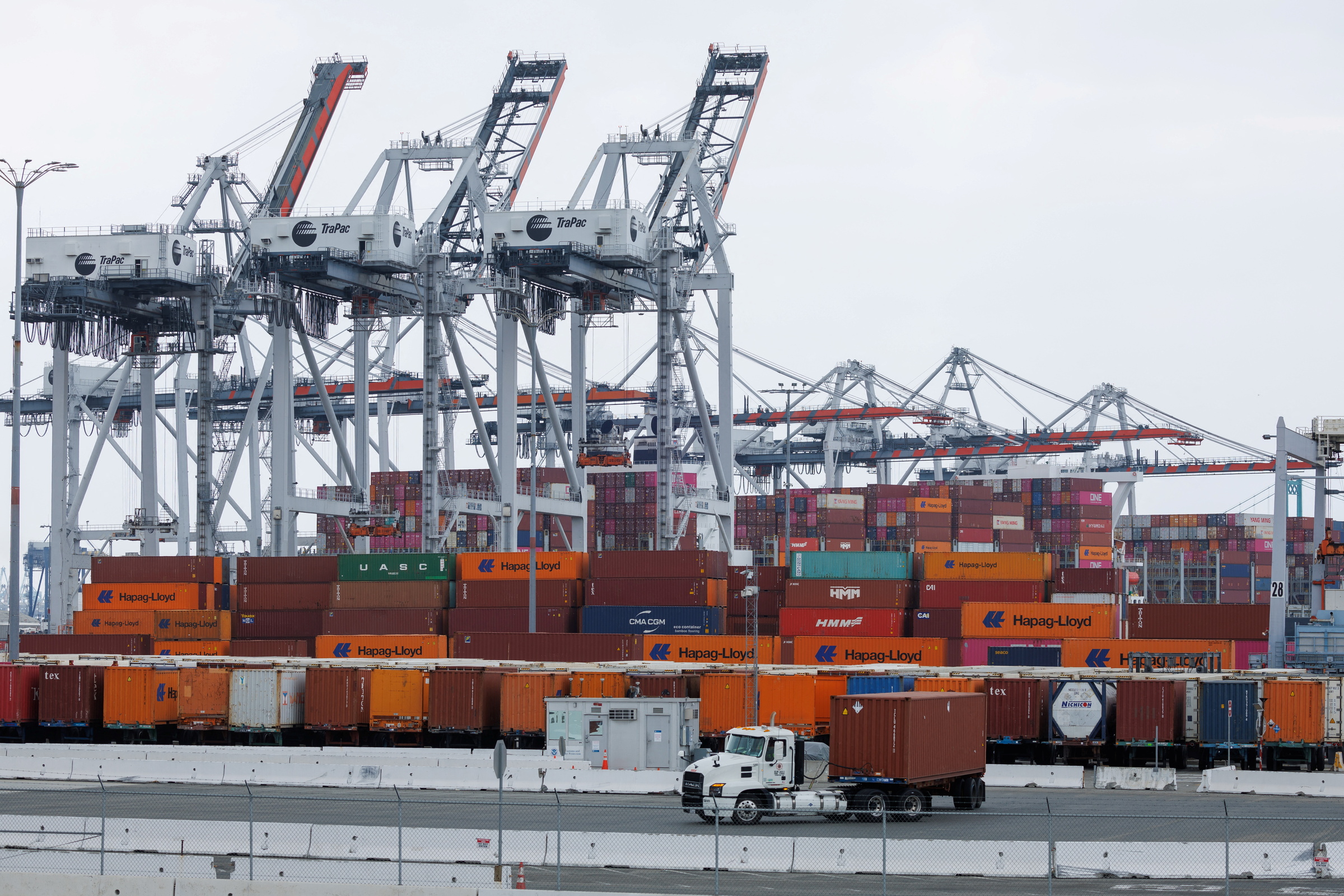 |
Container Terminal 1 at the Port of Los Angeles in Wilmington, California, U.S. on 17/10/2024. Photo: *Reuters*. |
Previously, on 20/2, the U.S. Supreme Court rejected tariffs issued by President Trump based on the IEEPA. CBP did not specify why it continued collecting these tariffs at ports of entry for three days following the court's ruling.
U.S. Customs also provided no further information regarding potential refunds for importers. "CBP will provide additional guidance to the trade community through notices as needed," the agency stated.
According to estimates from the Penn-Wharton Budget Model (PWBM) at the University of Pennsylvania, IEEPA-related import tariffs generated approximately USD 175 billion for the U.S. budget. On average, the nation collected over USD 500 million daily from these tariffs.
To offset the suspension of IEEPA tariffs, President Trump signed an executive order imposing an additional 10% global tariff for 150 days, effective 24/2. Nearly one day later, he announced an increase of this tariff to 15%.
According to Reuters, politicians, business leaders, investors, and experts had hoped that the period of U.S. trade policy volatility had concluded. However, following last week's U.S. Supreme Court ruling and Mr. Trump's retaliatory move, all now face the risk of new instability.
On CBS's "Face the Nation", European Central Bank (ECB) President Christine Lagarde stated that developments in the U.S. are shaking the familiar balance in the trade sector, potentially creating disruption. She emphasized, "You need to know the rules of the road before you get into a car. The same applies to trade and investment. People want to do business, not get embroiled in litigation." The ECB President expressed hope that any further U.S. tariff plans would be "thoroughly reviewed" and comply with the Constitution, so that people do not face more challenges.
Phi An (via Reuters)