According to data from Fiin Group, a financial data and market analysis provider, Vietnam had approximately 914,000 small and medium-sized enterprises (SME) as of late July. These SMEs account for 94% of all legal entities nationwide. However, their overall contribution to the economy remains limited, with revenue accounting for under 20% and total import-export turnover around 8%.
Small and medium-sized enterprises are defined as companies with revenues not exceeding VND 300 billion or total capital not exceeding VND 100 billion, and fewer than 200 employees. Given this scale, the proportion of these businesses that can access loans is very low, at only about 8.8%. This translates to roughly 80,000 legal entities, a 0.5 percentage point decrease compared to 2025.
In contrast, large companies achieve a loan access rate of 47.1%. "This indicates a significant gap in financial access for small and medium-sized enterprises, impacting their ability to sustain operations and grow," stated the Fiin Group report.
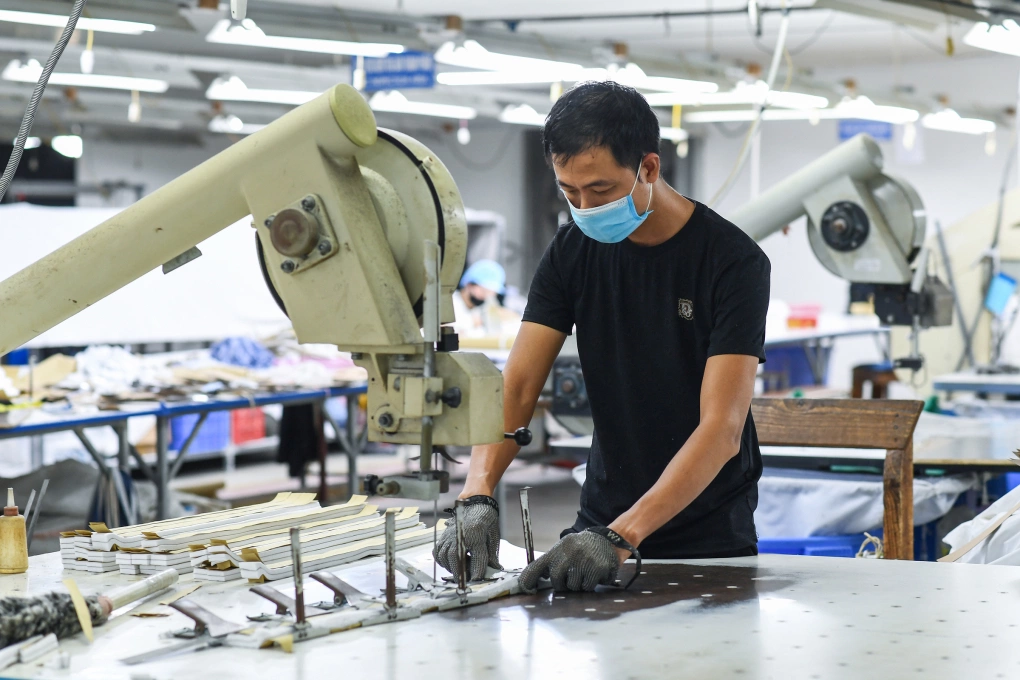 |
Inside a small and medium-sized enterprise in Hai Phong. *Photo: Giang Huy*
Capital difficulties are also a reason why only about 0.9% of active small and medium-sized enterprises transition into large businesses. Beyond capital, limitations in governance, technology, and market access also pose challenges.
Banks and credit institutions tend to be rigorous in client selection, with nearly 85% of small and medium-sized enterprises currently holding loans having been operational for five years or more. The risk profiles of these businesses are also considerably better.
However, Fiin Group also highlighted that about 45% of businesses operational for over five years have medium to low risk levels but have never accessed loans. This could be a potential group for credit institutions to target.
Specifically, approximately 222,000 businesses have been operating for over five years without incurring any loans. This group has a median asset size of VND 7.1 billion, which is smaller than the VND 18.5 billion of the group that has borrowed. Their average revenue is around VND 5.2 billion, lower than the VND 16.3 billion of companies that have borrowed.
Nevertheless, the median revenue growth for the unborrowed group reached 15.6%, significantly higher than the 9.8% for the group that has borrowed. Their net profit margin, return on assets (ROA), and liquidity are also more positive. Fiin Group suggests that a segment of these businesses might be self-financing or do not yet have a significant borrowing need.
Fiin Group also reported that 67,000 small and medium-sized enterprises operational for over five years have not incurred debt while simultaneously demonstrating positive cash flow from operating activities (CFO) and revenue growth. This represents a priority customer segment for credit institutions to approach and assess their capital needs.
This year, regulatory bodies have introduced numerous policies to support small and medium-sized enterprises. According to a National Assembly resolution passed on 24/8, businesses with total revenues up to VND 10 billion will receive a 30% tax reduction during the 2026-2027 period.
In early August, the State Bank of Vietnam directed banks to develop credit programs specifically for this group, offering preferential interest rates at least one percent per year lower than the average lending rate for the same term, along with waiving or reducing service fees where applicable.
Immediately following this directive, state-owned banks simultaneously launched loan packages totaling VND 50-70 trillion for small and medium-sized enterprises, with interest rates one to two percent lower than standard loans. Private banks have also made similar moves, offering loan limits in the trillions of dong.
Trong Hieu