In the global technology race, the airspace below 1,000 meters has become a new frontier for the economy. In Vietnam, unmanned aerial vehicles (UAVs) are identified as a strategic technology under Government Decision 1131/QD-TTg. Developing and mastering this technology is expected to address productivity bottlenecks and enhance national technological self-reliance.
Morgan Stanley forecasts the low-altitude economy could reach a scale of 9 trillion USD by 2050, becoming one of the fastest-growing technology sectors globally. Within this ecosystem, UAVs are considered core technological infrastructure, with the market projected to reach 128 billion USD by 2030 and 700 billion USD by 2035.
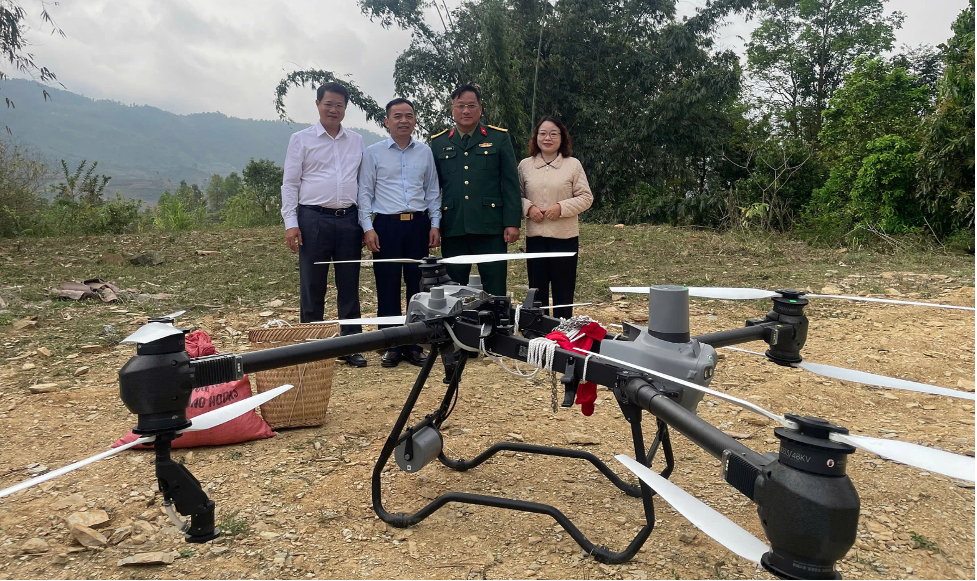 |
UAVs are being tested for agricultural product transport. Photo: MST |
According to experts, modern UAVs represent the convergence of three technology pillars: ultralight hardware systems; an AI-integrated "brain" processing data with LiDAR sensors and multispectral cameras; and real-time data transmission. The key difference of new-generation UAVs is their autonomy, enabling them to analyze obstacles and perform complex tasks with high precision.
Globally, many nations are increasing investment in and application of UAVs in low-altitude airspace for smart agriculture, infrastructure and energy monitoring, logistics and low-altitude delivery, rescue and environmental protection, tourism and cultural promotion, and defense.
In Vietnam, the race to master low-altitude airspace has seen breakthroughs from Viettel with modern military UAVs, and RealTime Robotics Vietnam with its Hera UAVs serving both military and civilian purposes. CT Group is developing transport UAV systems and trialing firefighting in specific urban areas. AgriDrone has deployed over 3,000 drones in the Mekong Delta to support agriculture, while MiSmart develops "make in Vietnam" AI-integrated drones. Trials for delivery in remote areas and urban monitoring using UAVs are also underway.
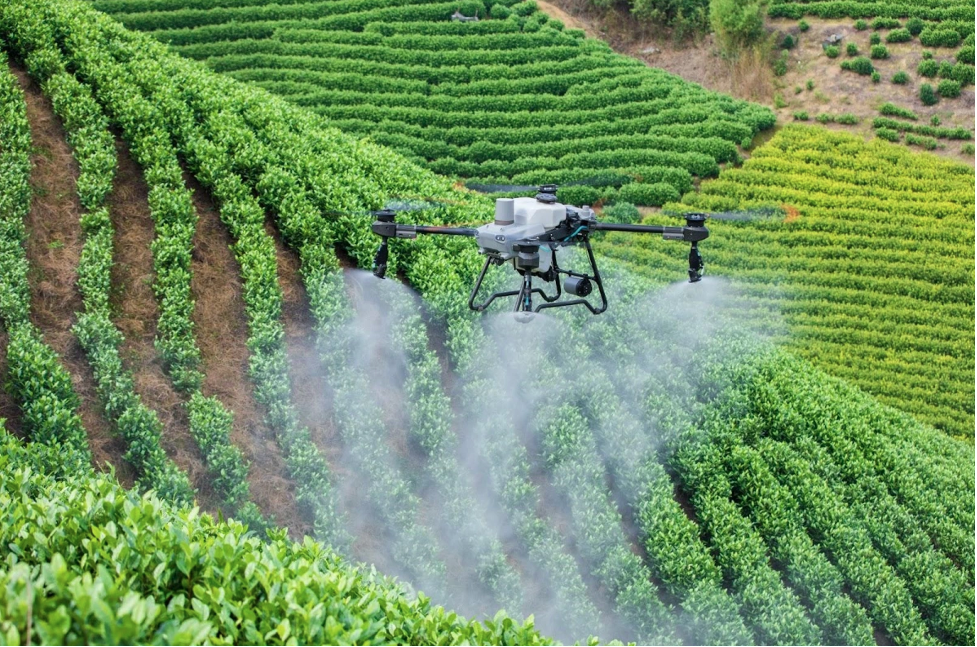 |
A drone model spraying pesticides in a field. Photo: AgriDrone |
Agriculture contributes approximately 12–14% of Vietnam's GDP, while the logistics market is forecast to reach 63 billion USD by 2030. In this context, UAVs are seen as a promising technology to enhance efficiency in agricultural production, infrastructure monitoring, and logistics operations.
Globally, development trends show modern UAVs are integrated across multiple technology layers, including telecommunications infrastructure and the internet of things (IoT), along with unmanned aircraft system traffic management (UTM) systems. This forms a safe operational network for numerous UAVs in the same airspace, allowing thousands of devices to operate concurrently.
In Vietnam, technology companies such as Viettel and FPT are investing in research and development of UAV-related technologies. FPT states it is ready to participate in building digital and operational platforms, encompassing cloud services, artificial intelligence, data analytics, real-time monitoring, and cybersecurity for the ecosystem. The company can also collaborate on pilot projects in sandbox environments with city units and partners, progressively refining the model before large-scale expansion.
Alongside technological development, training high-quality human resources is a crucial factor driving the growth of this sector. Many engineering technology training programs are being implemented to prepare personnel for new technology industries.
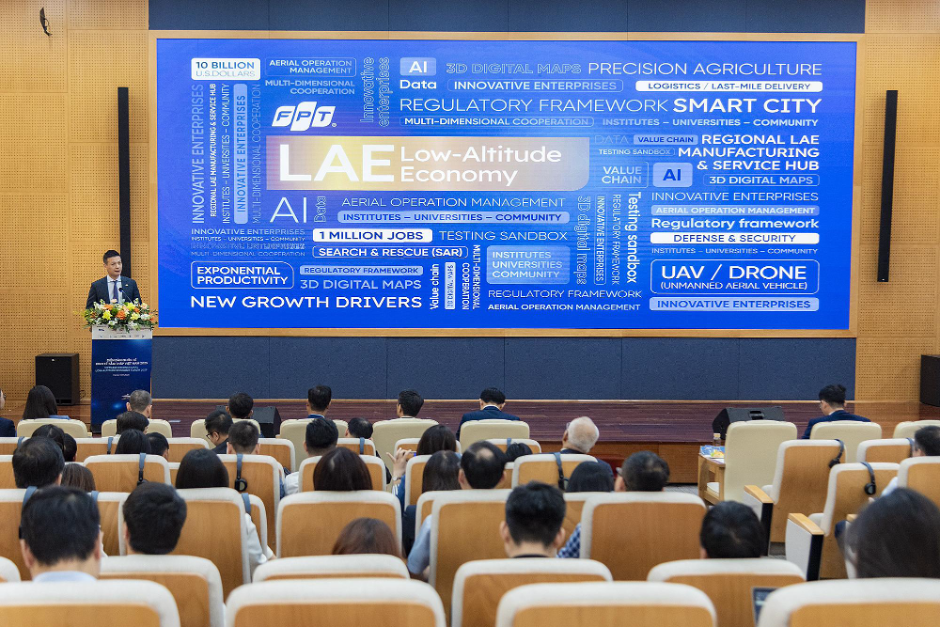 |
Vu Anh Tu, CEO of FPT UAV, speaking at the Low-altitude Economy Forum 2025. Photo: FPT |
Recently, FPT established international cooperation with five strategic technology training programs, including UAVs. Vu Anh Tu, CEO of FPT UAV, FPT Group, stated that by seizing this opportunity, Vietnam will create a new economic sector, provide improved services for remote and island residents, and establish a new presence on the global technology map. Developing UAV, artificial intelligence, and data technologies is expected to expand innovation and enhance Vietnam's technological capabilities in the coming years.
Quang Anh