Marc Jacobs is the next brand LVMH is considering selling amid a prolonged recession and the potential threat of a 30% retaliatory tariff by the US on European goods.
According to Reuters, LVMH has been in discussions with Authentic Brands Group (owner of Reebok) and WHP Global (owner of Vera Wang and Warners). The Wall Street Journal (WSJ) also reported that Bluestar Alliance, owner of Brookstone, is pursuing the acquisition of Marc Jacobs, with a potential value of around USD 1 billion.
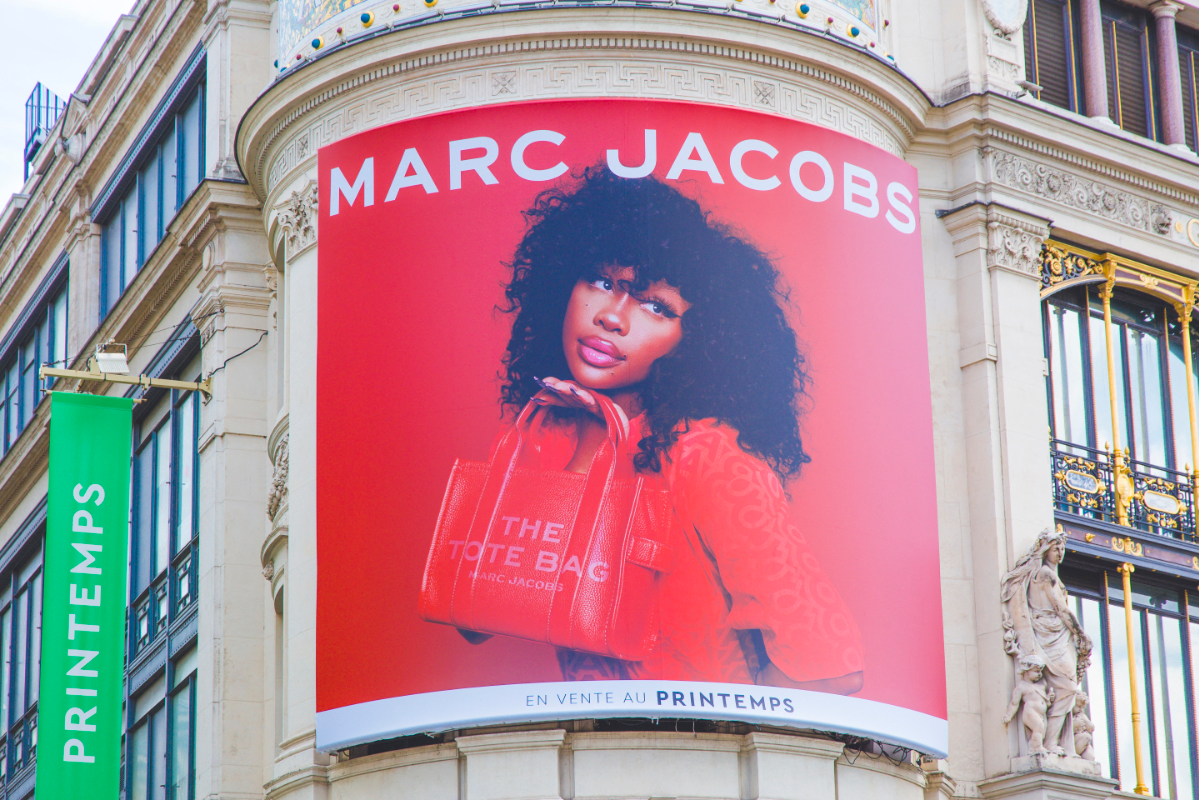 |
Marc Jacobs advertisement on the facade of Printemps Haussmann, Paris, France. Photo: AFP |
Marc Jacobs advertisement on the facade of Printemps Haussmann, Paris, France. Photo: AFP
None of the parties have commented on the matter, but the WSJ suggests a deal could be finalized soon.
At the end of Quarter II, LVMH's sales, which include Louis Vuitton handbags, Dior dresses, and Moet & Chandon champagne, fell short of market expectations, reaching 22.88 billion USD, a 4% decrease compared to the same period last year. Sales in the core leather goods and fashion division declined by 9%.
Founded in 1984 by American designer Marc Jacobs, the luxury fashion brand is known for its daring designs, blending high fashion with streetwear. In 1997, LVMH acquired a stake in the brand and appointed Jacobs to lead Louis Vuitton.
Last year, LVMH sold Off-White, the clothing brand founded in 2012 by the late artist Virgil Abloh, to New York-based Bluestar Alliance for an undisclosed sum.
Designer Stella McCartney also plans to buy back her minority stake in her eponymous brand from LVMH after leaving the group. Known for not using leather or fur, McCartney said she would advise CEO Bernard Arnault and the LVMH executive team on sustainability.
European brands are facing ongoing challenges in the estimated USD 400 billion luxury market. The Trump administration's threat of a 30% tariff on European goods significantly impacts luxury brands from Italy and France, amid weakening consumer confidence.
Along with China, the US is a key consumer market. Brands are becoming more cautious as previous price increases have made American consumers hesitant to purchase luxury goods.
Earlier this year, Prada acquired Versace from Capri Holdings for nearly USD 1.4 billion. Gucci, the main revenue generator for Kering, is currently undergoing restructuring and expects sales to decline by nearly one-fourth compared to the same period last year.
After two years of stagnant sales, many investors are concerned about the financial health of the luxury industry. LVMH's stock has fallen by nearly 27% since the beginning of this year, while Kering's has dropped by 15%. Hermes' stock has slightly decreased by 0.9%, while Richemont's has increased by 1.6% over the same period.
At the start of the year, LVMH was Europe's most valuable listed company, but it has now dropped to fifth place. Handbags, previously a driver of luxury growth, have weakened. Consumers are shifting towards more durable and investment-worthy jewelry.
Bao Bao (Reuters, WSJ)