Recruitment experts at the job site Indeed forecast very low hiring growth next year. Companies such as Shopify and Chime Financial have even stated their workforce size will remain largely unchanged, reflecting a broader sentiment among US businesses.
This reluctance to hire stems from various factors, including economic concerns and the growing belief that artificial intelligence (AI) can handle more tasks within large corporations. Additionally, some companies over-hired post-pandemic and are now readjusting their staffing levels to more sustainable figures. Christopher Waller, a member of the Board of Governors of the US Federal Reserve (Fed), noted at a Yale conference, "We are approaching zero job growth, which is not a healthy labor market. When I speak with CEOs, they explain they are not hiring because they want to wait and see what happens with AI: which jobs can be replaced and which cannot."
The US labor market has shown signs of a slowdown for months. The unemployment rate rose to 4,6% in November, its highest in four years. While sectors like healthcare and education continue to add jobs, the white-collar job market is seeing a stagnation. Major corporations, including Amazon, Verizon, Target, and United Parcel Service (UPS), have recently cut office positions, contributing to increased employee anxiety.
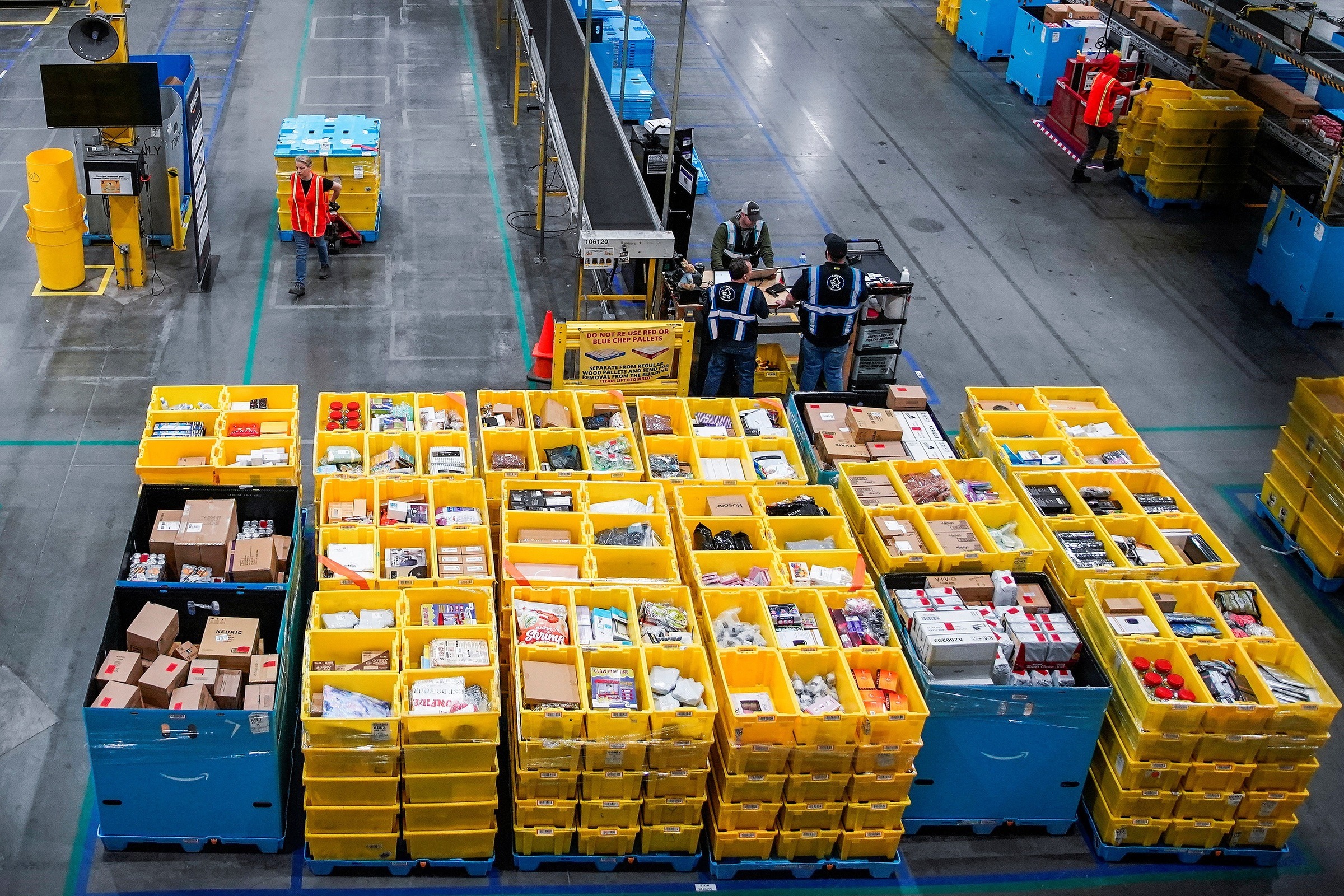 |
Inside an Amazon warehouse in New Jersey. *Photo: Reuters*
Many leaders are hesitant to speak openly about AI's potential harm to the labor market, even as its impact on workforce size is expected to be "extremely significant", according to Wells Fargo CEO Charlie Scharf. He acknowledged that while AI may not completely replace humans, it creates opportunities to do things differently. Wells Fargo plans to retrain its workforce to adapt to these changes.
The current climate also makes many employees determined to hold onto their jobs. This is evident at IBM, where the attrition rate is at a 30-year low, according to CEO Arvind Krishna. In IBM US, the voluntary attrition rate is currently below 2%, a sharp decrease from the usual rate of about 7%. Krishna explained, "People are not looking to change jobs. That leads to reduced hiring because no one is leaving." Waller added, "Everyone is afraid of losing their job. I am very serious about that."
At a CEO event hosted by the Yale School of Management in Manhattan this month, 66% of surveyed leaders indicated plans to either lay off employees or maintain their current workforce size next year. Only about one-third planned to hire. "Many companies are adopting a 'wait-and-see' approach. The current instability means they are not prioritizing investment in personnel", said Chris Layden, CEO of staffing company Kelly Services.
Specific companies have echoed this sentiment. At a recent conference, Shopify Chief Financial Officer Jeff Hoffmeister stated: "I don't foresee needing to increase our workforce next year. We have maintained this size for over two years now." Similarly, Wells Fargo CEO Charlie Scharf said this month that the bank expects to have fewer employees next year. The bank's workforce has decreased from 275,000 people in 2019 to approximately 210,000 currently, as management cut costs and restructured.
Indeed's economic experts recently updated their hiring scenarios for next year, forecasting a largely unchanged outlook. After analyzing job postings and growth projections, they anticipate the unemployment rate will remain around 4,6% in 2026. Laura Ullrich, Director of Economic Research at Indeed, stated: "We don't expect things to change much next year."
Sectors with the weakest hiring demand are high-paying fields such as data analytics, software development, marketing, and entertainment. Conversely, hiring activity is more robust in industries like healthcare and construction. Although white-collar jobs have declined, Ullrich believes the situation could still change. If the economy grows next year, some businesses might need to hire more people. "You cannot sustain an environment of low hiring and low layoffs while GDP continues to grow. At some point, something has to shift", she stated.
Ha Thu (based on WSJ, Reuters)