The Government Standing Committee met on 13/4 to discuss reducing administrative procedures, conditional business sectors and conditions, and decentralizing administrative procedure resolution, aligning with Central Committee Conclusion 18.
During the meeting, Prime Minister Le Minh Hung emphasized that improving the business environment and reducing compliance time and costs for citizens and businesses are crucial for Vietnam to achieve its double-digit growth target. He noted that many tasks and solutions fall within the immediate authority of the government and ministries.
"This demands significant responsibility from ministries, and ministers must directly engage," the Prime Minister stated. He instructed ministries not to wait until the end of QII, but to submit their proposals for administrative procedure and business condition reform to the Government Standing Committee and the Government by 20/4. The Government Office and the Ministry of Justice will then compile and review these proposals for government approval in April.
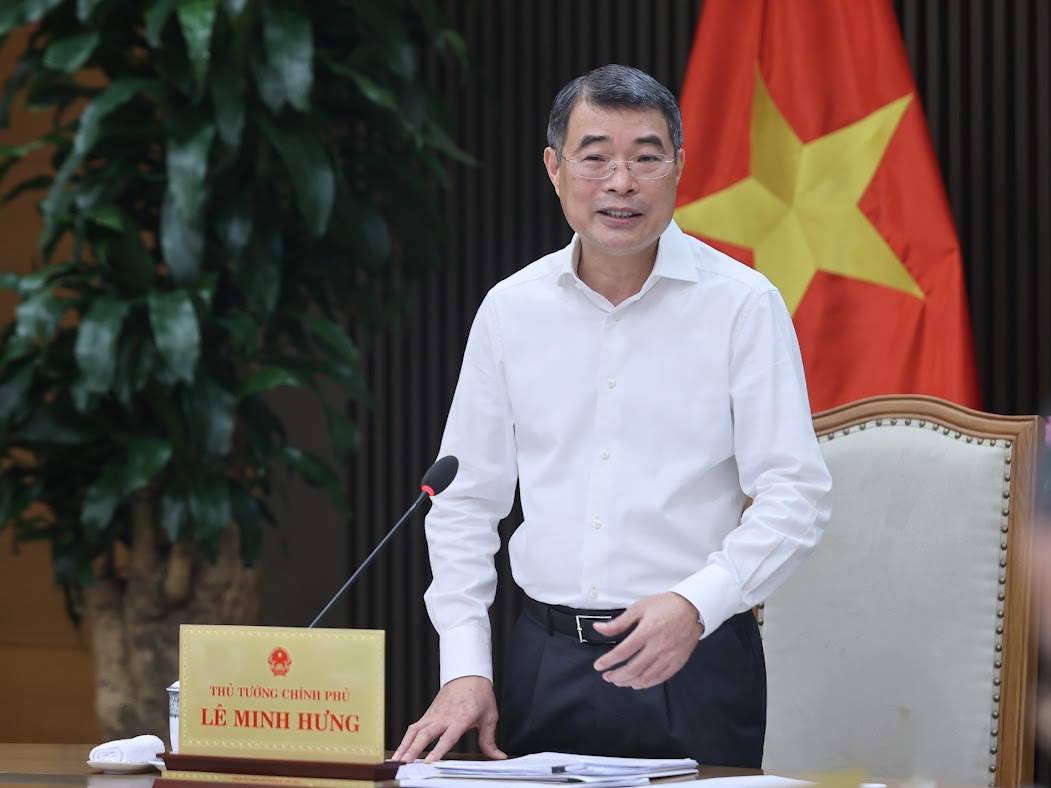 |
Prime Minister Le Minh Hung speaks at the meeting on 13/4. *Photo: VGP*
Reports presented at the meeting indicated 198 conditional business sectors and 4,603 business conditions. Central Committee Conclusion 18 mandates that ministries review and reduce 30% of these conditional sectors (approximately 60 sectors) and eliminate all unnecessary business conditions.
Additionally, regulatory bodies must reduce the implementation time and administrative compliance costs for citizens and businesses by 50%. Ministries are also tasked with enhancing decentralization, ensuring that they directly manage no more than 30% of the total administrative procedures under their purview.
The Prime Minister will assign Deputy Prime Ministers, along with the Ministry of Justice, the Ministry of Public Security, the Ministry of Home Affairs, and the Government Office, to collaborate directly with ministries on plans to reform and reduce administrative procedures, conditional business conditions, and sectors.
Government leaders also tasked the Ministry of Justice, the Ministry of Public Security, the Ministry of Home Affairs, and the Government Office with proposing specific procedures and conditions for reduction. They are also to identify areas for increased application of new technology and digital transformation to benefit citizens and businesses. Ministers must personally oversee a thorough review of administrative procedures under their authority, making them easier for citizens and businesses to understand and execute.
"Unnecessary business conditions must be cut, but other conditions also require review," he stated. The Prime Minister emphasized that while the number of reductions is important, the core essence and inherent content of the conditions are even more critical. Consequently, the reform must "genuinely reduce compliance time and costs."
The Prime Minister instructed the Ministry of Justice and the Government Office to act as effective "gatekeepers," strictly controlling administrative procedures and business conditions. They will be held accountable for any non-compliant regulations that are overlooked. Throughout the simplification process, agencies must actively solicit and incorporate recommendations from businesses and associations.
Furthermore, ministries must finalize databases and restructure processes to maximize data and information reuse in administrative procedure resolution. This means citizens and businesses will only need to provide information once, with officials then retrieving necessary details from existing databases.
By Phuong Dung