The Ministry of Industry and Trade is proposing significant changes to petroleum price regulation in its draft Decree on petroleum business. The new mechanism suggests that businesses will calculate and determine their selling prices independently, moving away from the current system where the State announces maximum price levels every 7 days. While this shift is intended to enhance market dynamics, it has sparked consumer concern that fuel prices might "increase quickly, decrease slowly", failing to reflect input cost fluctuations.
To mitigate potential price manipulation, the draft Decree includes requirements for businesses to declare all price components and provide explanations for each adjustment. Ms. Nguyen Thuy Hien, Deputy Director of the Domestic Market Management and Development Agency under the Ministry of Industry and Trade, explained this during a press conference on 7/10. This declaration process will utilize a centralized price database system, enabling regulatory agencies to closely monitor price movements by each petroleum business.
According to Ms. Hien, the data monitoring system will specifically flag abnormal changes in retail prices or input cost components. This information will then be promptly forwarded to the Department of Industry and Trade and market management forces for immediate inspection and supervision. Businesses will be required to justify their price adjustments based on factors such as changes in input costs, operating expenses, or profit margins. The State will continue to maintain standardized cost elements within the price calculation formula and reserves the right to implement stabilization measures when deemed necessary.
Addressing proposals to limit the margin and frequency of price adjustments, Ms. Hien clarified the complexities involved. She noted that petroleum is imported in various batches, each with different timings and acquisition costs, which are then commingled in storage tanks. Consequently, enforcing price changes that correspond precisely to each individual batch or react instantaneously to global price fluctuations is impractical.
Ms. Hien emphasized that the new mechanism must ensure selling prices accurately reflect market signals, fostering an environment where businesses can proactively operate, compete, and consistently maintain supply. The Ministry of Industry and Trade is committed to reviewing all feedback to refine these regulations.
 |
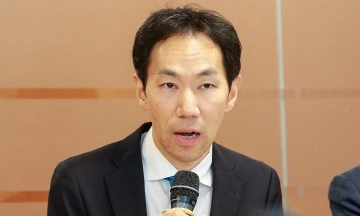
Ms. Nguyen Thuy Hien, Deputy Director of the Domestic Market Management and Development Agency (Ministry of Industry and Trade), speaking at a press conference on 7/10. Photo: Moit
A key concern among retail businesses is the potential for wholesalers to dominate selling prices once granted greater autonomy. However, Ms. Hien assured that the draft allows both wholesalers and independent distribution businesses, not affiliated with a specific wholesaler's system, the right to set their own prices. This aims to reduce intermediary levels from three to two, potentially enabling over 10,500 businesses to adopt new distribution models and determine their prices. This restructuring is designed to promote competition and limit the capacity of a select group of wholesalers to control the market.
To further prevent anti-competitive practices, the Ministry has incorporated regulations to address agreements that restrict competition, in accordance with the Law on Competition.
Beyond the pricing framework, the draft Decree introduces a new requirement for wholesalers to maintain a minimum total petroleum supply of 300,000 cubic meters or tons annually, a measure slated for implementation from 2027. Businesses failing to meet this threshold for two consecutive years risk having their licenses revoked. Ms. Hien indicated that over half of current wholesalers already meet this requirement. She also stressed that this does not imply immediate market exclusion for the remaining entities, as they will have time to invest in and expand their distribution systems to comply with the new conditions. The Ministry of Industry and Trade states that elevating the total supply requirement aims to restructure the wholesale system, enhance overall supply capacity, and strengthen energy security.
Regarding petroleum supply for the remaining months of the year, Ms. Hien highlighted that ongoing conflicts in the Middle East and Ukraine continue to cause unpredictable fluctuations in the international oil market. The Ministry has developed various response scenarios and is closely monitoring import volumes, domestic production, and business inventories. Currently, inventory levels at refineries are high. Based on an assessment of the overall supply balance, the Ministry projects that "domestic petroleum supply will largely meet demand" through the end of this year.
The draft Decree on petroleum business has been under development for approximately two years, undergoing 4 rounds of feedback from Government members. Following a consultation conference with businesses at the end of September, the Ministry of Industry and Trade continued to refine the draft and expects to submit it to the Government on 7/10.
Phuong Dung