NetZero Pallet, a bio-pallet brand under AirX Carbon, was established in 2022. It specializes in producing recycled products from agricultural byproducts. NetZero Pallet products are manufactured in Binh Duong using a heat-pressing process that combines plant fibers with recycled polymers.
According to the company, as of Q3/2025, exports accounted for 57% of NetZero Pallet's total sales volume. Key markets include Australia, the United States, the EU, Japan, South Korea, and South Asia. The Australia-New Zealand region alone represents 28% of production, equivalent to 24,000-26,000 pallets annually. The United States accounts for 22%, the EU for 19%, Japan and South Korea for about 14%, South Asia for 9%, and Southeast Asia for 8%.
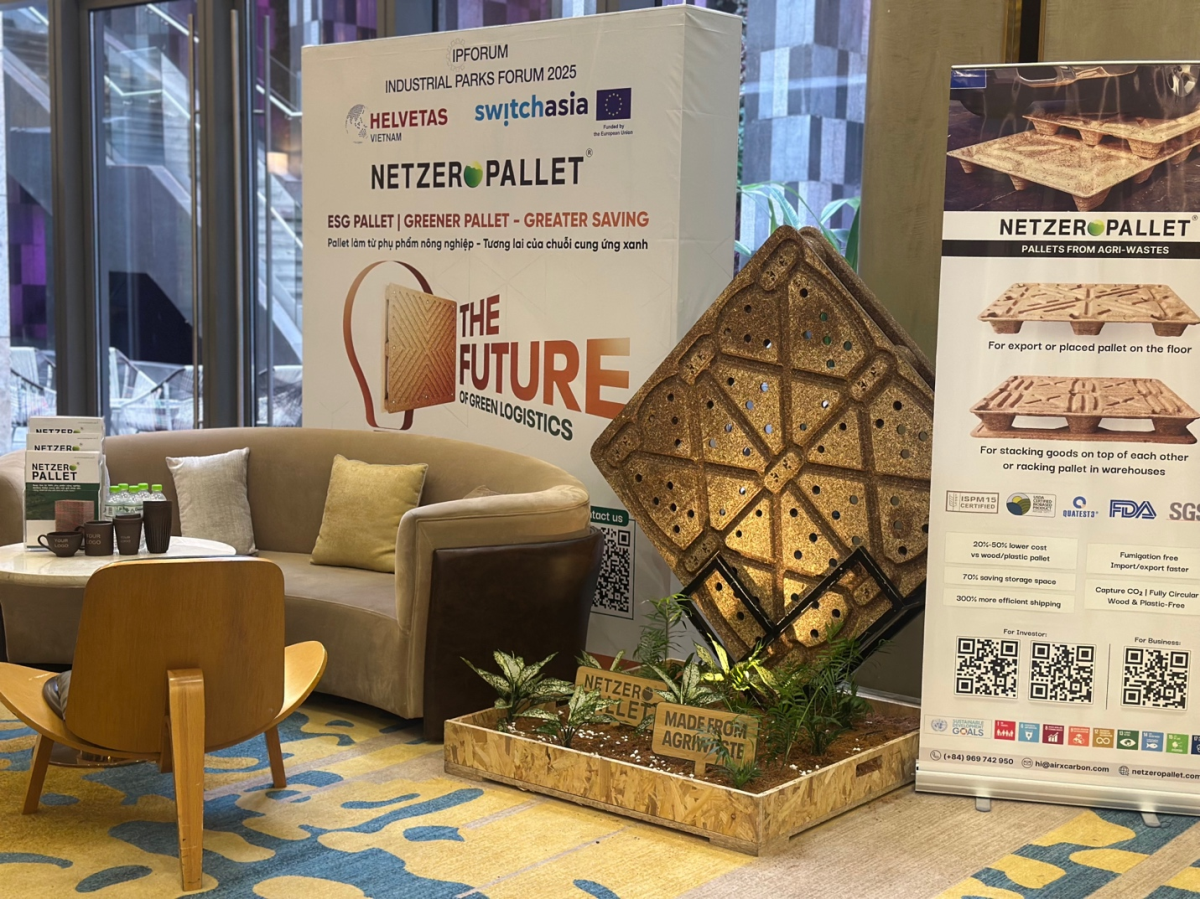 |
NetZero Pallet products displayed at an exhibition event. *Photo: AirX Carbon* |
The growth in AirX Carbon's exports is driven by global trends and policies. These include restrictions on natural wood logging, efforts to reduce single-use pallets, and strict regulations on sustainable packaging in developed markets. According to a report by the United Nations Conference on Trade and Development (UNCTAD), demand for environmentally friendly packaging materials is rapidly increasing in developed economies as many countries tighten regulations on emissions and plastic packaging. This situation creates opportunities for companies developing bio-based materials, such as AirX Carbon.
A company representative stated that NetZero Pallet has been supplied to over 120 domestic and international customers, including small and medium-sized enterprises (SMEs) and global corporations. The products are available in Australia, the United States, the European Union, Japan, South Korea, India, and Thailand, meeting the quarantine, shipping safety, and environmental standards of each import market.
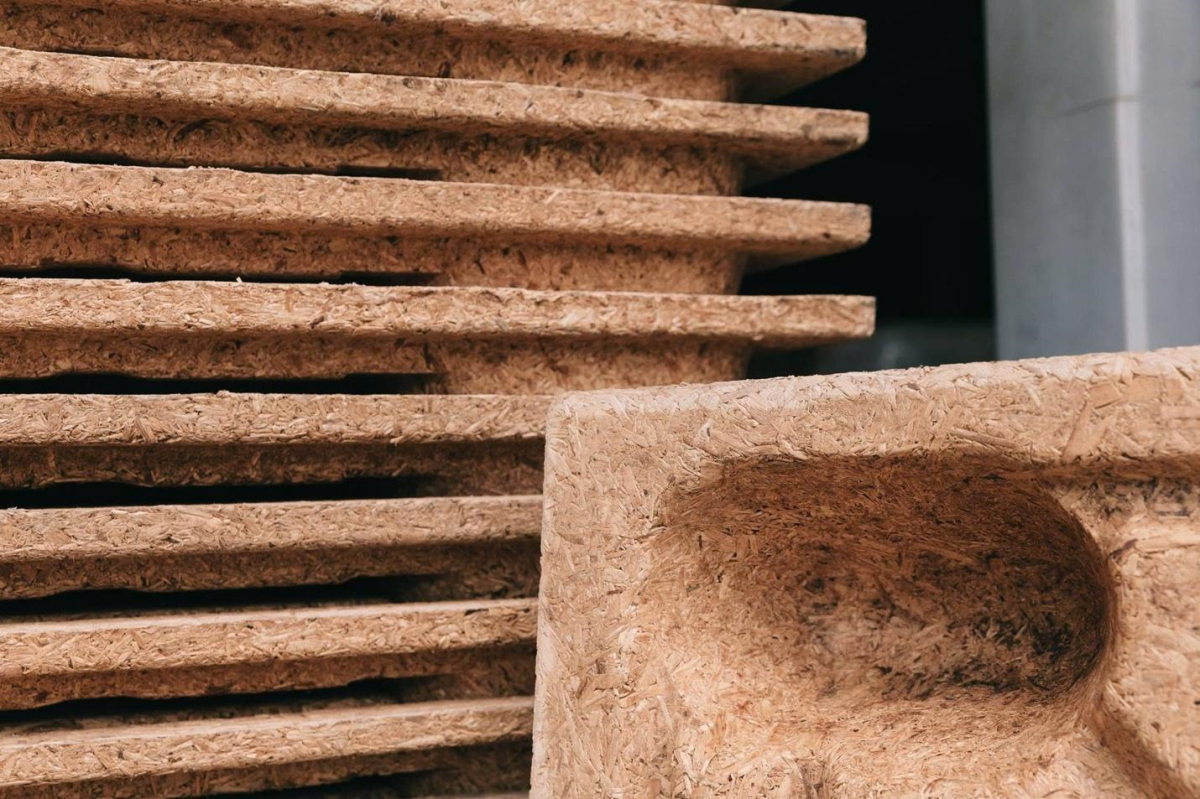 |
A close-up of a coconut fiber product manufactured by NetZero Pallet. *Photo: AirX Carbon* |
The production process, which uses plant fibers combined with recycled polymers, helps reduce the demand for virgin wood and plastic. According to the Institute of Strategy and Policy on Natural Resources and Environment (Isponre), replacing traditional pallets with recycled materials can reduce CO2 emissions in the logistics chain by up to 60%. For 2026, NetZero Pallet aims to expand research and application of new raw materials derived from hard-to-degrade plastics. This initiative seeks to transform environmental challenges into sustainable value, running parallel to its existing bio-byproduct pallet lines. Through technological innovation and multi-party collaboration, NetZero Pallet intends to extend material lifecycles and reduce environmental waste burden. Specific research findings and product directions will be announced soon.
An AirX Carbon representative expressed the company's desire to expand factory capacity and develop its export network in regions with high standards for sustainable materials, such as Europe, North America, and Northeast Asia. The company also plans to collaborate with international logistics partners to standardize the supply chain and optimize transportation costs.
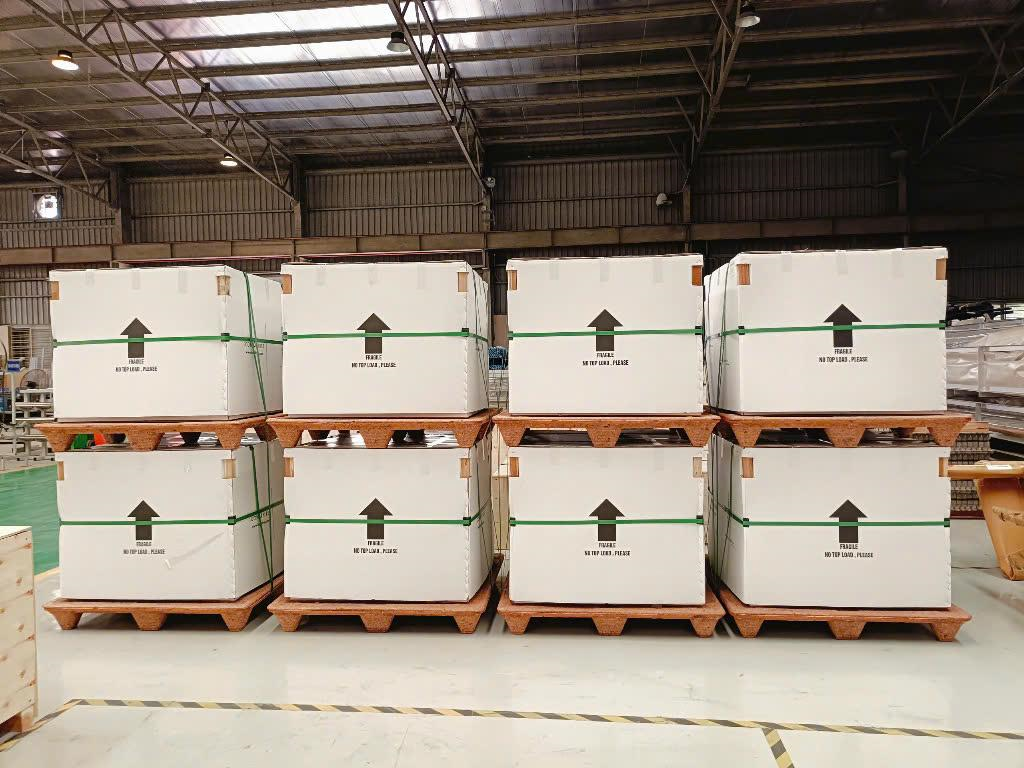 |
Bio-pallets at AirX Carbon's manufacturing plant. *Photo: AirX Carbon* |
According to Allied Market Research, the global recycled pallet market could reach a size of 22 billion USD by 2032, with an average annual growth of 9,3%. An AirX Carbon representative noted that deeper participation by Vietnamese businesses in the green pallet supply chain will not only boost exports but also contribute to achieving the national sustainable logistics development goals by 2050.
Thai Anh