According to Energy Capital & Power, a global energy investment platform, the efficient deployment of offshore oil and gas projects increasingly depends on onshore logistics systems. These include specially built coastal bases and specific ports capable of supporting complex offshore operations.
Key examples include Guyana, Trinidad and Tobago, and Suriname. Guyana is currently among the fastest-growing offshore oil producers globally. The U.S. Energy Information Administration reports that the country's oil output has increased nearly 10 times since 2020, projected to reach an average of about 750,000 barrels per day by 2025.
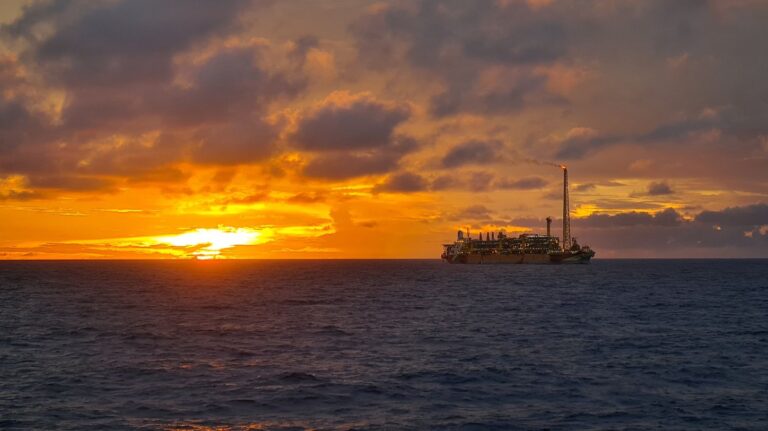 |
An offshore oil and gas facility in the Caribbean Sea, where energy activity is driving demand for onshore logistics infrastructure development. Logistics Manager
This significant increase is supported by specialized logistics infrastructure. This includes the USD 300 million Vreed-en-Hoop shore base, operational from early 2025, alongside facilities managed by Guyana Shore Base. These centers offer services ranging from pipeline storage and drilling fluid management to vessel support and customs procedures, helping operators shorten turnaround times and maintain continuous offshore operations.
In Trinidad and Tobago, Galeota Point has long served as a logistics pillar for offshore oil and gas activities in the southern Caribbean. Energy Capital & Power notes that Galeota functions as a supply base for offshore gas drilling campaigns, supporting production and maintenance. This illustrates the role of logistics hubs in underpinning exploration and production development, while also supporting overall energy infrastructure.
In Suriname, where large-scale offshore oil and gas discoveries are nearing the development phase, logistics infrastructure has "been adjusted early to meet the demands of exploration and production activities," according to Energy Capital & Power. Port facilities in the capital, Paramaribo, have signed long-term contracts to support offshore operations, while specialized supply base projects like ComPort NV are positioned to serve drilling and production efforts. Simultaneously, logistics businesses, including DP World Paramaribo, are expanding integrated services tailored for the oil and gas sector as Suriname approaches its first commercial production milestone.
Energy Capital & Power suggests these examples highlight a core reality: efficient offshore exploration and production cannot operate without well-designed onshore support systems. In deepwater environments, where each day of disruption can result in millions of USD in losses, the geographical proximity, reliability, and operational readiness of logistics centers directly impact a project's economic viability.
These topics are expected to be discussed in depth at the upcoming Caribbean Energy Week, scheduled for 31/3 - 1/4.
By Nhu Y (According to Logistics Manager)