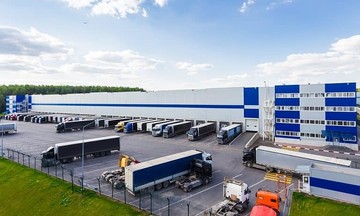
The program is being implemented in Texas, a region identified for its high optimization potential due to a low beverage market share but a strong presence in snacks. This allows the company to leverage shared warehouse infrastructure and distribution points for both segments.
This initiative marks a departure from previous operations, where the two business segments maintained separate warehousing and distribution systems. According to company leadership, significant investment in data and technology has enabled PepsiCo to integrate its warehouses. This integration optimizes delivery routes, reduces logistics costs, and enhances order fulfillment efficiency.
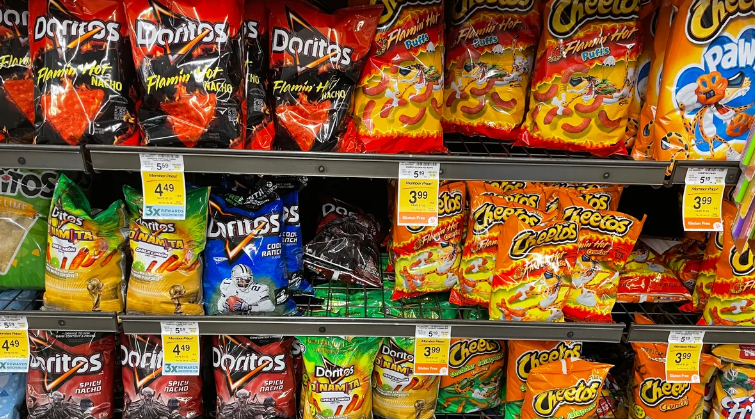 |
Some Frito-Lay products (part of PepsiCo) displayed in a store. Photo: *Supply Chain Dive* |
Chairman and CEO Ramon Laguarta explained that Texas was selected as the test site because it represents a market where PepsiCo has a low beverage market share but a high proportion of snack sales. "When we combine the two segments into one warehouse and serve customers from a single distribution point, we observe clear benefits," Laguarta stated during an earnings call on 9/10. "We are still experimenting and continue to learn in Texas."
This project is a key component of PepsiCo's "One North America" strategy, which focuses on reducing costs, improving profit margins, and driving growth. Following the trial period, the company will assess the model's potential for expansion across the United States. PepsiCo leadership indicated that the final solution will not be uniformly applied but will be tailored based on market size, the market share of each segment, and population distribution in each region.
A slowdown in consumer spending and shifts in eating habits are compelling food manufacturers to adjust production plans and cost structures. Concurrent with the announcement of the warehouse consolidation trial in Texas, PepsiCo further announced the closure of two Frito-Lay facilities in Orlando, Florida: one plant and an on-site warehouse on 4/11, and an off-site warehouse on 9/5/2026.
Laguarta emphasized that PepsiCo is preparing for "future demand, not past demand," as the market increasingly concentrates on a few large retailers, and consumers are rapidly shifting towards pickup, delivery, and digital shopping methods.
By Ngoc Minh (Source: *Supply Chain Dive*)