In Directive 09 issued on 19/3, Prime Minister Pham Minh Chinh assessed that military conflict and geopolitical tensions directly impact the supply of oil, gas, and coal, increasing risks to Vietnam's energy security.
To mitigate these risks, the Prime Minister has directed ministries, sectors, and localities to accelerate the transition to electric vehicles and develop essential charging infrastructure. Authorities are tasked with researching incentive mechanisms to encourage the production and use of electric vehicles, gradually converting public and official transport vehicles to this energy source.
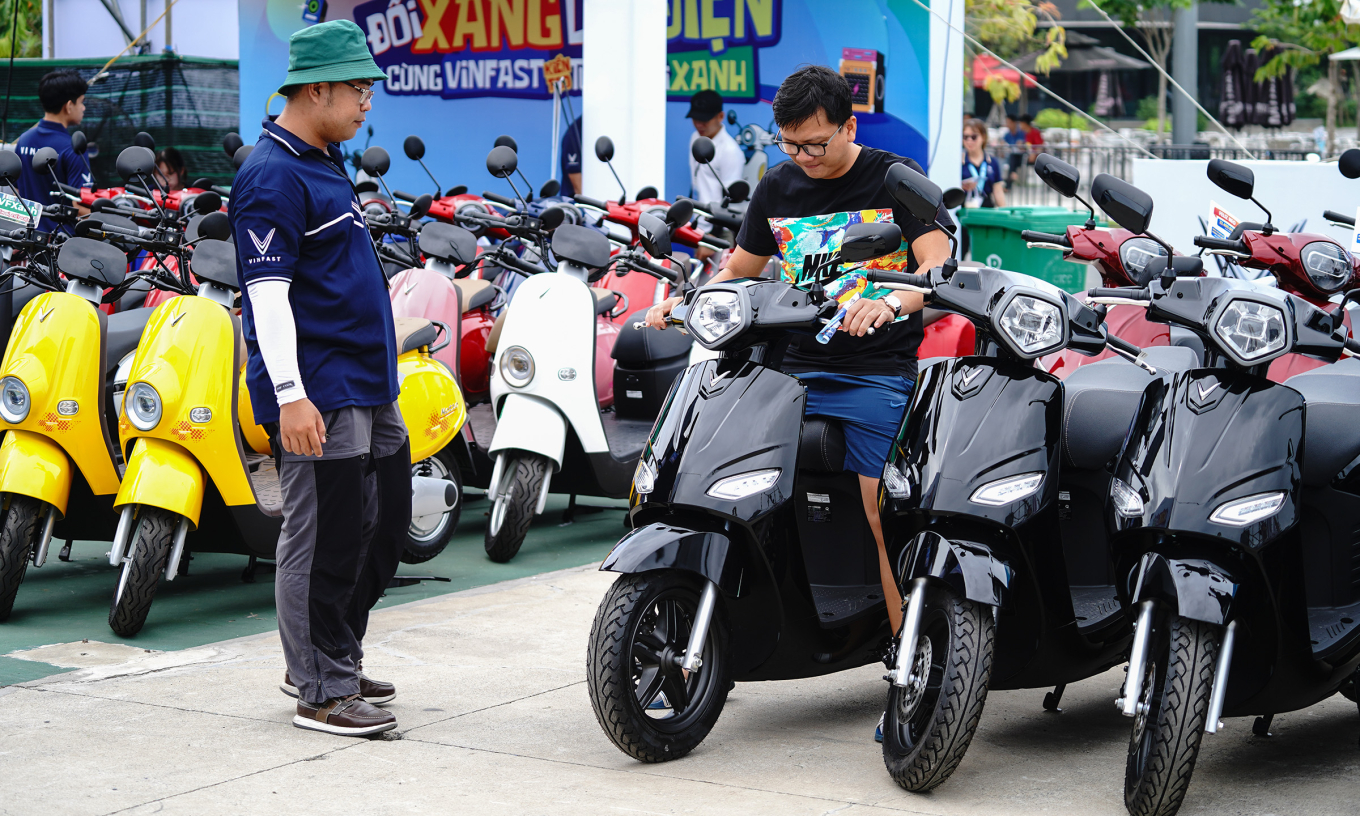 |
People explore electric motorcycles at an event in TP HCM in 7/2025. Photo: Quoc Huy
The Prime Minister has assigned specific responsibilities to key ministries. The Ministry of Industry and Trade is tasked with developing energy-saving scenarios and implementing energy efficiency solutions in transportation, focusing on electric vehicle transition and clean fuels.
The Ministry of Construction is directed to encourage urban development and parking projects that integrate electric vehicle charging infrastructure. Additionally, the Ministry will collaborate with provinces and cities to promote electric public transport systems in major urban areas. These efforts aim to reduce the demand for private vehicles and, consequently, the consumption of gasoline and oil. Concurrently, the Ministry of Finance is instructed to research incentive mechanisms for electric vehicle production and use, along with preferential policies for energy-saving projects. These initiatives are slated for completion in June.
Furthermore, regulations concerning the management, recovery, and recycling of electric vehicle batteries and related waste must be finalized in Q3. This measure is crucial for ensuring the sustainable development of electric vehicles.
The Prime Minister emphasized that efficient energy use is a top solution for minimizing supply risks and robustly ensuring national energy security.
In related efforts, on March 9, the Ministry of Industry and Trade also encouraged businesses to allow employees to work remotely. Similarly, the International Energy Agency (IEA) recently advised governments and businesses to permit remote work and limit air travel to save fuel and reduce pressure on the energy market.
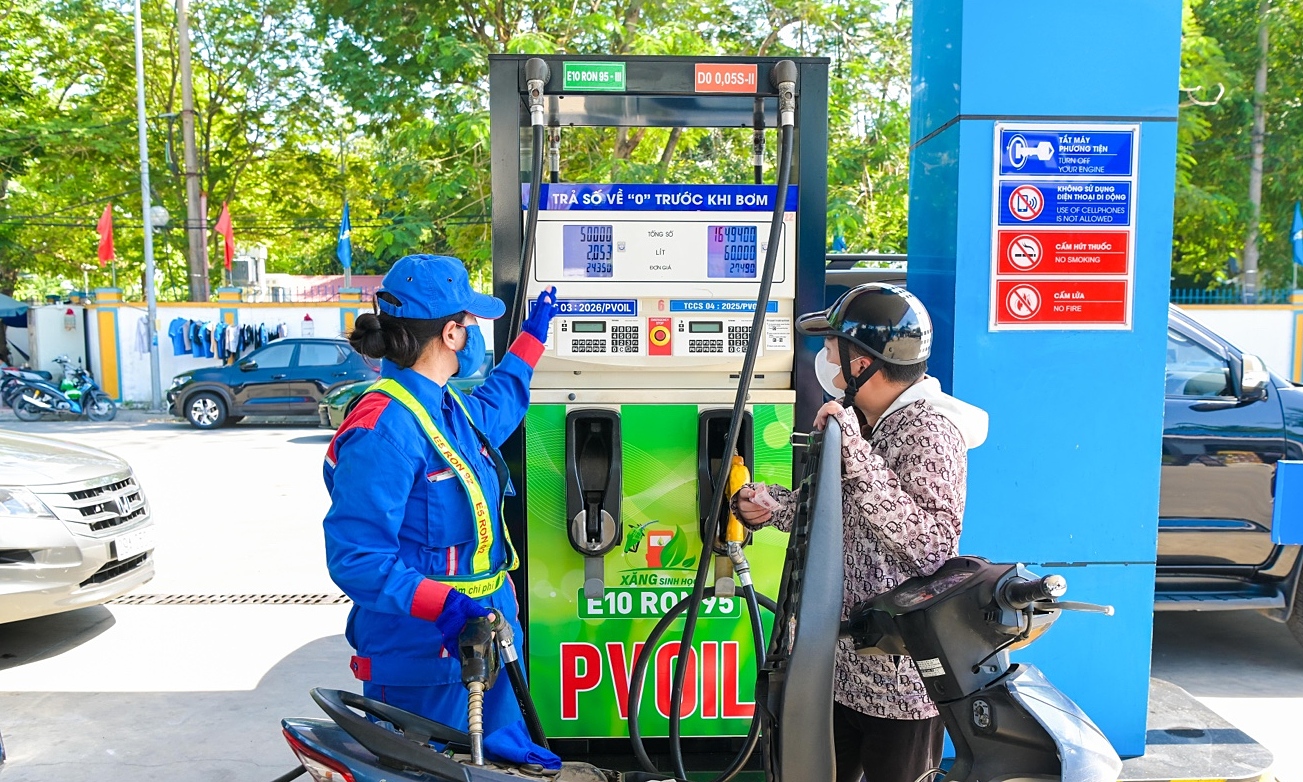
Regarding E10 biofuel, the Prime Minister has instructed the Ministry of Industry and Trade to review the conditions for transitioning to this fuel in April, two months ahead of schedule. This move is expected to contribute to a 10% reduction in fossil gasoline consumption.
Thuy Truong