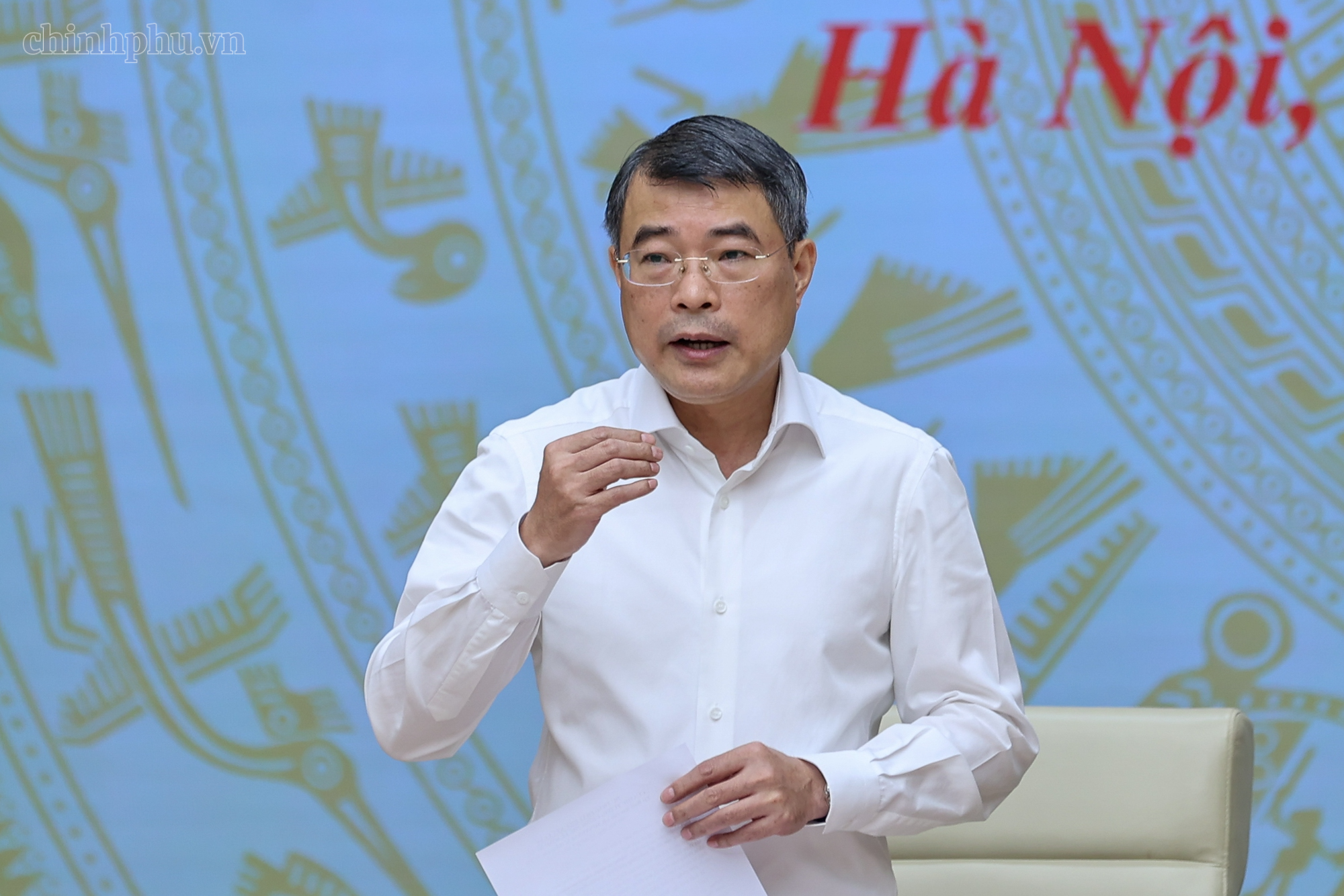
Prime Minister Le Minh Hung issued the request during a working session with the State Bank of Vietnam and credit institutions on 13/8.
The Prime Minister noted that the government's recent macroeconomic management primarily involved fiscal policies, such as reducing and deferring taxes and fees. The government also streamlined procedures, shortened implementation times, and lowered compliance costs for people and businesses, including banks. This approach aimed to avoid adding pressure on the State Bank of Vietnam and the banking system regarding credit and interest rates.
Therefore, the Prime Minister stated that the banking system needs to demonstrate "greater responsibility and decisiveness" in mobilizing resources for growth while maintaining macroeconomic stability. The sector must also share responsibility with people and businesses by stabilizing and reducing lending rates, directing credit to appropriate sectors, and controlling risks.
"Credit institutions must continue to cut costs, stabilize interest rates, and substantially reduce lending rates", the Prime Minister said. He directed the State Bank of Vietnam to maintain operating interest rates and increase market liquidity. This aims to help credit institutions access capital at lower costs, enabling them to reduce their lending rates.
Regarding credit, the Prime Minister instructed the State Bank of Vietnam to manage growth in line with the 2026 target but not to treat it as a "rigid ceiling" at all times. Policy needs flexibility based on actual developments, ensuring capital reaches the correct sectors, times, recipients, and purposes at reasonable costs.
Capital flows are required to focus on production, exports, high technology, supporting industries, agriculture, innovation, social housing, rental housing, essential infrastructure, important national key projects, and priority sectors that drive growth.
 |
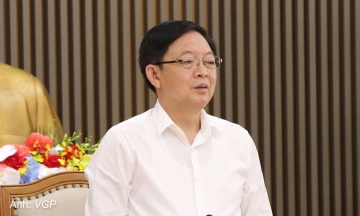
Prime Minister Le Minh Hung speaking at a meeting with banks on 13/8. *Photo: VGP*
Vietnam aims for double-digit growth in the upcoming period to become a high-income country by 2045. The Prime Minister emphasized that achieving high, sustainable growth over many years requires strengthening macroeconomic stability. Therefore, the State Bank of Vietnam needs to regularly quantify and assess the "equilibrium point" between inflation control and growth support.
Based on this, the regulator must update specific scenarios for each tool, such as interest rates, exchange rates, money supply, liquidity, and credit. It needs to identify warning thresholds and ensure timely policy responses. The intensity and timing of using monetary tools also require flexibility based on actual developments.
In addition to interest rates and credit, the State Bank of Vietnam needs to manage exchange rates flexibly, intervening in the market when necessary to stabilize foreign currency and continue tight management of the gold market.
He also called on the banking sector to improve access to capital for businesses, especially small and medium-sized enterprises (SMEs). He urged them to innovate inspection and supervision methods, focusing on early and remote monitoring and risk warnings. Violations related to ownership, credit granting, loan capital management, and operational safety regulations must be handled strictly.
According to the Prime Minister, credit institutions need to enhance their governance, risk management, internal control, and financial capacity. The government also requested an increase in charter capital for state-owned commercial banks.
The Prime Minister assessed the monetary and banking system as the "lifeblood of the economy", playing a crucial role in macroeconomic stability, inflation control, and growth promotion. In the new phase, the banking sector needs to expand in scale while becoming safer and more efficient.
"Scale must go hand-in-hand with quality, credit growth with risk control, digital transformation with data security, and international integration with governance capacity according to international standards", the Prime Minister stated.
Phuong Dung