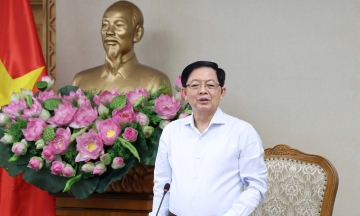
Speaking at a conference with the business community on 27/3, Prime Minister Pham Minh Chinh outlined Vietnam's ambitious economic goals. The nation aims for double-digit economic growth from 2026 to 2030, with the ultimate objective of becoming a high-income developed nation by 2045. To achieve this, the prime minister emphasized that "businesses must be the central driving force for development, and there is a need to establish regional and global-scale corporations." He further suggested that solutions are crucial to enable household businesses to transform into enterprises, and small and medium-sized enterprises to grow into large companies, global, and transnational corporations.
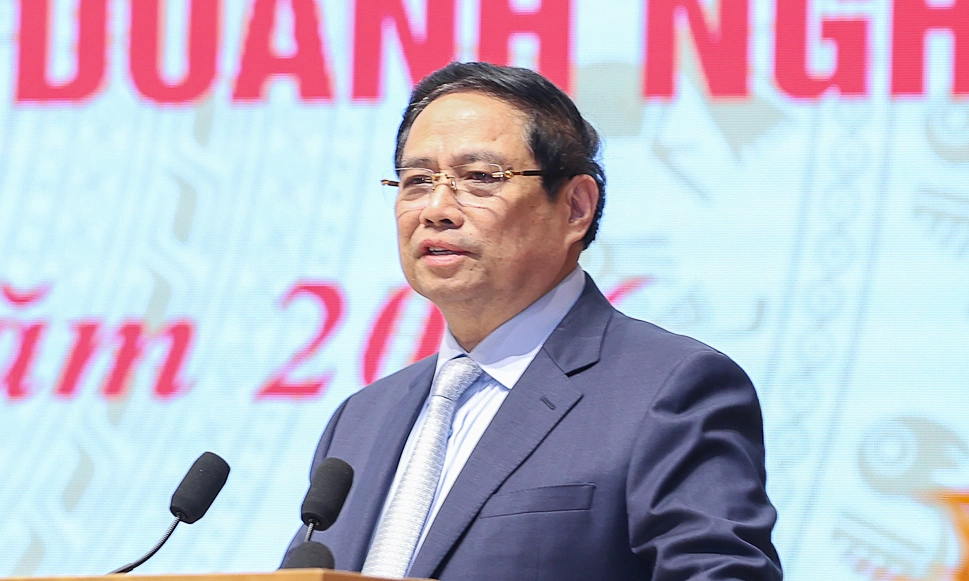 |
Prime Minister Pham Minh Chinh speaking at the business conference, 27/3. Photo: VGP |
Vietnam's business landscape shows significant growth. According to a Ministry of Finance report, the country had over 1 million active businesses by the end of 2025, marking an increase of more than 25% compared to five years prior. Additionally, nearly 298,000 new businesses were established or resumed operations nationwide. Following the issuance of Resolution 68 on private economic development in 5/2025, an average of 18,000 new businesses are established each month, a 38% increase compared to the average of the four preceding months. Currently, the business sector contributes approximately 60% of the GDP, provides employment for over 16 million workers, and accounts for the majority of Vietnam's total import-export turnover.
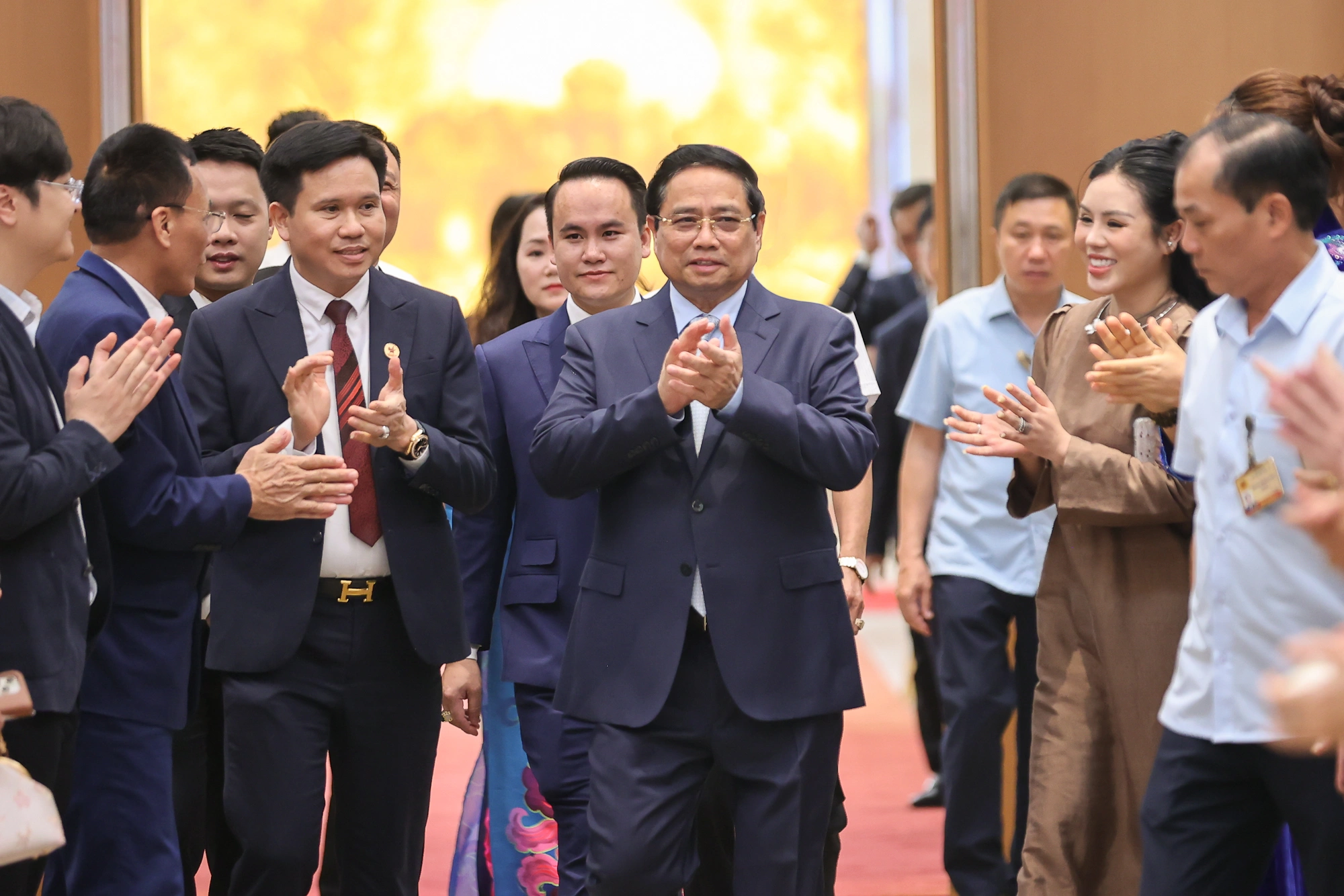 |
Prime Minister Pham Minh Chinh with business leaders attending the conference, 27/3. Photo: VGP |
Experts underscore the importance of global expansion for Vietnam's sustained growth. Truong Gia Binh, Chairman of FPT, asserted that no nation can sustain high long-term growth by ignoring international markets. He urged Vietnamese businesses to bravely expand globally, seek new opportunities, and promote an innovative spirit. Concurring with this view, Tao Duc Thang, Chairman and General Director of Viettel, stated that Vietnam's rising national standing presents a significant opportunity for businesses to confidently expand globally. According to Thang, Vietnam should view expanding its economic presence abroad as a growth pillar. He explained that international investment involves organizing the economy in a two-way manner: both reaching outward and attracting global resources.
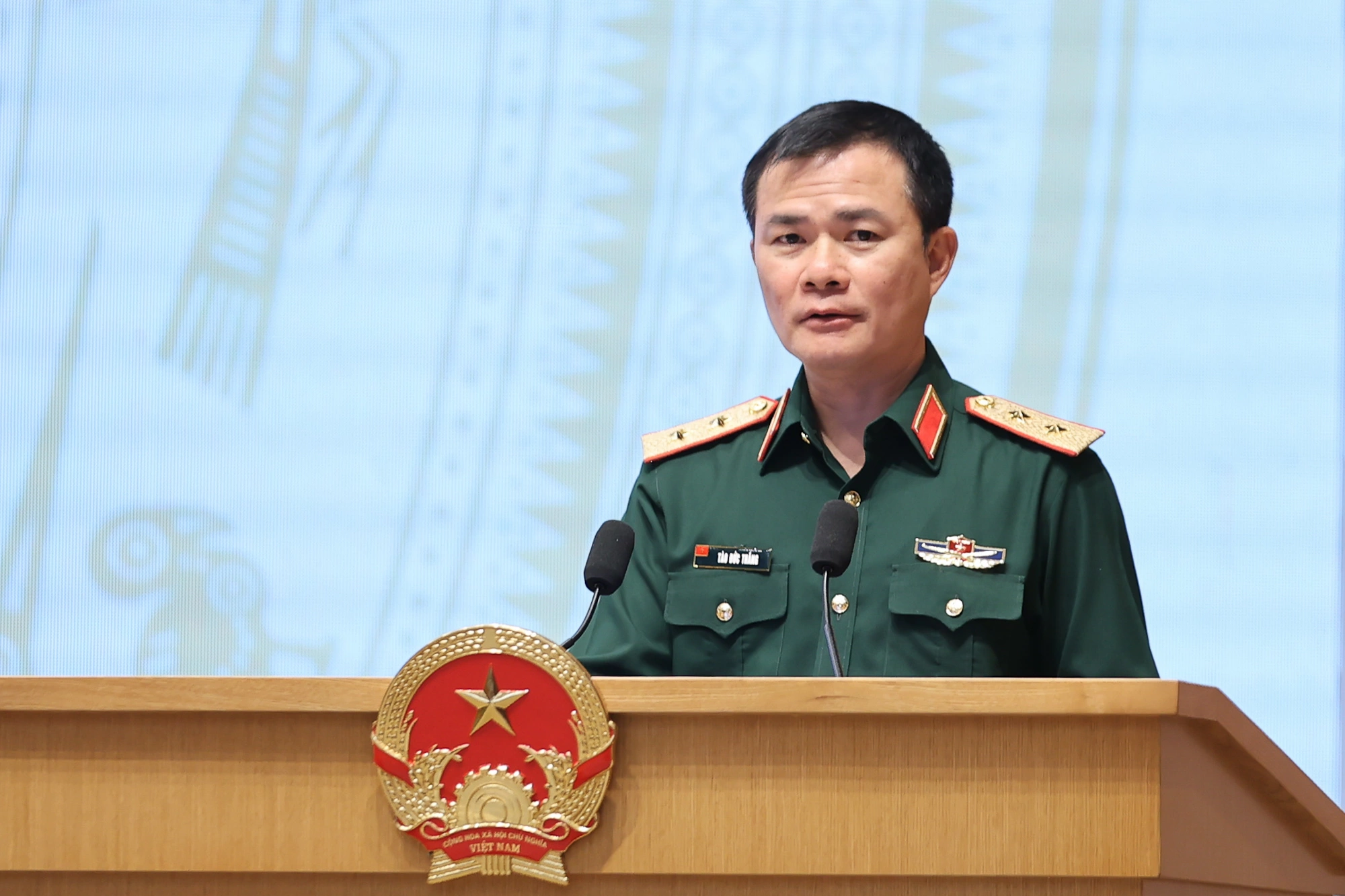 |
Tao Duc Thang, Chairman and General Director of Viettel Group, speaking at the conference. Photo: VGP |
Regarding strategy, Thang noted that Vietnam should target developing markets in ASEAN, South Asia, the Middle East, Africa, and Latin America due to compatible capabilities. Key focus areas should include strategic infrastructure, high-tech industry, and high-value services, leveraging the advantages of an adaptable workforce and reasonable costs. He also suggested that key economic groups should be structured to lead other businesses in participating along value chains, a model proven successful in Japan and South Korea, and currently implemented on a large scale by China.
Business representatives collectively acknowledged the need for a national-level approach from policymakers. Viettel Chairman Tao Duc Thang cited international experience, noting that many countries have established systematic and effective organizations and tools to support businesses investing abroad, such as: Japan with Jetro and Jica, South Korea with Kotra and Koica, and China with its Belt and Road strategy. He added, "Without establishing a national-level organizational structure, Vietnamese businesses will continue to operate individually and find it challenging to build global competitiveness."
Phuong Dung