Deputy Chief Cabinet Secretary Masanao Ozaki announced that the cabinet approved an expenditure of 513,5 billion yen (3,2 billion USD) at today's meeting. This funding is intended to help families cover their electricity and gas bills for the July-September period.
This decision follows Prime Minister Sanae Takaichi's announcement a day earlier of a plan to allocate an additional 19 billion USD from the budget to tackle surging prices across various products. The 3 billion USD subsidy will be drawn from the reserve fund within the current fiscal budget.
Ozaki noted that while electricity and gas bills are unlikely to see sharp increases in May and June, imported fuel prices are projected to rise afterward, potentially driving up electricity and gas costs. "Even with the uncertain situation in the Middle East, we will do our utmost to ensure no further disruption to people's daily lives and economic activities," he stated.
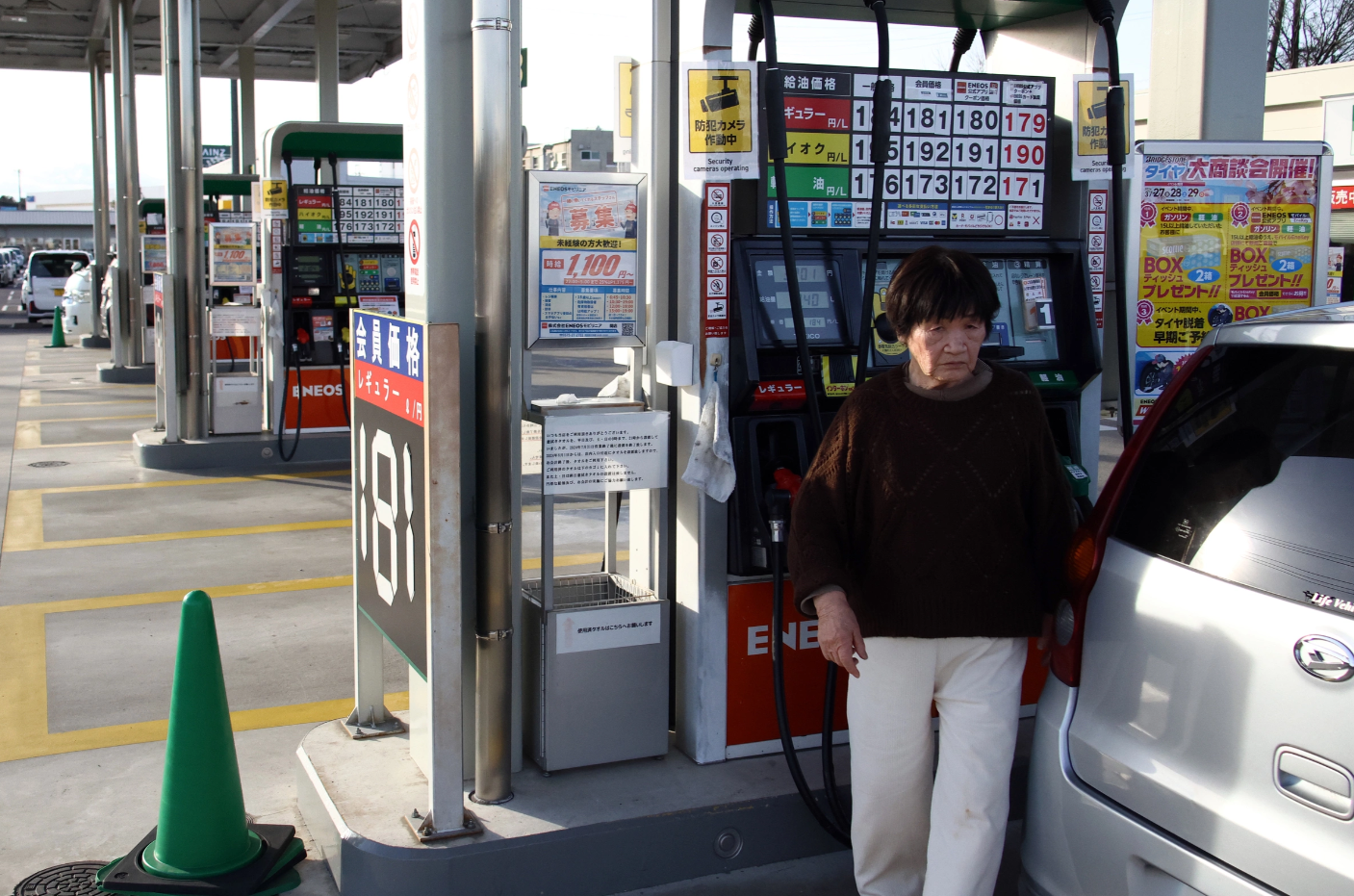 |
A woman refuels her car in Chuo, Tokyo, Japan, on 15/3. Photo: *Reuters*
Like many other Asian nations, Japan is heavily dependent on imported fuel from the Middle East. The blockade of the Strait of Hormuz since late February has disrupted 20% of the global crude oil and liquefied natural gas (LNG) supply. The Middle East alone accounts for 95% of Japan's imported oil. In March, gasoline prices in the country reached a record 190,8 yen (1,2 USD) per liter.
Consequently, the nation has implemented various policies to mitigate the conflict's impact on supply and commodity prices. Since mid-March, the Japanese government has reinstated gasoline price subsidies, projecting monthly expenditures of hundreds of billions of yen to keep retail prices around 170 yen per liter.
On 25/5, Takaichi announced that the government anticipates securing a stable oil supply until next spring. Japan currently maintains one of the world's largest strategic oil reserves, exceeding 400 million barrels as of 12/2025. In mid-March, the government stated its intention to release 80 million barrels of oil, equivalent to a 45-day supply.
Ha Thu (according to *Reuters*, *AFP*)