Qatar's energy sector faces a severe blow following recent events. Saad al-Kaabi, Qatar's Energy Minister and CEO of national oil and gas corporation QatarEnergy, revealed that Iranian attacks disrupted 12,8 million tons of LNG annually, representing 17% of export capacity. This disruption translates to an estimated 20 billion USD in annual revenue loss. The full financial impact could reach 100 billion USD over the projected three to five-year restoration period for damaged production lines. Repair costs alone are estimated at 26 billion USD.
On 18/3, Iranian missiles struck QatarEnergy's Ras Laffan LNG complex, located approximately 80 km north of Doha. This facility is the world's largest LNG production site, supplying about 20% of global output. Mr. Saad al-Kaabi expressed his shock, stating, "I never imagined that Qatar and the region would suffer such an attack."
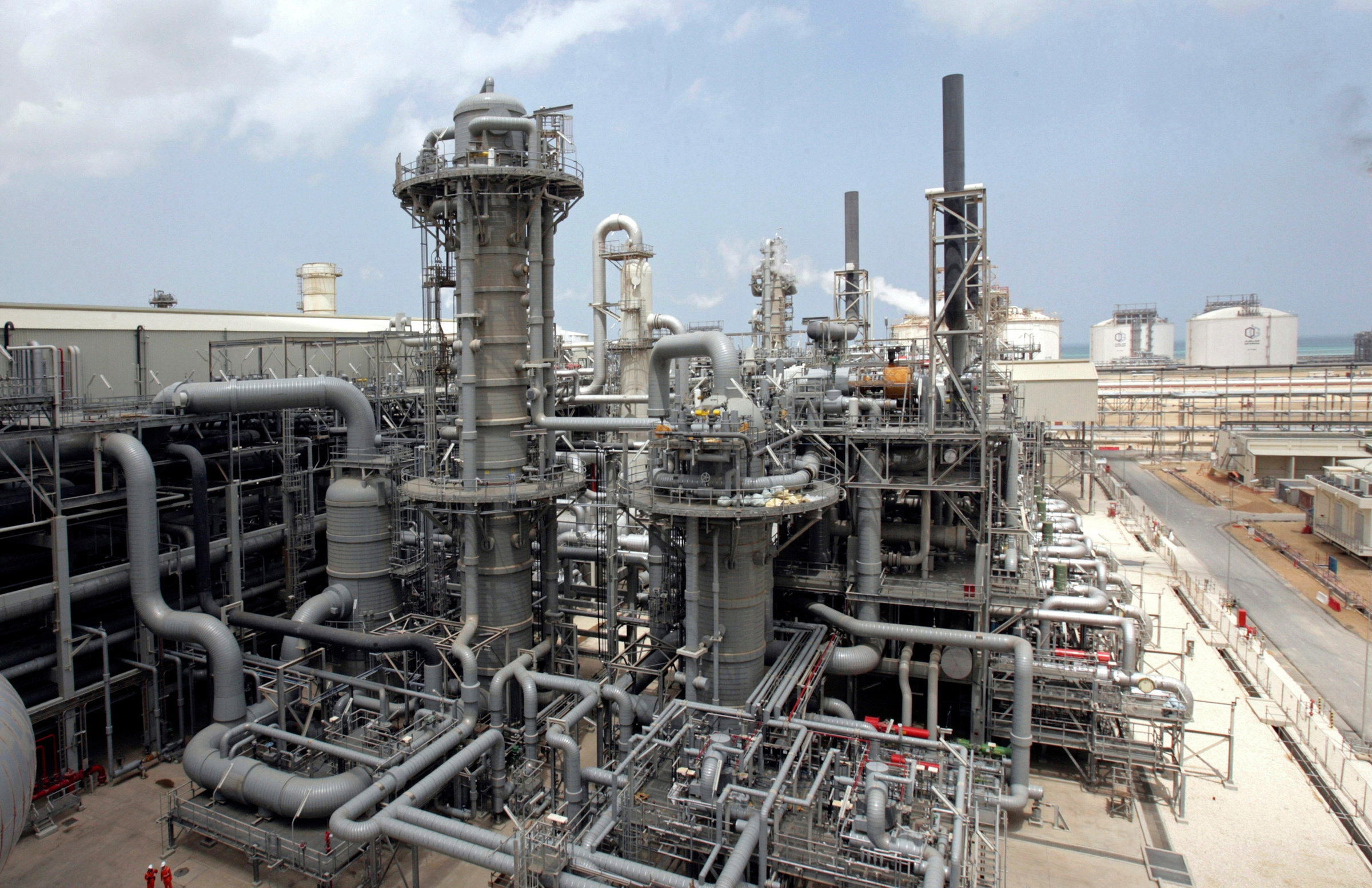 |
A view of Qatar's Ras Laffan complex. *Photo: AP*
According to Minister Saad al-Kaabi, two of the 14 LNG production lines and one of the two gas-to-liquid (GTL) facilities were damaged. ExxonMobil (US) is a partner in the two affected LNG facilities, while Shell is a partner in the attacked GTL plant.
These systems supply LNG to Italy, Belgium, South Korea, and China. Consequently, QatarEnergy declared force majeure on long-term LNG contracts for up to five years with these customers. The repercussions extend beyond LNG, with Qatar's condensate exports projected to decrease by 24%, liquefied petroleum gas (LPG) by 13%, helium by 14%, and naphtha by 6%. These losses impact various sectors, from LPG used in Indian restaurants to South Korean chip manufacturers relying on helium.
In addition, Qatar has postponed the expansion of its North Field by more than one year. Mr. Saad al-Kaabi urged all parties – whether Israel, the US, or any nation – to avoid attacking oil and gas facilities.