Speaking at a New York conference on 28/5, Neil Chapman, senior vice president of Exxon Mobil, warned that global oil inventories are nearing unprecedented lows. He projected that "in two to three weeks, inventories could drop to extremely low levels, triggering a sharp increase in oil prices." Spot Brent crude, which benchmarks over 60% of global crude trade, could then climb to USD 150-160 per barrel.
Over the past three months, existing oil inventories and strategic reserve releases have partially contained oil prices, even as conflict in the Middle East disrupted global supply. This explains why crude oil futures currently remain below USD 100 per barrel, despite the ongoing blockade of the Hormuz Strait.
US President Donald Trump has consistently indicated that an agreement to reopen Hormuz was close. Yet, this has not materialized, leading oil industry businesses and experts to issue increasingly stark warnings.
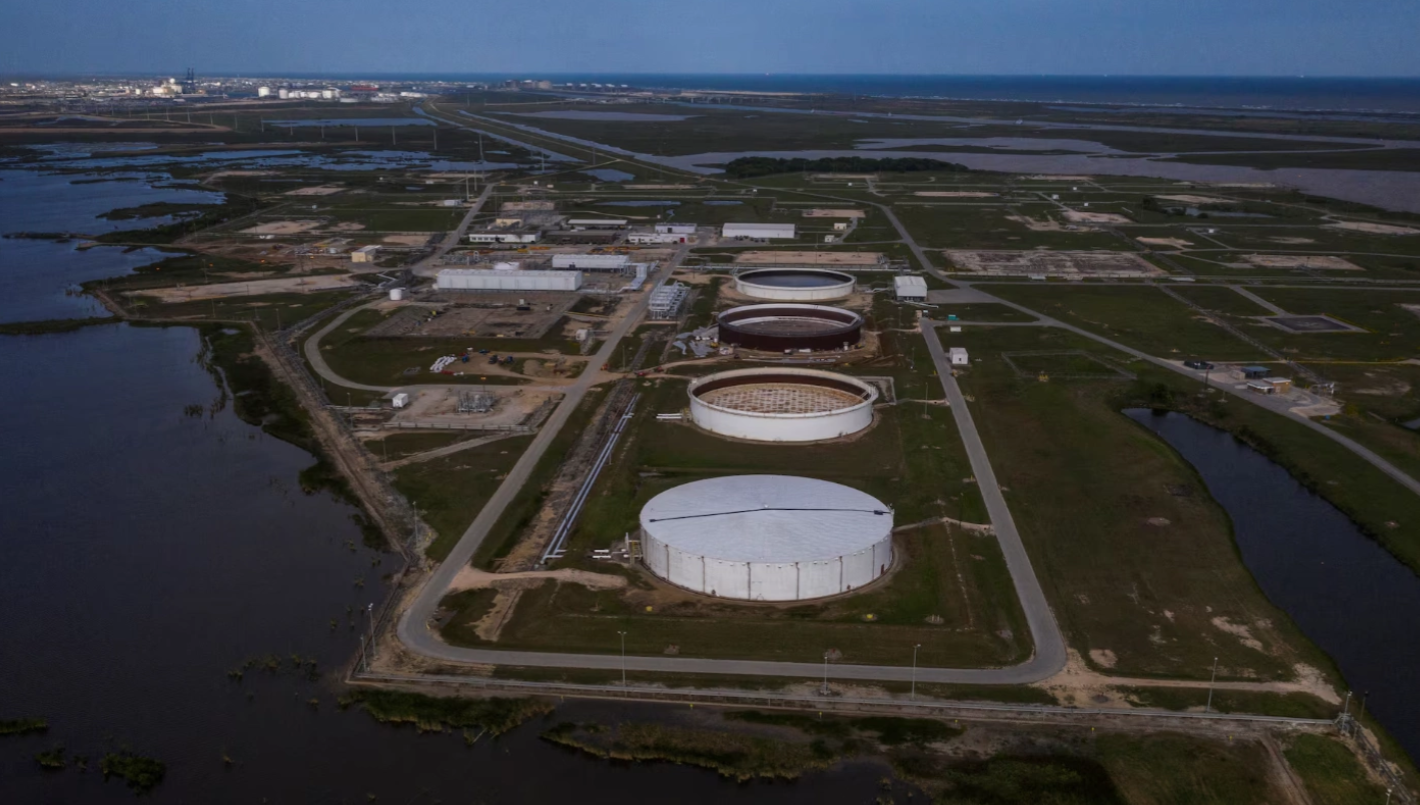 |
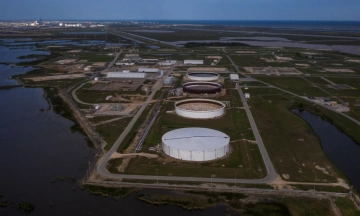
US Strategic Petroleum Reserve at Freeport, Texas in 4/2020. Photo: Reuters |
Toril Bosoni, director of the oil and markets division at the International Energy Agency (IEA), warned on 2/6 that if current depletion rates persist, global oil reserves could hit critically low levels precisely when summer fuel demand peaks.
Mehmet Beceren, vice president and senior market strategist at Rosenberg Research, explained, "As backup supplies dwindle, oil prices will have to rise more sharply to balance supply and demand. This means consumers will either pay higher prices or demand will decrease." He predicted a market turning point by late June.
JPMorgan bank forecasts that "oil prices are likely to increase rapidly in the latter half of June" if traffic through the Hormuz Strait fails to return to pre-conflict levels.
In the US, the world's largest crude oil producer, total inventories reached only 791 million barrels for the week ending 29/5. This represents the lowest level since 2/2024, according to the US Energy Information Administration (EIA). US oil inventories have decreased by nearly 64 million barrels since the conflict began, marking eight consecutive weeks of decline.
IEA member countries plan for the US to release 172 million barrels from its Strategic Petroleum Reserve (SPR). Collectively, IEA nations will sell a record 400 million barrels to mitigate rising energy prices.
These reserve releases, coupled with a sharp decline in China's seaborne crude oil imports, have somewhat softened the initial supply shock. Shohruh Zukhritdinov, an oil trader in Dubai, stated, "I believe the risk of a second oil price shock is real. However, this shock could stem from the depletion of reserve buffers, rather than from a blockade of the Hormuz Strait."
JPMorgan suggests that US reserve releases, alternative fuel options, and other factors that previously helped curb oil price increases may become insufficient if supply disruptions are prolonged.
Investors believe the conflict has embedded geopolitical risk into oil prices, causing ripple effects on inflation, bond yields, and consumption. Joseph Tanious, director of investment strategy at Northern Trust Asset Management, noted that recent developments indicate a structural shift in the energy market.
Tanious asserted, "The Hormuz Strait has become a persistent geopolitical bottleneck." He believes oil prices are unlikely to return below USD 70 per barrel, even if tensions ease.
Moreover, the impact will not be uniform globally. Tanious suggests that Europe and Asia remain more vulnerable to prolonged high energy prices, while the US, as a net energy exporter, will be less affected.
Adam Schickling, an economist at Vanguard, views rising oil prices as a "moderate drag" on the US economy. He suggests that substantial domestic oil production and robust investment in artificial intelligence have partially offset consumer pressure.
Vanguard estimates that if oil prices reach USD 120 per barrel and persist for one year, US economic growth could decrease by about 0,4 percentage points. For households, the impact hinges on both the price increase and its duration. Consumers currently retain some spending flexibility, as fuel costs constitute a smaller proportion of income compared to past oil crises; however, this flexibility will diminish over time.
Phil Blancato, a market strategist at Osaic, suggests that if oil prices remain high for the next three months, coinciding with increased automobile usage, consumer spending could further weaken.
Blancato stated, "Consumer confidence has hit a record low. If oil prices remain at current levels for another three months or rise more sharply in the short term, the economy will begin to feel a distinct impact."
Ha Thu (according to Reuters)