On the morning of 6/5, Samsung Electronics shares rose 12%, pushing its market capitalization to 1.65 quadrillion won ($1.133 trillion). This achievement makes it the second Asian company, following chipmaker TSMC, to reach this significant milestone.
Samsung Electronics is currently the world's largest manufacturer of memory chips. The surging demand for chips used in artificial intelligence (AI) has been a key driver, helping Samsung Electronics shares quadruple over the past year. Asia plays a crucial role in the global AI ecosystem, combining its dominance in chip manufacturing with expanding data infrastructure.
This strong performance is reflected across the sector. SK Hynix and TSMC shares also set new records this month, as investors increasingly bet on sustained demand for advanced chips. On the same morning of 6/5, South Korea's Kospi stock market index also reached a new record, rising 5.5% to 7,322 points. The index has surged over 70% this year, partly due to the strong performance of chip stocks like Samsung Electronics and SK Hynix.
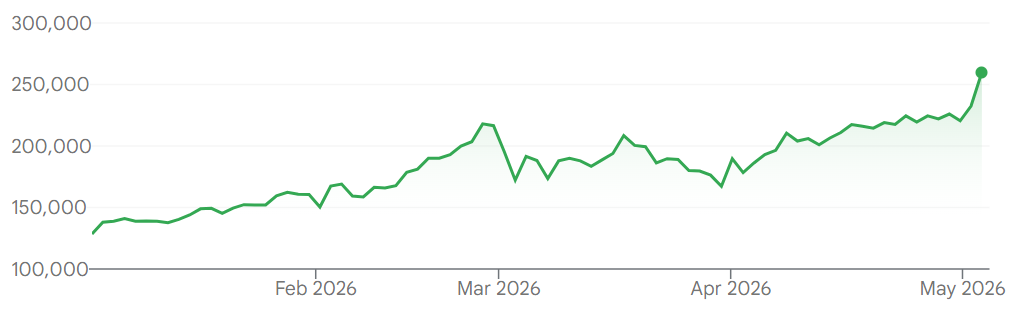 |
Samsung shares have consistently risen this year. Chart: Google Finance |
Late last month, Samsung Electronics announced its Q1 business results. The company reported a substantial increase in its chip division's profit, which rose 49 times to 53.7 trillion won (over $36 billion). Looking ahead, Samsung stated that the supply shortage is expected to worsen next year, as customers increase spending on AI, driving up memory chip prices.
"Our supply capability is still far below customer demand," stated Kim Jaejune, head of the memory chip division at Samsung. He predicted that continuously developing AI technology would sustain demand for the company's products. However, supply will remain limited in the near future, as new factories require time to build.
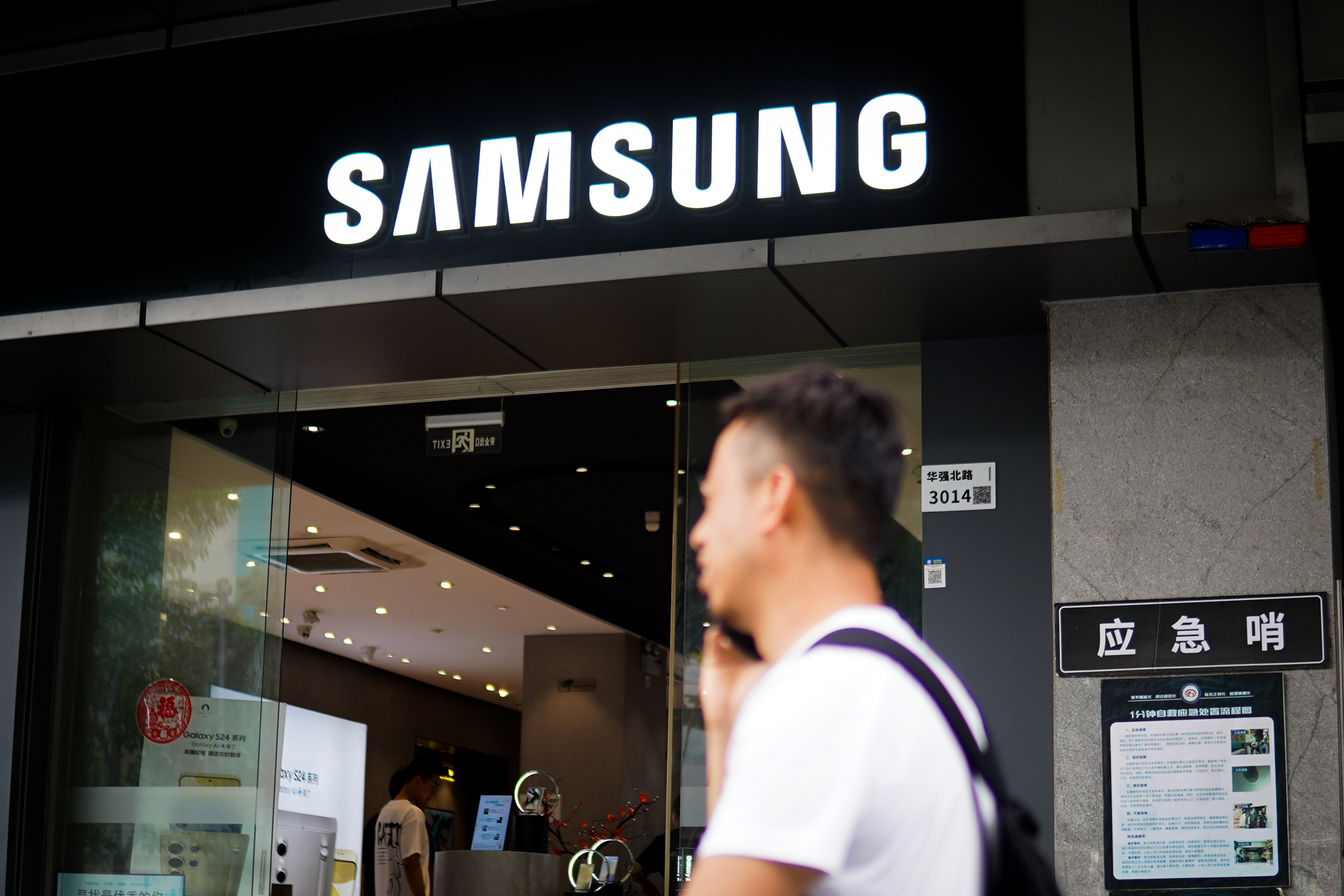 |
A person walks past a Samsung store in Shenzhen, Trung Quoc, 4/2024. Photo: Luu Quy |
Samsung Electronics confirmed that the conflict in the Middle East has not yet disrupted its chip production. This resilience is attributed to the company having accumulated sufficient inventory and diversified its gas sources for manufacturing. Despite this, Samsung highlighted the risk of increased shipping costs due to rising fuel prices. The company pledged to coordinate with the South Korean government to ensure a stable energy supply.
Ha Thu (according to Reuters, Bloomberg)