On 2/6, the Office of the United States Trade Representative (USTR) announced the conclusion of an investigation under Section 301 concerning unfair trade practices. The USTR concluded that these 60 economies have not implemented reasonable measures to prevent the circulation of goods produced with forced labor, which disadvantages the US in trade competition.
Consequently, the agency proposes additional tariffs of 10% on goods from Canada, Ecuador, the EU, Indonesia, Mexico, Pakistan, Argentina, Bangladesh, Cambodia, El Salvador, Guatemala, Malaysia, Taiwan, and the UK. For the remaining 45 economies under investigation, including Vietnam, the additional tariff rate is 12.5%.
US Trade Representative Jamieson Greer stated that partners failing to address the import of goods produced with forced labor is “unacceptable”. He added, “This forces American workers to compete unfairly in the global market”."
Regarding the proposed additional tariffs on Vietnam, Ministry of Foreign Affairs spokesperson Pham Thu Hang stated at a regular press conference on the afternoon of 4/6 that the USTR's investigation findings “do not accurately reflect Vietnam's reality and its efforts to prevent and mitigate forced labor”."
The Ministry of Foreign Affairs spokesperson affirmed Vietnam's consistent policy of strictly prohibiting all forms of forced labor. Vietnam adheres to International Labor Organization (ILO) regulations, free trade agreements, and ensures their practical implementation. Hang stated that Vietnam has exchanged information fully during the investigation and will continue to work with the US in a constructive, cooperative spirit to resolve existing disagreements through bilateral and multilateral cooperation. This effort aims to protect the legitimate interests of Vietnamese workers and businesses.
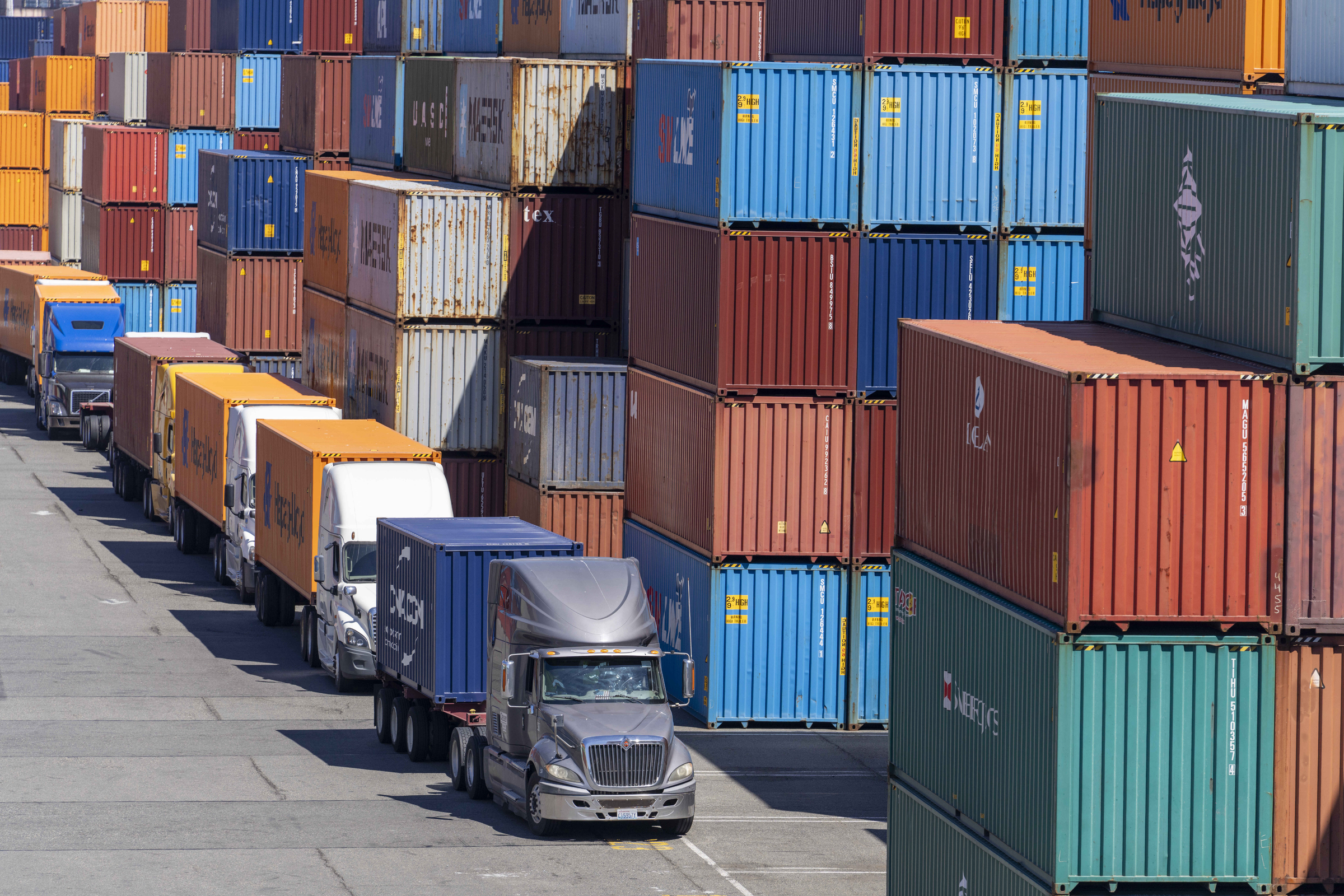 |
Container at Seattle Port in Seattle, Washington, US on 11/8/2025. Photo: Reuters
The USTR will hold a public hearing on 7/7. The agency also proposed a separate mechanism for the textile and garment industry, allowing a certain quantity of goods to benefit from lower tariffs upon entering the US, but specific details have not yet been disclosed.
The USTR initiated investigations under Section 301 after several import tariffs, citing the International Emergency Economic Powers Act (IEEPA), were rejected by the US Supreme Court in February. Section 301 allows the president to impose tariffs to counter unfair trade practices from foreign countries. The USTR recently announced the conclusions of investigations under this provision as temporary 10% tariffs, enacted by President Donald Trump, are set to expire on 24/7.
Nick Marro, an expert at the Economist Intelligence Unit (EIU), predicts that the Trump administration will continue to launch more investigations and announce new tariff measures, preparing for subsequent rounds of trade negotiations. Previously, on 1/6, the USTR proposed 25% tariffs on several goods from Brazil, following a Section 301 investigation. The agency also expects to soon release investigation results on industrial overcapacity in 16 trade partners.
Deborah Elms, director of trade policy at the Hinrich Foundation, believes that while Section 301 tariffs may be adjusted, any significant changes would impact global supply chains and business supply.
Phien An (according to Reuters, CNBC)