For the 2026/27 academic year, Ho Chi Minh City (TP HCM) will launch the "Green Tick Kitchen" model in schools. This marks the next expansion of the "Responsible Green Tick" product quality control program, which the Department of Industry and Trade initiated in early 2024. The "green tick" system integrates blockchain technology to control and update all changes in product records, enabling distributors and consumers to trace origin, check ingredients, verify quality, and detect fraud.
In schools, the "Green Tick Kitchen" model connects data from the source to the dining table via QR codes, moving beyond just inspecting dishes after preparation. This allows schools and parents to easily look up supplier information, ingredient origins, purchase invoices, menus, and actual images of daily meals. This transparency shifts the monitoring approach from passively resolving incidents to actively preventing risks at the very beginning of the supply chain.
At the pilot "Green Tick Kitchen" site in Tan My ward, parents directly observed the food delivery process alongside school staff and local food safety management officials. All aspects, from ingredient origin, transportation conditions, delivery staff's adherence to protective measures, to inspection records, were publicly verified. Parents reported feeling more assured knowing what their children eat and where the food comes from.
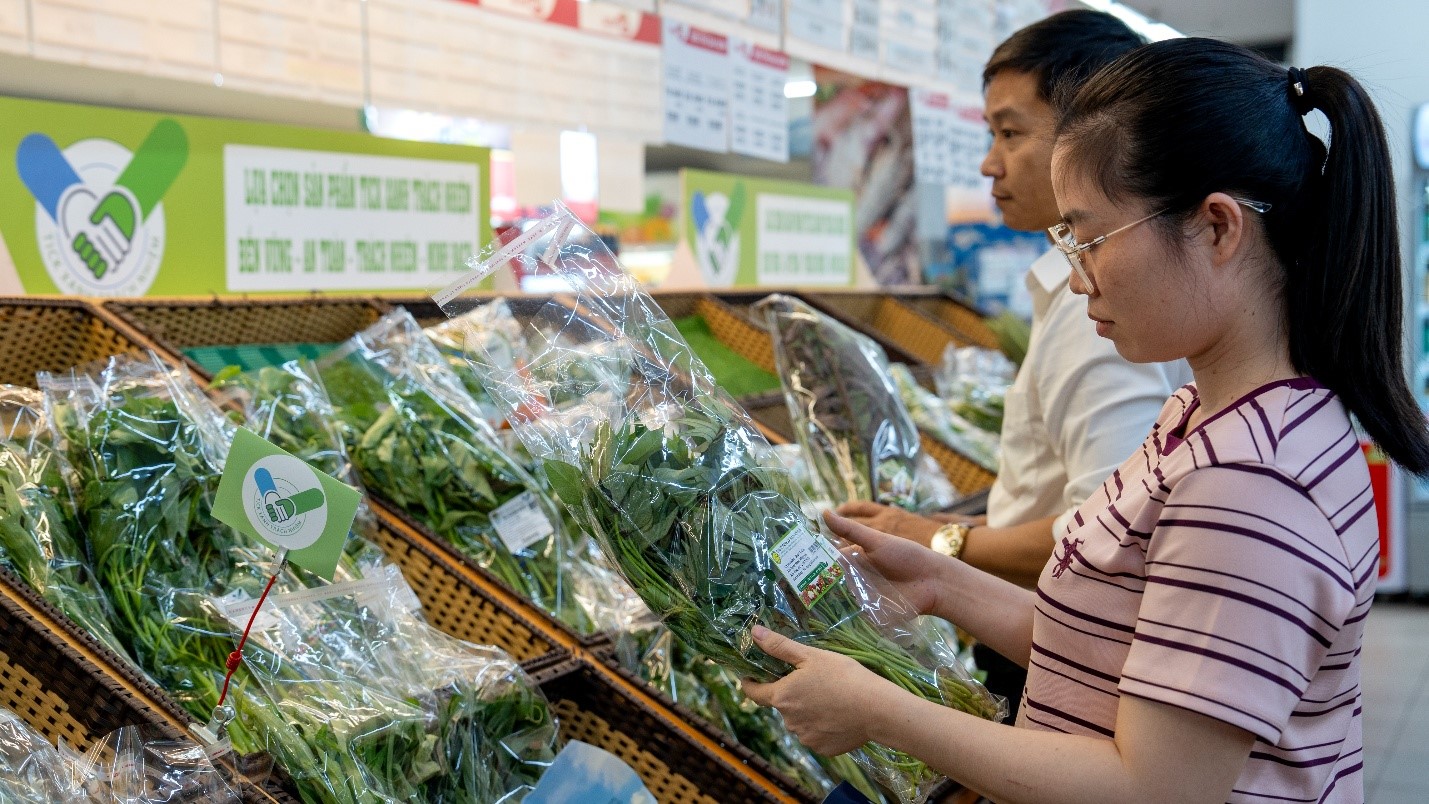 |
Customers selecting green tick products at a retail point within the SATRA system. *Photo: SATRA* |
Satra controls before goods reach schools
SATRA is a leading distributor of green tick products in TP HCM, boasting a comprehensive ecosystem connecting production, processing, distribution, and retail. The SATRA retail system currently partners with 34 suppliers, offering 287 certified green tick products across 4 Satramart supermarkets and nearly 150 Satrafoods convenience stores citywide. SATRA focuses on strict control of three main risk groups: supplier origin and capability; product safety standards; and storage and transportation conditions throughout the entire system.
This control process continues even after products enter the system. At reception and distribution points, goods are continuously monitored for sensory quality, expiration dates, and storage conditions. Periodic testing results serve as the basis for re-evaluating suppliers; products that no longer meet standards are immediately removed from the system.
This ensures schools receive ingredients that have undergone thorough checks by SATRA beforehand, while still retaining the right to inspect at the time of delivery. Daily public records of origin, batch information, and transportation data will serve as legal grounds for schools to report to regulatory agencies and provide transparent information to parents.
Should an abnormal batch be detected, data on the supplier, batch number, production or harvest date, delivery time, and receiving points will enable swift and accurate traceability. The affected batch will be quickly identified, usage suspended, and isolated for inspection. Subsequent test results will be used to assess product quality, evaluate supplier responsibility, and implement timely replacement supplies, preventing disruption to the school's meal services.
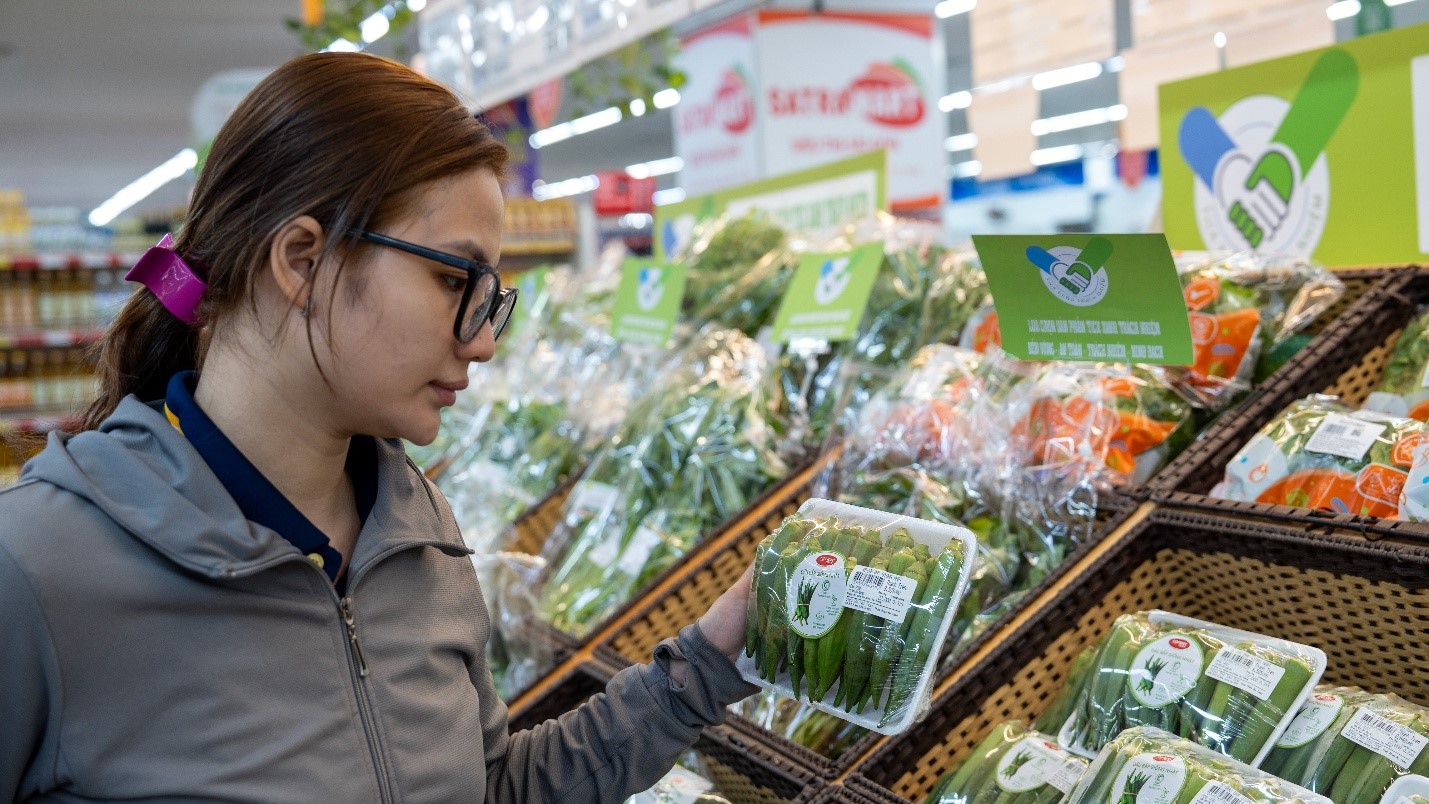 |
Cofidec's green tick okra is distributed through SATRA's retail system as fresh, unprocessed ingredients. *Photo: SATRA* |
Additionally, the Green Tick program establishes a coordination mechanism among distribution systems. Upon detection of a violation, information will be widely shared, allowing other entities to conduct checks and implement appropriate corrective measures. This cross-monitoring mechanism enhances supplier accountability, as a single violation could lead to the risk of being barred from all modern retail systems, not just facing penalties at an individual retail outlet.
For schools and parents, the green tick kitchen model not only ensures ingredients have clear origins but also links to a traceable chain of responsibility, allowing for thorough inspection and resolution when necessary.
Green tick products from Satra member units
Several member units of Tong Cong Ty Thuong Mai Sai Gon - TNHH Mot Thanh Vien (SATRA) have received Green Tick certification and are distributed within the SATRA retail system. For instance, meat products from Vietnam Livestock Industry Corporation (Vissan). This supply helps provide essential, clearly traceable ingredients for consumers and school kitchens, ensuring safe, quality nutrition for daily meals.
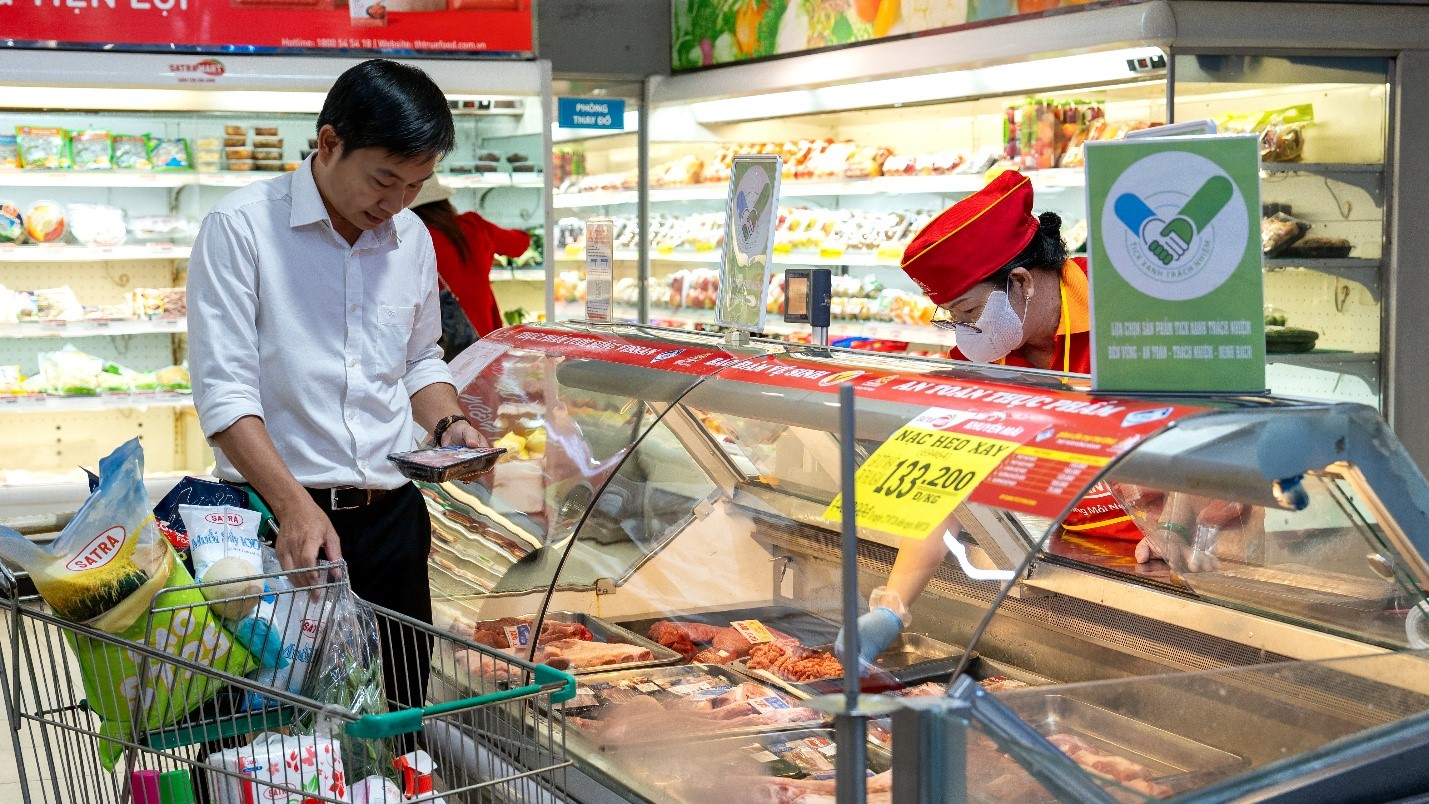 |
Vissan's VietGAP pork products are registered with the "green tick" in the SATRA retail system. *Photo: SATRA* |
Coastal Economic Development Company (Cofidec) also offers a range of green tick products. The company's okra and eggplant are cultivated in certified raw material zones, with clear identification of origin, area, soil type, water source, and seed quality. Technical staff directly guide farmers on cultivation techniques, care, fertilizer and pesticide use, and farm logkeeping; they also conduct field inspections every 7 to 10 days. The control process emphasizes the active ingredient list, dosage, withholding period, and strictly prohibits the use of unauthorized pesticides.
Before harvest, technical staff collect samples for analysis to check pesticide residues. Products meeting harvest standards must fulfill requirements for size, weight, and be free from pests, damage, spoilage, or toughness. After harvest, ingredients are immediately transported to the factory for sorting, selection, and processing on the same day; if production volume is large, they are stored in specialized cool storage at approximately 20°C.
The entire processing procedure strictly adheres to export standards for the Japanese market. Currently, these okra and eggplant products are distributed through SATRA's retail system as fresh, unprocessed ingredients.
Hoang Anh