My family pays about two to three million dong for electricity each month. While researching solar power installation to reduce long-term costs, many providers quoted an investment of 160-200 million dong, but I want a cheaper option to recover capital sooner. I hope the expert can offer advice.
Hang, Tan Thoi Hiep, TP HCM
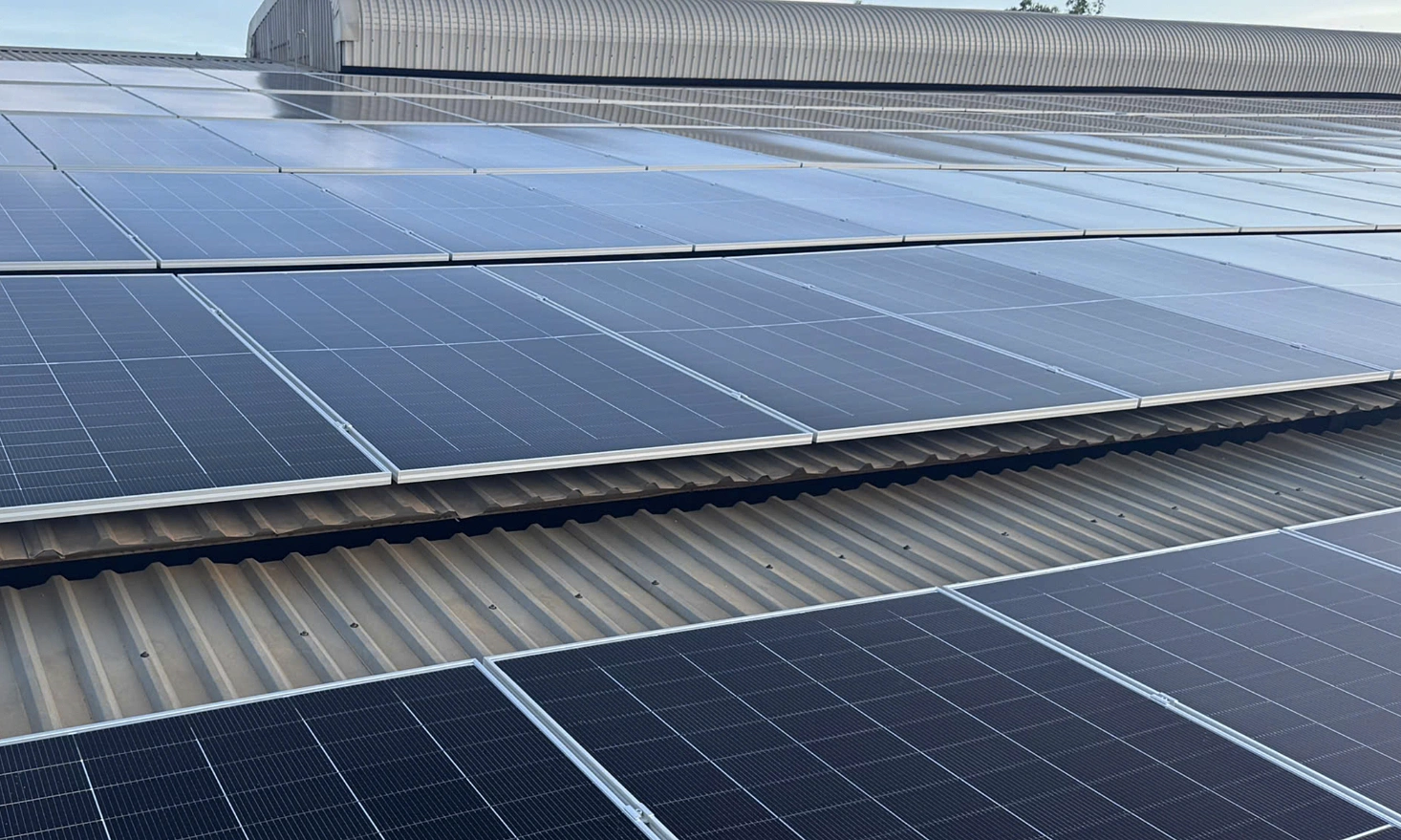 |
Rooftop solar installation at a residence in Quy Nhon city (Gia Lai). Photo: Hong Chau |
Expert advice:
For a monthly electricity bill of about two to three million dong, your household could consider a 5-7 kWp system combined with a 16 kWh battery storage, with a total cost of approximately 150 million dong. The payback period is around 3,5 years if the system is designed to match your electricity usage.
This is only a reference configuration, as capacity and battery storage depend on past consumption, whether electricity is used more during the day or night, and each family's specific needs.
In the market, some providers quote only 100-120 million dong. This price difference requires buyers to carefully examine the configuration and included items, rather than just comparing the final price.
Differences between cheap and expensive systems
For the same power capacity, system prices can vary due to the type of solar panels, inverters, battery storage, and accompanying materials. Wires, connectors, protective devices, and installation methods also impact costs.
Some components directly relate to safety. Solar power systems use high-voltage direct current. Substandard wires, incompatible connectors, or loose contact points can generate heat and electric arcs, increasing fire risk.
Installation methods also create differences in quotes. Some providers might reduce costs by using low-priced materials, less experienced labor, or by simplifying installation steps. For residential rooftops, installation must consider the roof structure, equipment placement, ventilation space, and wiring routes.
The initial survey also affects the final price. If the roof conditions and installation scope are not fully assessed, the quote might be low but additional costs could arise during implementation.
Therefore, when receiving multiple quotes, households should request a clear breakdown of capacity, equipment type, battery capacity, inverter, wires, connectors, protective devices, grounding plan, and installation items. This helps determine if systems with the same capacity are truly comparable.
Potential costs after installation
Costs do not end once the system is operational. Households need to consider maintenance, such as cleaning solar panels, inspecting wires, connectors, inverters, and circuit breakers.
Dirt, leaves, or bird droppings on solar panels can reduce electricity generation efficiency. Meanwhile, wire connection points can change over time due to thermal expansion. If not regularly inspected, these anomalies can create hot spots, decrease performance, and increase the risk of malfunction.
Depending on the system, inspections may include insulation status and protective devices. For systems requiring deeper assessment, thermal cameras can detect anomalies.
Another cost is for repairs and equipment replacement when the system degrades or malfunctions. If equipment needs early replacement, the savings from the initial installation price might be offset during use. Therefore, households should also clarify warranty terms, coverage, and out-of-warranty service costs before signing a contract.
Electricity generation efficiency also affects the payback period. If the system is not designed to meet needs or actual output is lower than expected, the family will still have to purchase additional electricity from the grid, extending the capital recovery time.
For a system intended for many years of use, the initial installation price is only one part of the equation. A cheaper option that cuts corners on important components, leading to additional installation, repair, or equipment replacement costs, can result in a higher overall expense than anticipated.
Therefore, in cases like Hang's, instead of just seeking the lowest quote, households should choose a configuration that matches their consumption and compare the total costs, including equipment, installation, maintenance, warranty, and troubleshooting during use.
Phan Ngoc Anh
Director, Alena Energy Company
Head of Representative Office
Vietnam Clean Energy Association (VCEA) in TP HCM