This was shared by businesses at the SaigonTex - SaigonFabric 2026 exhibition on 8/4. According to these businesses, purchasing power remains weak due to a slow global economic recovery, high interest rates, and ongoing pressure from the Middle East conflict.
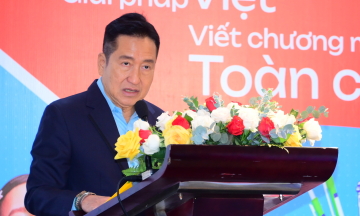
Cao Huu Hieu, Director General of Vietnam National Textile and Garment Group (Vinatex), stated that geopolitical and trade risks directly impacted costs and production from Q1. Logistics costs surged, delivery times extended, and demand remained unstable, forcing businesses to restructure and optimize costs to maintain efficiency.
From a comprehensive perspective, Hoang Manh Cam, Chief of Staff of the Vinatex Board of Directors, observed that the industry is entering a phase with "more pressure than advantages." Businesses must not only secure orders but also adapt to new operational methods within the global supply chain.
This pressure is evident as raw material and transportation costs have increased simultaneously. However, the ability to pass these costs onto customers is limited, leading to continued narrowing of profit margins.
Despite these challenges, the market retains certain advantages. According to Cam, the US remains a key market, with Vietnam maintaining its position as a major supplier. This reflects a trend of shifting orders under the "China + 1" strategy. However, this opportunity comes with higher demands for supply chain transparency, traceability, and labor standards.
Conversely, in Europe, price pressure remains a significant barrier due to weakened demand. This forces Vietnamese businesses to compete directly with Bangladesh and China amid thin profit margins. Meanwhile, the Northeast Asia region maintains greater stability, helping businesses balance their orders.
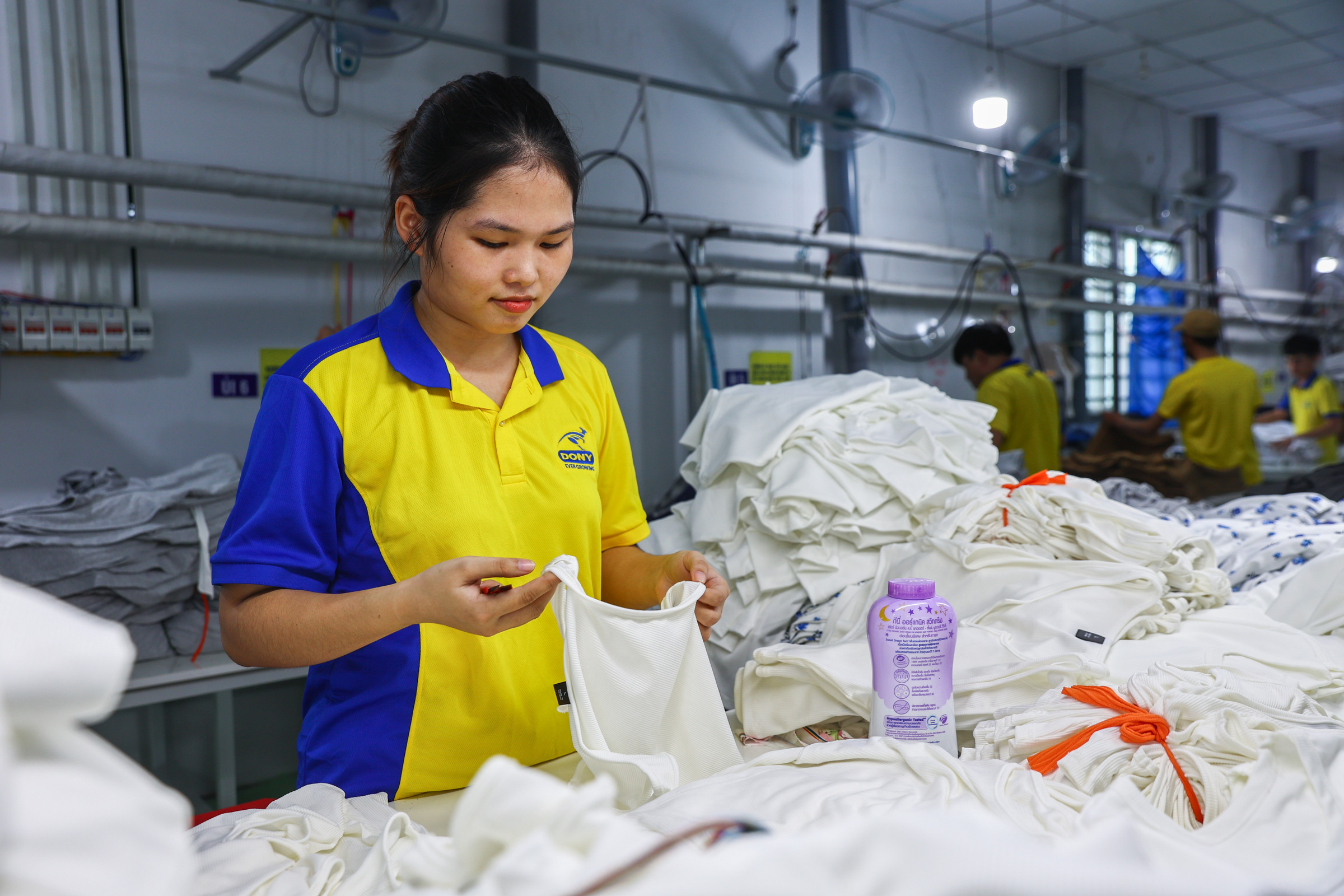 |
Workers at Dony garment company (Vinh Loc A commune, TP HCM), 8/2025. Photo: Quynh Tran. |
Workers at Dony garment company (Vinh Loc A commune, TP HCM), 8/2025. Photo: Quynh Tran.
On the global competitive landscape, Vietnam's textile and garment industry occupies a "middle ground" in the value chain. It no longer possesses the cost advantage of low-price producers, nor has it mastered high-value-added stages. Its primary advantage remains reliability and the ability to fulfill complex orders. However, competitive room is shrinking due to rising labor costs and significant reliance on imported raw materials. The industry's localization rate currently stands at only 45-50%.
Policy risks are also increasing. According to Cam, there is no precedent for transit tariffs yet. However, recent investigations indicate that origin determination criteria will become increasingly stringent. This compels businesses to enhance their autonomy and transparency to avoid competitive disadvantages.
In this context, upgrading is no longer optional. Businesses must develop their weaving and dyeing segments, increase localization, and gradually transition to higher value-added models through investment in technology, research and development (R&D), and design.
Vu Duc Giang, President of Vietnam Textile and Apparel Association (Vitas), also asserted that to maintain its position among the top 3 global exporters and aim for approximately USD 49 billion this year, the industry must simultaneously diversify markets, develop domestic raw materials, accelerate digital transformation, apply artificial intelligence (AI), and promote green production.
While order recovery may be slow, the pressure for change is accelerating. In this "trickling" market environment, businesses and associations believe that upgrading is a prerequisite for Vietnam's textile and garment industry to retain its position in the global supply chain.
Thi Ha