On 2/2, following a phone call with Indian Prime Minister Narendra Modi, US President Donald Trump wrote on the Truth Social social media platform that the two countries "have reached a trade agreement." He stated: "Reciprocal tariffs will be reduced from 25% to 18%. They will also reduce import tariffs and non-tariff barriers with the US to zero."
According to Reuters, a White House official indicated that the US would also withdraw the 25% tariff imposed on India last year due to its purchases of Russian oil. Consequently, import tariffs for India will decrease from 50% to 18%.
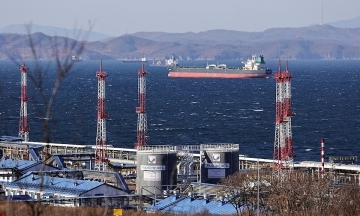
In return, India agreed to stop buying Russian oil and will increase purchases of US oil, potentially from Venezuela. Trump wrote: "Prime Minister Modi also pledged that India would purchase US goods at a much higher level, in addition to spending over 500 billion USD on energy, technology, agricultural products, coal, and other goods."
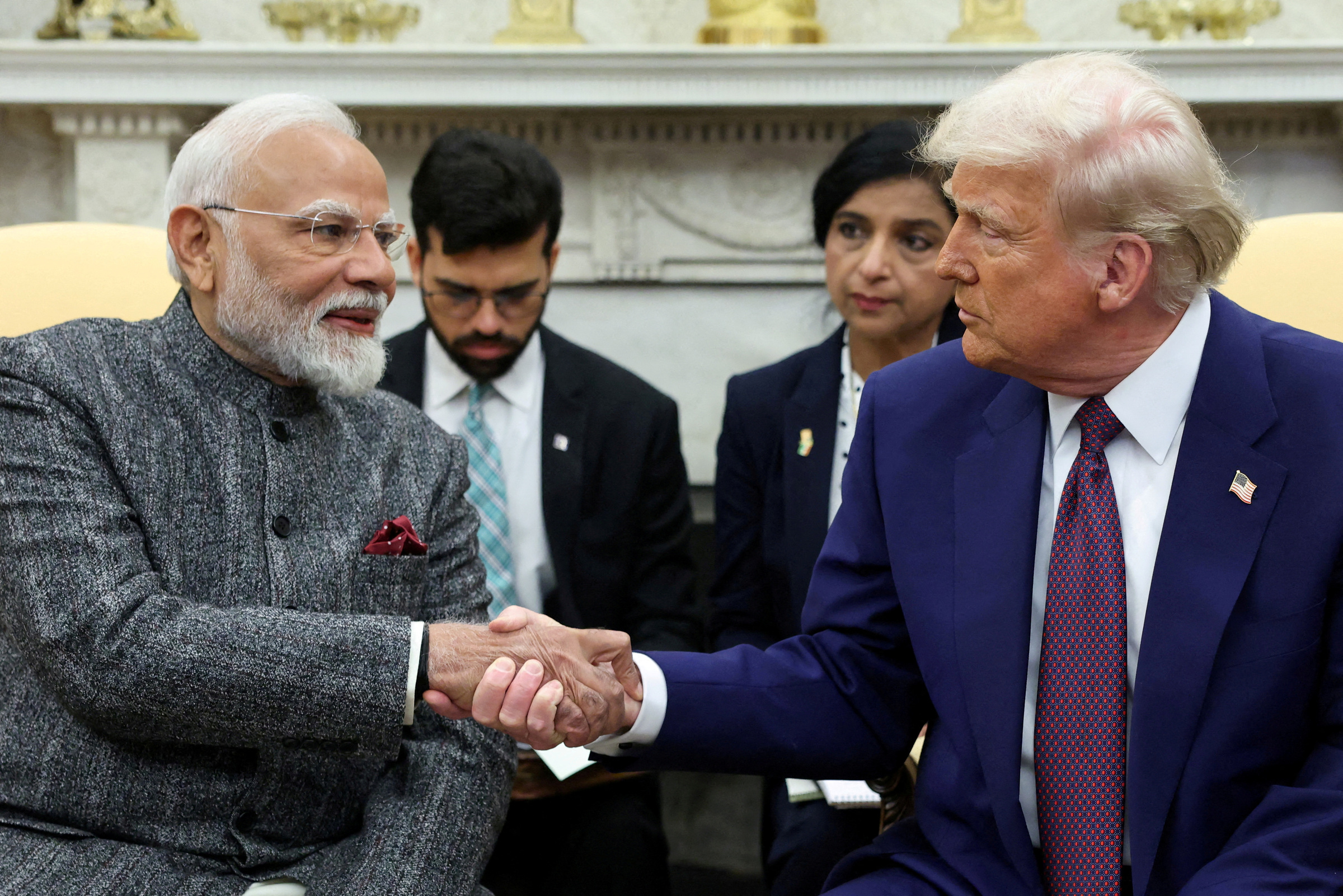 |
US President Donald Trump and Indian Prime Minister Narendra Modi at the White House in 2/2025. Photo: *Reuters*. |
Shares of major Indian companies surged following the announcement. Shares of information technology consulting firm Infosys closed up 4.3%. Consulting firm Wipro rose 6.8%. HDFC Bank gained 4.4%, and iShares MSCI India ETF increased 3%.
However, Trump's announcement lacked many details, such as the start date for tariff reductions, the deadline for India to stop buying Russian oil, policies to reduce trade barriers, and which US products India pledged to purchase. The White House has also not published any further documents on this matter on its website.
Madhavi Arora, an economist at Emkay Global, stated that this agreement allows India to benefit from import tariff levels similar to other Asian countries, ranging from 15% to 19%. India has faced significant pressure since Washington imposed tariffs, becoming the worst-performing market among emerging economies in 2025, with foreign capital withdrawals at record levels.
The US Chamber of Commerce assessed Trump's announcement as a major step forward. Suzanne Clark, director of the Chamber of Commerce, said: "We are optimistic that this is the first step towards a comprehensive trade agreement that could unlock further private sector cooperation. We also want to examine the details of the agreement."
India relies on imports to meet about 90% of its domestic oil demand. Purchasing cheap Russian oil after the Russia-Ukraine conflict in 2022 significantly helped the country reduce import costs.
Recently, however, India has begun to slow its pace of oil purchases from Russia. Reuters cited data indicating that imports in 1/2026 were only about 1.2 million barrels per day, expected to decrease to about 1 million barrels in 2/2026 and 800,000 barrels in 3/2026.
Ha Thu (according to *Reuters*).