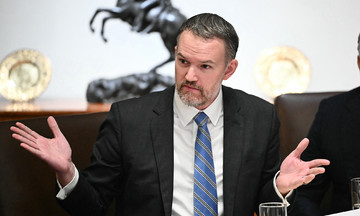
White House spokesperson Taylor Rogers confirmed to CNBC on 25/2 the summoning of executives from Amazon, Google, Meta, Microsoft, xAI, Oracle, and OpenAI. The commitment to self-powering their facilities comes amid strong public opposition to data centers, with many Americans arguing they are the cause of rising household electricity bills.
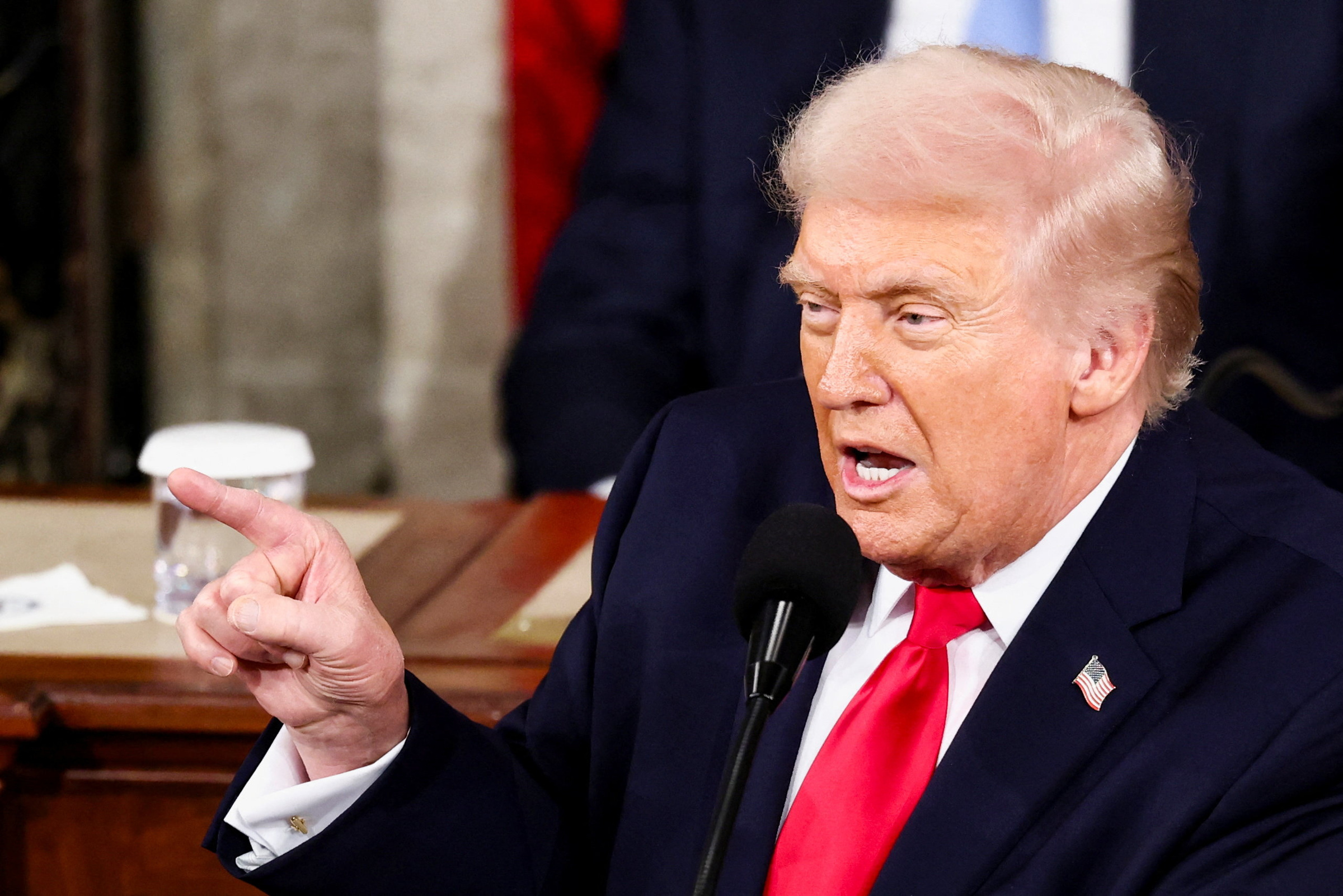 |
US President Donald Trump delivers the State of the Union address at the Capitol, Washington, US, on 24/2. Photo: Reuters |
The meeting is scheduled for 4/3. Under the commitment, tech companies must either build or procure their own power sources when constructing new data centers for artificial intelligence (AI). The White House spokesperson stated this initiative aims to ensure that American electricity bills do not increase amidst the ongoing tech race.
Trump first outlined this commitment in his State of the Union address last Tuesday, referring to it as a "consumer protection pledge". "We are telling tech corporations that they have an obligation to meet their own power needs. They can build their own power plants so as not to impact the public's finances", Trump said.
Data centers are currently facing community opposition across the United States. Residents argue that rising electricity bills are a direct result of the enormous power consumption by these facilities.
The Trump administration views AI as a driver of economic growth and a pillar of US national security. However, this stance presents a politically risky position for the White House, particularly given past election results. Last November, New Jersey Governor Mikie Sherrill and Virginia Governor Abigail Spanberger secured decisive victories against their Republican opponents by campaigning against rising electricity prices.
Energy Secretary Chris Wright added that officials had warned tech companies about the risk of public backlash, fueled by the belief that data centers are driving up energy costs. "We want to see data centers developed. But to do that, we need initial investment in grid infrastructure", he said.
Interior Secretary Doug Burgum dubbed this commitment "BYOP" (Bring Your Own Power), a playful reference to the BYOB (Bring Your Own Bottle) movement.
Burgum further stated that no electricity bills have risen solely due to data centers, with the exception of certain states like Virginia, which prioritize renewable energy development with "climate illusion" policies. He attributed this to their choice of wind and solar power over cheaper energy sources.
Google has already taken a significant step toward self-powering. Two days prior, the company announced plans to build a new data center in Pine Island, Minnesota. This facility will be powered by 1,9 GW of wind and solar energy, combined with a 300 MW battery storage system, touted as the world's largest.
To accelerate clean energy projects without increasing consumer electricity bills, Google and Xcel Energy signed the Clean Energy Accelerator Charge in Minnesota. Under this agreement, the tech giant will invest 50 million USD to support Xcel in installing smaller battery storage units across the grid, aiming to enhance power capacity and stability. According to Google, this partnership will help local communities access clean, more affordable electricity.
Bao Bao (via CNBC, ABC)