


On 3/5, US President Donald Trump announced "Project Freedom," a plan to guide vessels out of the Strait of Hormuz. This initiative allowed two ships to complete their voyages. However, on 5/5, Trump halted the operation to allow more time for negotiations with Iran.
Consequently, after more than two months of conflict, the Strait of Hormuz remains congested, and navigation risks have not decreased. On 6/5, CMA CGM Group (France) reported that one of its container ships was damaged after being attacked while attempting to pass through the strait.
Many major shipping lines and vessel owners consider transit through the Strait of Hormuz too dangerous, citing the presence of Iranian speedboats and drones. Sean Pribyl, an expert at the law firm Holland & Knight in Washington, stated that the core issue remains safety along this route.
"It seems we are a long way from restoring free flow of traffic and maritime operations through the strait," he remarked.
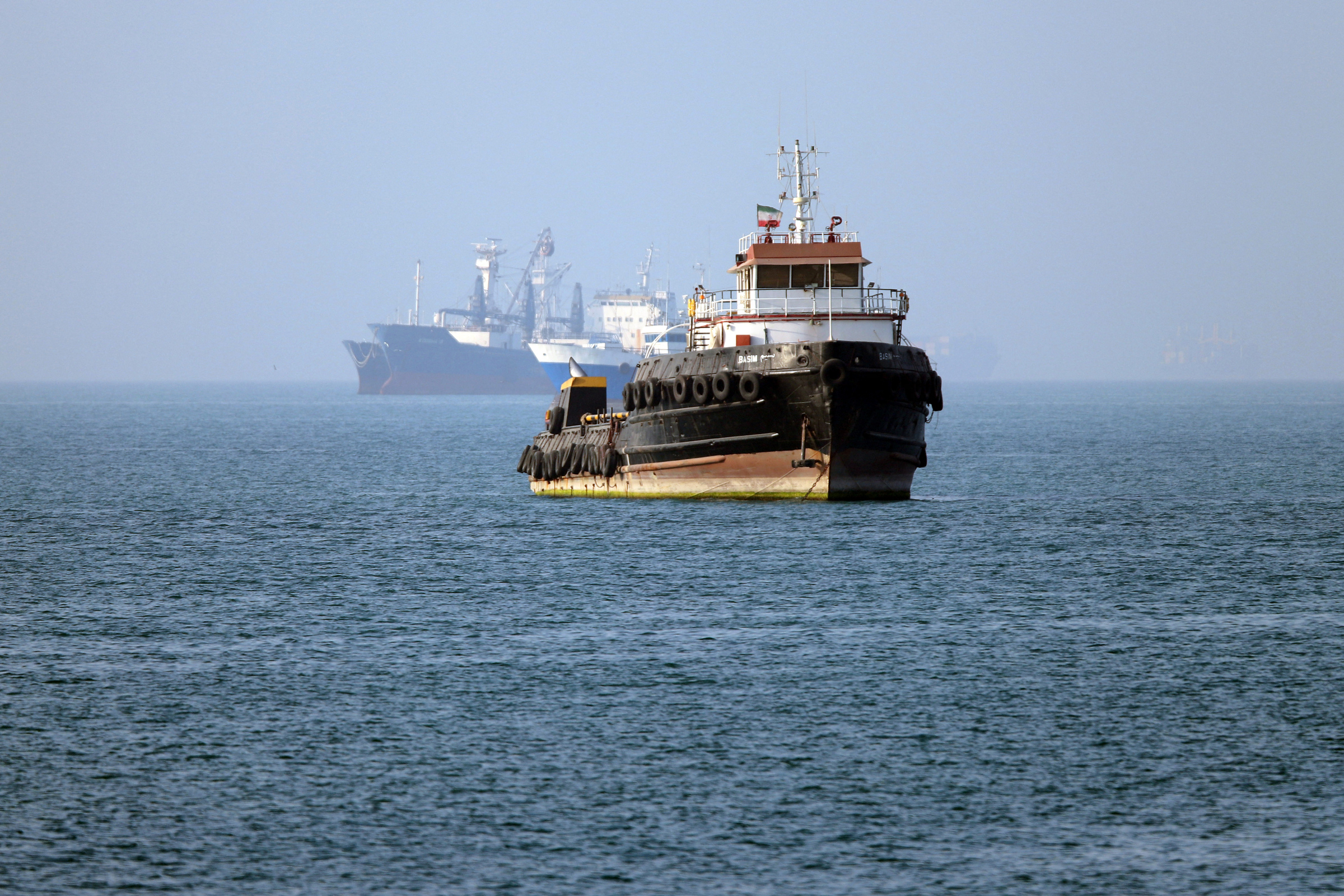 |
An image released by the Iranian news agency ISNA on 4/5 shows an Iranian-flagged tugboat moving near a ship anchored in the Strait of Hormuz area. Photo: AFP
Before the conflict, approximately 100-135 ships transited the Strait of Hormuz daily, according to research firm Lloyd’s List Intelligence. However, traffic has now slowed to a trickle, as Iran requires vessels to undergo an inspection process, managed by the Islamic Revolutionary Guard Corps (IRGC), to be granted safe passage.
This procedure mandates ships to follow a route close to the Iranian coast, provide information about their crew and cargo, and pay fees in some instances. However, ships paying these fees risk violating sanctions imposed by the US and the EU.
With passage through the strait almost impossible for the past two months, more than 1,550 ships carrying approximately 22,500 sailors are currently stranded in the Persian Gulf, according to US Air Force General Dan Caine. The primary goods affected include crude oil and petroleum products such as fertilizers, in addition to thousands of maritime workers.
To pressure Iran, the US Navy is blockading the country's ports while enforcing a blockade outside the strait in the Gulf of Oman and the Arabian Sea.
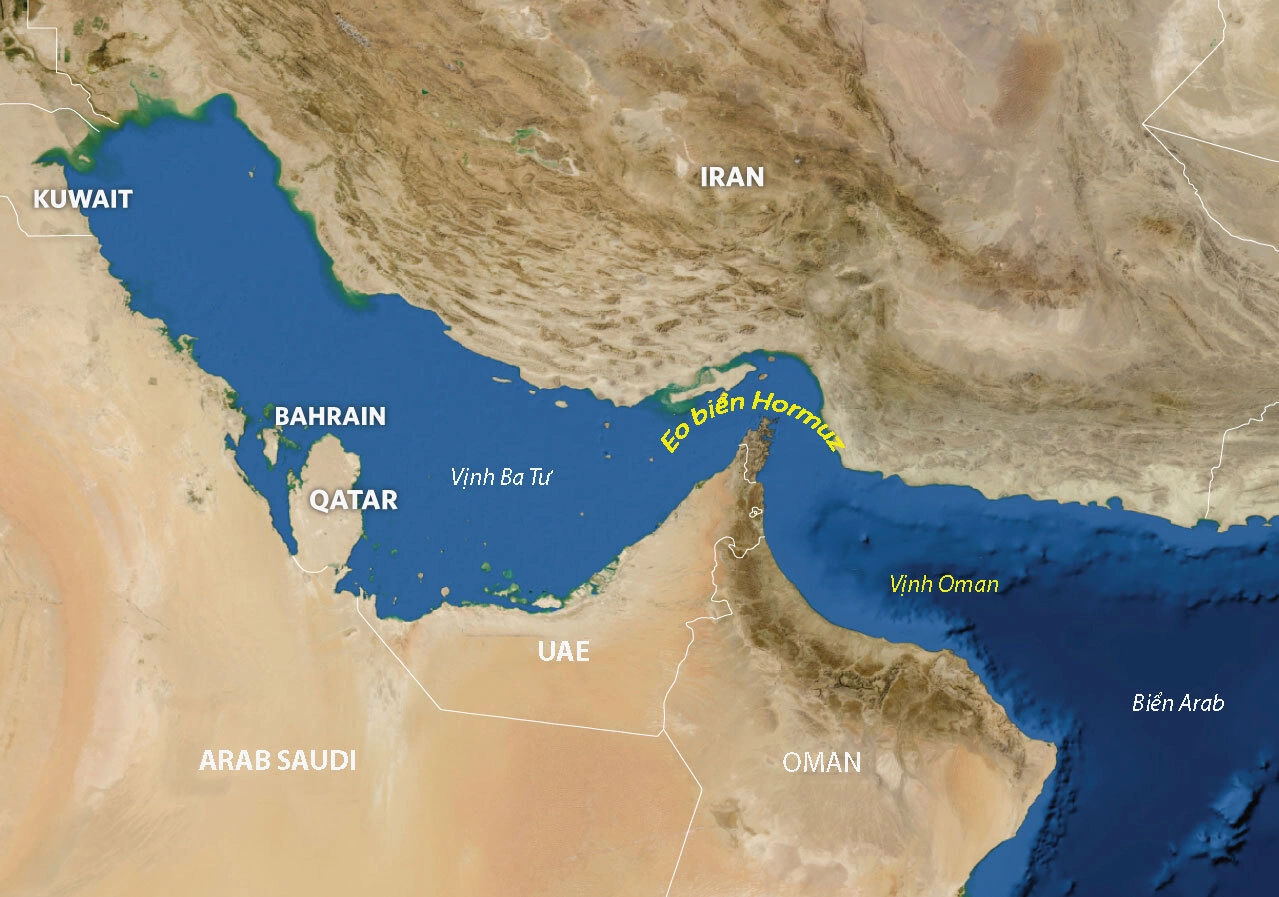 |
Location of the Persian Gulf, Strait of Hormuz, Gulf of Oman, and Arabian Sea. Graphic: NASA
Pribyl noted that shippers and insurance companies are likely still assessing the situation in the strait. Marine vessels typically carry two main types of insurance: liability and indemnity insurance, which covers property and third-party liabilities; and war risk insurance during wartime to compensate for conflict-related damages.
Insurance costs for ships in the region have surged, rising from below 1% of the cargo's value to 3-10% throughout the conflict, according to Ed Anderson, a professor of supply chain management at the McCombs School of Business at the University of Texas.
Even with insurance, most shippers believe that navigating the strait is too dangerous. "Escorting a few ships out does not significantly impact the shipping industry," he commented.
Container shipping company Hapag-Lloyd AG reported weekly losses of USD 60 million, primarily due to soaring fuel and insurance prices. The company, which owns a fleet of 301 ships, has four vessels stuck in the Persian Gulf. They have had to suspend operations on some sea routes and seek alternative solutions, including land transport. "However, these options have limited capacity and cannot fully replace regular maritime routes through the region," the company stated.
Maersk announced that its US-flagged vehicle carrier Alliance Fairfax departed the Persian Gulf via the Strait of Hormuz on 4/5 "under US military escort." "The journey was safe, and the entire crew is unharmed," the company noted.
On 7/5, Maersk reported a first-quarter earnings before interest, tax, depreciation, and amortization (EBITDA) of USD 1.73 billion, a decrease of approximately 36% compared to the same period in 2025. The company warned that the Iran conflict casts a shadow over freight rates and transport costs. The company's shares fell by 3.3% after this news.
Maersk is often considered a barometer of global trade. The company forecasts a 2-4% increase in global container output this year, but acknowledges continued volatility. "The outlook for global container demand in 2026 is extremely uncertain," the company stated.
The prospect of US-Iran negotiations remains unclear. Kaho Yu, an expert at risk intelligence firm Verisk Maplecroft, cautioned that oil prices and maritime activity are unlikely to return to normal quickly. "Refiners, carriers, and commodity traders will remain cautious until there is clearer evidence that disruptions in Hormuz do not escalate again," he remarked.
On Wednesday (6/5), a meeting between Iranian and Chinese diplomats emphasized the need to de-escalate tensions. However, according to Yu, "Hormuz is the real measure to watch." "Oil tanker traffic and energy flows in the coming weeks and months are probably more important than diplomatic statements," he said.
Moreover, unlike air transport which can recover quickly, sea transport typically takes several weeks or months due to longer delivery times and contractual obligations. When the strait reopens, Yu believes that shipments of liquefied gas and sulfur are likely to move faster, but "most shippers will remain cautious until stability is proven sustainable."
Phien An (according to AP, Reuters)


