On 10/6, the US Bureau of Labor Statistics announced that the US consumer price index (CPI) for May increased by 4.2% compared to last year. While this figure matched forecasts, it marks the first time it has surpassed 4% since 4/2023.
Inflation accelerated largely because energy prices rose by 3.9%, a consequence of the Middle East conflict. Excluding volatile food and energy costs, the US core CPI increased by only 2.9%.
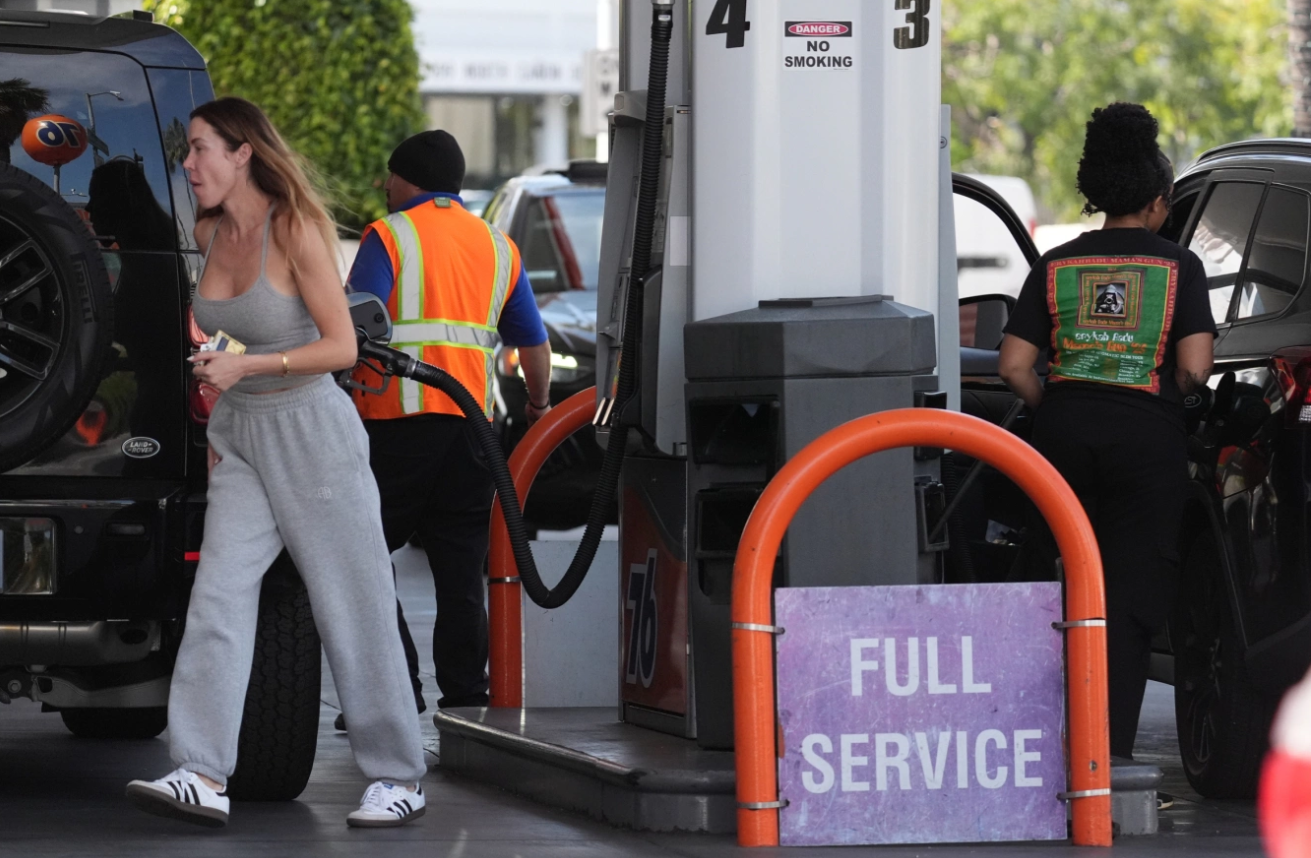 |
Americans fill up their cars at a gas station in Beverly Hills, California, on 3/3. Photo: AP |
This report arrives at a sensitive time for markets and policymakers. Next week, the US Federal Reserve (Fed) will hold its policy meeting. Investors anticipate the Fed may maintain interest rates but hope for further indications regarding officials' concerns about inflation.
As the US remains embroiled in conflict with Iran, investors are increasingly worried that surging oil prices could affect other sectors of the economy. Markets also reacted to President Donald Trump's warning that Iran would "pay a price" for prolonging peace negotiations.
The US stock market saw all three major indices decline. The DJIA, S&P 500, and Nasdaq Composite are currently down nearly 0.6%. Meanwhile, Brent and WTI crude oil each rose by more than 1%, reaching USD 92 and USD 89 per barrel, respectively.
Global spot gold prices fell by nearly USD 100 from the previous session, with each ounce now at USD 4,160. Since the Middle East conflict erupted in late February, gold prices have decreased by about 20%. This decline stems from the conflict driving crude oil prices higher, which in turn raises concerns about inflation and increasing interest rates.
Ha Thu (according to Reuters, CNBC)