A growing number of US workers, particularly those in their 30s, are proactively leaving stable jobs to launch their own businesses. This trend is driven by concerns over artificial intelligence (AI) potentially replacing their roles and a desire for greater control over their careers. Travis Di Lombardi-Spicer and Michelle Yeung are two examples of individuals who made this significant shift.
In 1/2025, Travis Di Lombardi-Spicer, 30, resigned after being denied a raise and sensing that AI could eliminate his job. News of companies like Amazon, Salesforce, and Block citing AI in laying off tens of thousands of employees over the past year partly drove his decision to leave. Spicer wanted to be proactive rather than continue earning around 75.000 USD annually from full-time audio production and freelance projects, only to wait for AI to replace him.
Recognizing the unstable labor market, Spicer transitioned to entrepreneurship. He sold personal assets and withdrew 40.000 USD from his savings to launch a beta version of Spotbookr in 5/2025. Spotbookr is a platform that uses AI to analyze consumer spending and advertising.
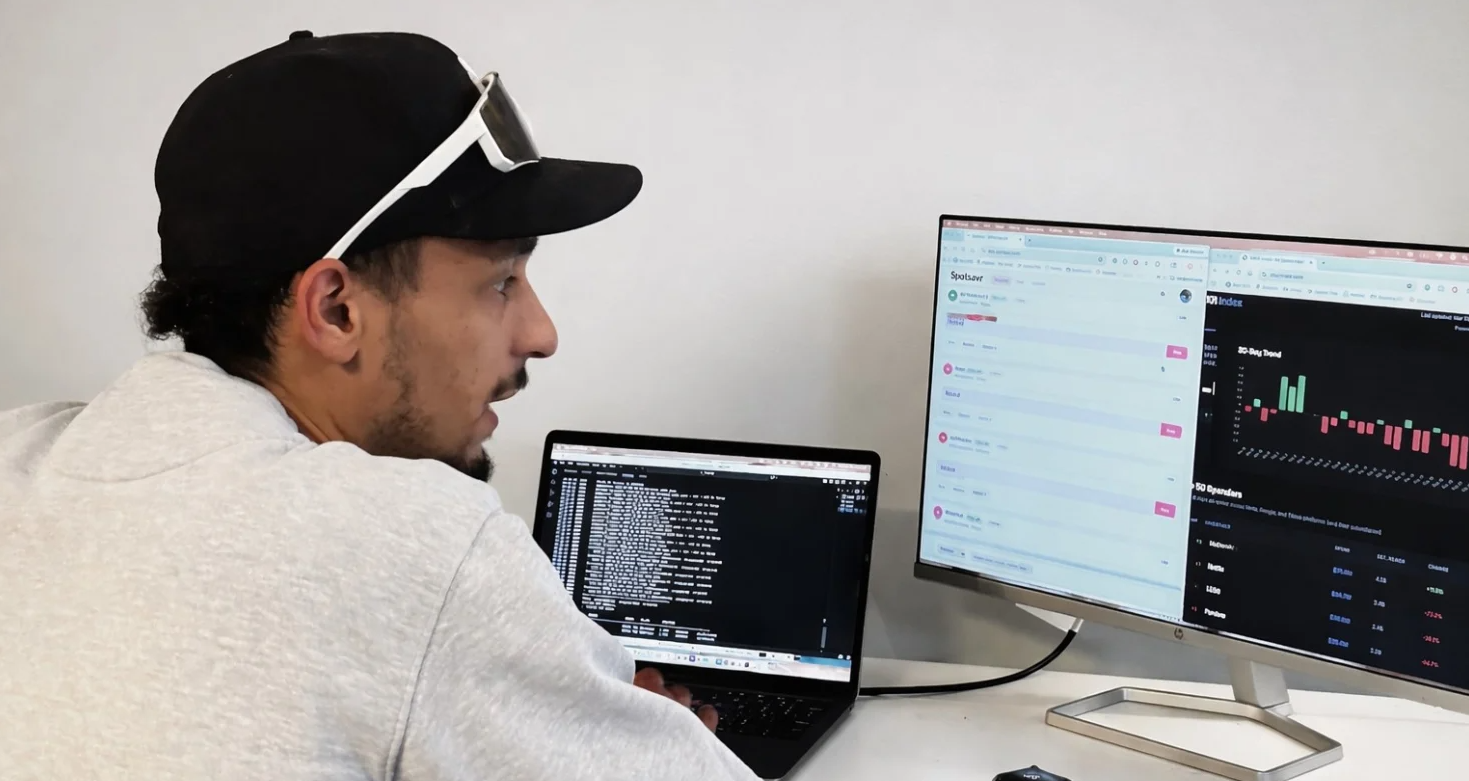 |
Travis Di Lombardi-Spicer uses AI to start a business. Photo: Travis Di Lombardi-Spicer. |
This surge in new businesses is evident in recent data. According to information from the US Census Bureau, CNBC reported that Americans submitted 1,56 million applications to establish businesses between 11/2025 and 1/2026. This marks the highest level in over 20 years, indicating a broader movement towards self-employment.
This trend is predictable: when workers face difficulties finding employment, especially amid a stagnant labor market or mass layoffs, they tend to start their own businesses more often. However, this current wave of entrepreneurship differs. Fearing future layoffs, some Americans are proactively resigning to start businesses before being cut. Many report that AI simplifies the startup process. Others state they want to control their departure timing before becoming victims of AI-related layoffs. Spicer exemplifies both these trends.
“Budgets for audio projects are decreasing. I just wanted to be proactive”, Spicer said.
Michelle Yeung, 29, also experienced a similar shift. After five years as a software engineer at a major US media corporation, Yeung found herself unhappy. Yeung earned about 250.000 USD annually, including bonuses. However, as AI advanced, she increasingly recognized its potential to replace her, leading to a sense of disorientation. Yeung stated that beyond AI, other factors contributed to her job dissatisfaction. She wanted to “shift from dedicating about 20% of herself to 200% for something else”.
 |
Michelle Yeung at Matcha House cafe in New York. Photo: Michelle Yeung. |
In early 2025, Yeung resigned and used her savings to open Matcha House in New York’s East Village in 7/2025. “I really enjoy creating something with my own hands and giving it to customers, while also building relationships with them”, she said. Both Yeung and Spicer reported that they are not yet drawing salaries from their new businesses and have accepted reduced spending. Spicer’s girlfriend currently covers most of their living expenses. Meanwhile, Yeung moved to a cheaper apartment and lives with a new friend.
Todd McCracken, President of the Small Business Association in the US, suggests that corporate employment is less stable now than before, prompting many to seek self-employment. The US saw a sharp decline in new job creation in 2025, with 116.000 positions created compared to 1,46 million the previous year.
While AI could threaten job stability for some workers, experts also highlight its role in facilitating entrepreneurship. This technology can assist in creating basic websites or building business plans without requiring specialized expertise. In some cases, artificial intelligence can even handle fundamental tasks that founders previously had to do themselves or hire others to perform.
Shahezad Contractor, 44, is the founder and CEO of Cousin’s Food, a restaurant chain in Philadelphia. Contractor worked in information technology for 24 years. He stated that the proliferation of AI in the tech industry was one factor that prompted him to resign in 2024 to start his own business. Last year, Contractor’s startup generated over 4 million USD in consolidated revenue. Contractor said he regularly uses AI, especially large language models like Claude, to generate social media content ideas, develop employee training materials, and write advertisements. “Previously, I had to hire content writers”, he explained, but AI helped him bridge skill gaps to do it himself. He even uses AI to scout new locations for his restaurant chain and build financial forecasts for existing stores.
Entrepreneurship inherently involves many risks. According to data from the US Bureau of Labor Statistics, about 25% of new businesses in the country do not survive their first year. Benjamin Jones – Professor of Entrepreneurship and Strategy at the Kellogg School of Management at Northwestern University – believes AI can support some small business owners but does not guarantee long-term success. “More startups mean more competition”, he said.
However, Jones noted that entrepreneurship always requires accepting risks and potential failure. “It’s very hard to know what will work until you try. When you start a new business, you’ve already embarked on an adventure”, he said.
Ha Thu (according to CNBC, Reuters)