The potential withdrawal would deliver another significant blow to OPEC, coming after the UAE's departure in May. For Venezuela, this move represents a major political shift, particularly following the US's arrest of President Nicolas Maduro earlier this year and its subsequent control over the nation's oil sales. Venezuela possesses the world's largest crude oil reserves.
For years, Venezuela has consistently failed to meet its OPEC production quotas, a consequence of underinvestment in its oil industry. The US has long expressed concerns about OPEC's influence on global oil prices. Prior to the UAE's exit, Qatar withdrew in 2019, followed by Ecuador in 2020, and Indonesia in 2016.
Sources, however, clarified that this remains a topic of discussion with the US, with no final decision reached. Notably, Venezuela was one of the five founding members of OPEC, established in 1960 in Baghdad alongside Iraq, Iran, Kuwait, and Saudi Arabia.
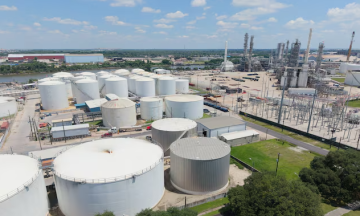
Latest data from 2024 reveals Venezuela's oil reserves at 303 billion barrels, representing 17% of global reserves. This volume exceeds that of Saudi Arabia, OPEC's leading nation, which possesses 267 billion barrels.
Reuters reported on 28/8 that the US is nearing an agreement to secure long-term access to a portion of Venezuela's crude oil reserves. This deal aims to lower US oil import costs.
Sources suggest the agreement could be signed and announced imminently. It would grant US companies long-term rights to develop specific Venezuelan oil fields, with the resulting oil supply secured for US consumption.
Current Venezuelan regulations lack a mechanism for area-based oil field leases, and the constitution mandates state control over core industry activities. Although a recently amended oil law permits exploitation via joint ventures and production-sharing contracts, the Venezuelan government has historically prevented foreign producers from booking its oil reserves for decades.
Ha Thu (Reuters, Bloomberg)