In its latest credit assessment report for Southeast Asia Commercial Joint Stock Bank (SeABank, HOSE: SSB), international credit rating agency Moody's Ratings upgraded the bank's Baseline Credit Assessment (BCA) and Adjusted BCA to Ba3. It also raised the long-term Counterparty Risk Ratings (CRRs) to Ba2 and the long-term Counterparty Risk (CR) assessment to Ba2(cr).
Simultaneously, Moody's maintained the Ba3 rating for long-term deposits and issuer, while adjusting the outlook from stable to positive.
Moody's stated that the upgrade of SeABank's BCA and Adjusted BCA from B1 to Ba3 reflects the bank's improved intrinsic credit capacity. This improvement is attributed to stable asset quality, a strengthened capital base, and enhanced risk management efficiency.
The agency also raised the long-term local and foreign currency Counterparty Risk Ratings (CRRs) to Ba2, alongside the long-term Counterparty Risk (CR) assessment to Ba2(cr). These results indicate a higher assessment of the bank's ability to meet financial obligations to its counterparties.
Moody's anticipates that efforts to diversify funding sources and enhance the stability of its deposit structure will continue to improve SeABank's credit profile over the next 12-18 months. The agency noted that the bank could see further rating upgrades if Vietnam's sovereign credit rating improves.
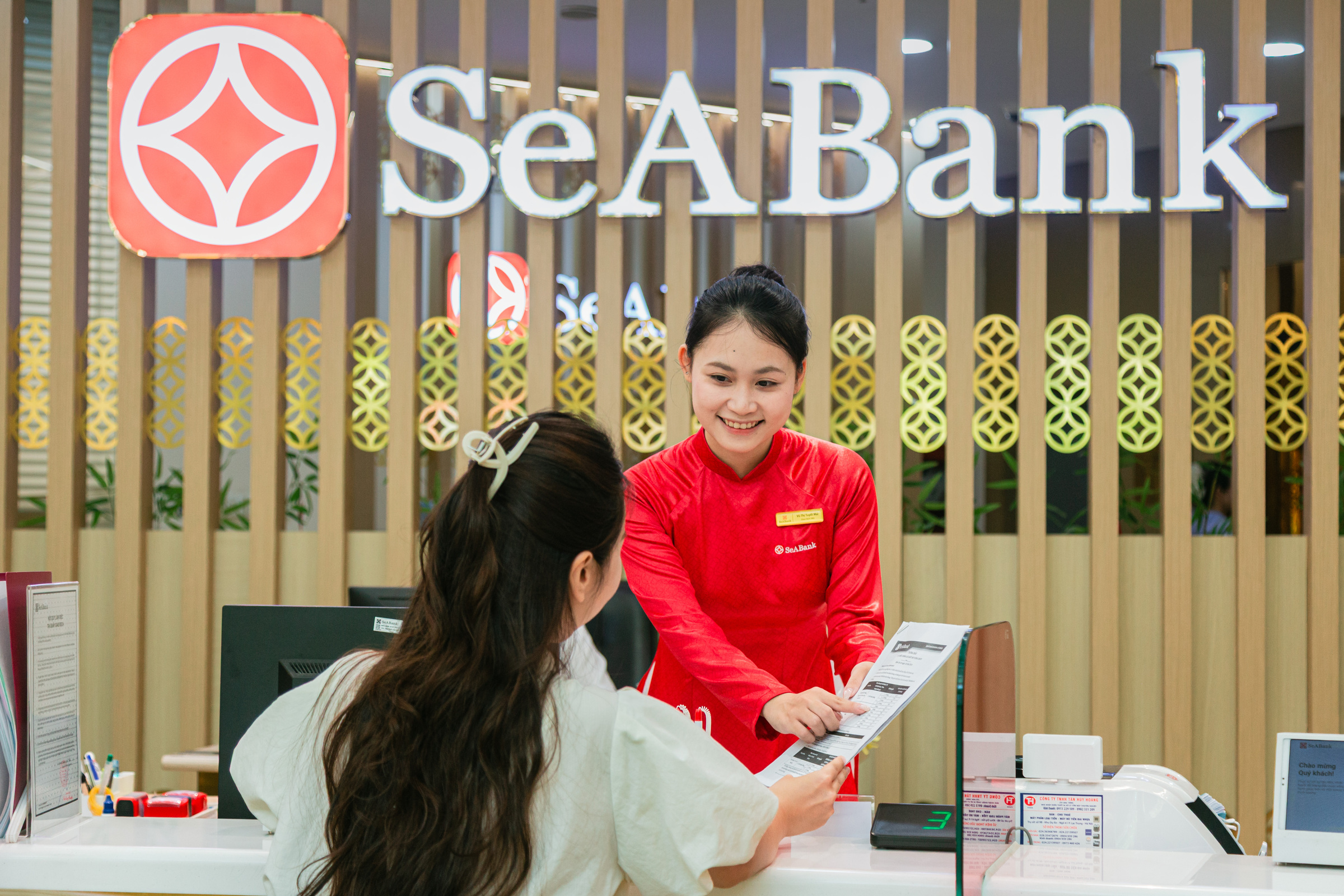 |
SeABank staff advising a customer. Photo: SeABank
The report also observed SeABank's asset quality remains stable. The bank controls its non-performing loan ratio, and new overdue loans are expected to remain low over the next 12-18 months due to a favorable operating environment and effective asset management.
Furthermore, Moody's projects SeABank's capital base will remain robust, with a tangible common equity to risk-weighted assets (TCE/RWA) ratio exceeding 12%. This level is comparable to banks with similar credit ratings.
According to the report, expanding access to medium- and long-term capital from development financial institutions will contribute to increased funding stability, reduced refinancing risk, and a foundation for future growth.
Established in 1994, SeABank currently serves over 4 million customers, employs more than 5,300 staff, and operates 181 transaction points nationwide. The bank focuses on developing a retail model, providing financial products and services to individual customers, small businesses, and large corporations.
The entity has a charter capital of 34,288 billion VND. It holds a Ba3 rating from Moody's across various categories and is one of the first banks in Vietnam to implement international risk management standard Basel III.
Under its "Digital Convergence" strategy, SeABank prioritizes the digitalization of products and services and applies technology to its operations. Concurrently, it invests in technological infrastructure to optimize processes, improve operational efficiency, and develop digital banking services.
Nhat Le