


Data from Chinese Customs reveals that in the first 11 months of 2025, the import turnover of fruits and vegetables from Vietnam reached USD 5,36 billion, an increase of 32,3% compared to the same period. This represents the highest growth rate among China's top 10 suppliers. Consequently, Vietnam's market share for fruits and vegetables in China expanded from 18,27% to 22,55%, securing its position as the second-largest supplier, trailing only Thailand.
This upward trend has allowed Vietnam to significantly narrow the gap with Thailand while widening its lead over Chile. In contrast, Thailand's fruit and vegetable exports to China increased by only 4,7%, causing its market share to slightly decrease from 30,73% to 30,03%.
Meanwhile, Chile, the third-largest supplier, experienced a 6% decline in turnover, reducing its market share to 13,52%. Chile previously held the position of the second-largest supplier, after Thailand, but has yielded this spot to Vietnam in the past two years.
Considering that China's total fruit and vegetable import turnover grew by only 7,2%, Vietnam's growth exceeding 30% demonstrates a genuine gain in market share. This growth is driven not only by increased demand but also by Vietnam's ability to replace supplies from other markets.
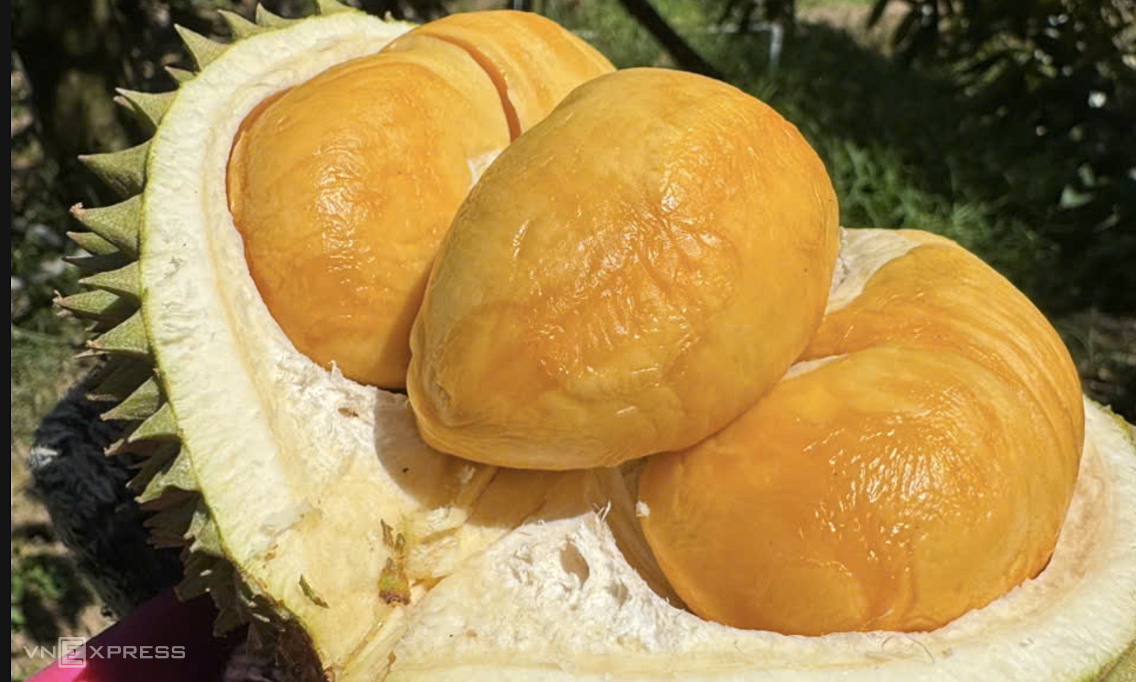 |
Durian at a garden in Can Tho. Photo: Manh Khuong
Key drivers for Vietnam's fruit and vegetable exports to China include staple products such as durian, banana, and dragon fruit. Durian continues to lead, benefiting from surging consumption demand in China, coupled with advantages in large production volume, extended harvest seasons, and increasingly stable official export channels.
Beyond durian, Vietnamese bananas have rapidly increased their market share due to abundant supply, competitive pricing, and shorter transportation times compared to South American competitors. Dragon fruit, while no longer experiencing explosive growth as in previous periods, maintains stable production and plays a foundational role in the structure of fruit and vegetable exports to this market.
Speaking recently to VnExpress, Doan Nguyen Duc, Chairman of the Board of Directors (HDQT) of Hoang Anh Gia Lai, stated that Vietnamese fruits and vegetables are increasingly favored by Chinese consumers not only for their quality but also for their competitive prices. According to Duc, Vietnamese bananas are gaining more recognition on international trading platforms.
At Hoang Anh Gia Lai, bananas and durians are the two primary export items to China. In the first nine months of the year, the company exported 365,670 tons of bananas and 3,284 tons of durians. Nearly 60% of these banana exports went to China, with the remainder consumed in Japan and South Korea.
"China is a massive market that every competitor wants to capture. If Vietnamese goods meet standards and ensure high quality, exports to this market will continue to grow strongly," Duc stated.
Dang Phuc Nguyen, General Secretary of the Vietnam Fruit and Vegetable Association, shares this perspective. He believes China remains a significant market, bringing impressive turnover for the fruit and vegetable sector, especially for tropical fruits like durian. However, according to Nguyen, China frequently adjusts and adds new regulations, requiring Vietnam to adapt more quickly. Management agencies need to implement systematic cultivation area planning and enhance promotion efforts to ensure farmers and businesses produce and export according to standards, meeting the market's evolving demands.
Thi Ha


