Vietnam's high per capita consumption establishes it as one of the world's most distinctive instant noodle markets. On average, Vietnamese individuals consume an instant noodle meal every 4-5 days. Although the country's population is not among the largest, this high frequency of use has made instant noodles a familiar part of daily meals for many families, spanning both urban and rural areas.
Vietnam's position shifts when considering total consumption. Data from the World Instant Noodles Association (WINA) Demand Rankings for 2024 indicates that Vietnamese people consumed approximately 8.14 billion servings of instant noodles, ranking 4th globally. This places them behind China (including Hong Kong), Indonesia, and India. India, with around 8.32 billion servings, surpassed Vietnam due to its larger population, despite a significantly lower per capita consumption rate.
The disparity between per capita and total consumption rankings clearly highlights the unique characteristics of the Vietnamese market. Rather than relying on a large population, this market is shaped by consumers' strong attachment to instant noodle products, thereby playing a significant role in the strategies of global manufacturers.
Beyond market size, WINA also identifies specific consumption trends in Vietnam. The spicy shrimp flavor is currently the most popular variety. Consumers tend to prefer chewy noodles and often add extra onions, lime, and chili during preparation. In addition to wheat-flour noodles, products utilizing rice noodles, such as pho-based noodles, are prevalent in Vietnam – a factor WINA considers rare compared to many other instant noodle markets.
From an economic perspective, instant noodles remain a significant and highly competitive consumer food sector in Vietnam. The market currently features approximately 50 businesses involved in production and trade, offering brands across popular to premium segments. The three largest manufacturers – Vina Acecook, Masan Consumer, and Asia Foods – collectively account for about 70% of the total industry's market share or revenue.
Vina Acecook leads the market, owning well-known brands such as Hao Hao, De Nhat, and Modern. This company previously reported instant noodle revenues of approximately 10,000-12,000 billion VND annually, placing it among Vietnam's major consumer food companies. Masan Consumer, with its Omachi and Kokomi brands, stated that its convenience food sector – predominantly instant noodles – generated over 8,600 billion VND in revenue in recent years. Asia Foods and Uniben are also major manufacturers, contributing to the market's intense competitive landscape.
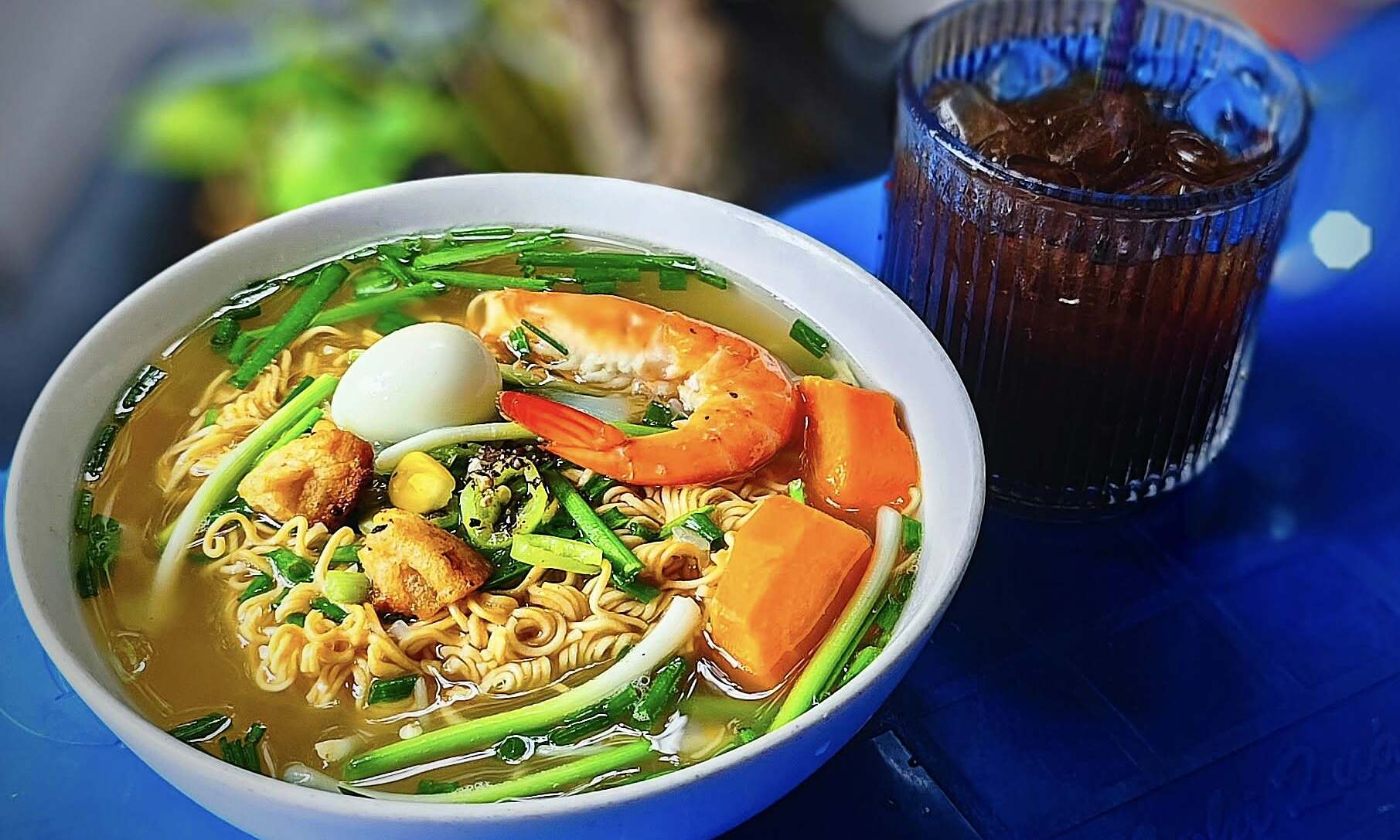 |
On average, Vietnamese people consume a bowl of instant noodles every 4-5 days. Photo: Ha Mai |
On average, Vietnamese people consume a bowl of instant noodles every 4-5 days. Photo: Ha Mai
According to experts, the high consumption of instant noodles in Vietnam stems from their convenience, affordability, and extensive distribution network. However, as incomes improve and food choices become more diverse, the total demand for instant noodles tends to plateau or slightly decrease. In response to this trend, businesses are shifting focus towards enhancing quality, diversifying flavors, and improving nutritional aspects to sustain product appeal.
WINA predicts that in the short term, Vietnam is likely to maintain its position as the world's leading per capita instant noodle consumer. It will also continue to be a key market for the global instant noodle industry, even if the overall growth rate is no longer as high as in previous periods.
Thi Ha