Over several years, VPBank has steadily solidified its standing in the international capital market, thanks to an extensive network of connections with leading global financial institutions. The bank has consistently undertaken large-scale transactions, securing international capital flows totaling billions of US dollars.
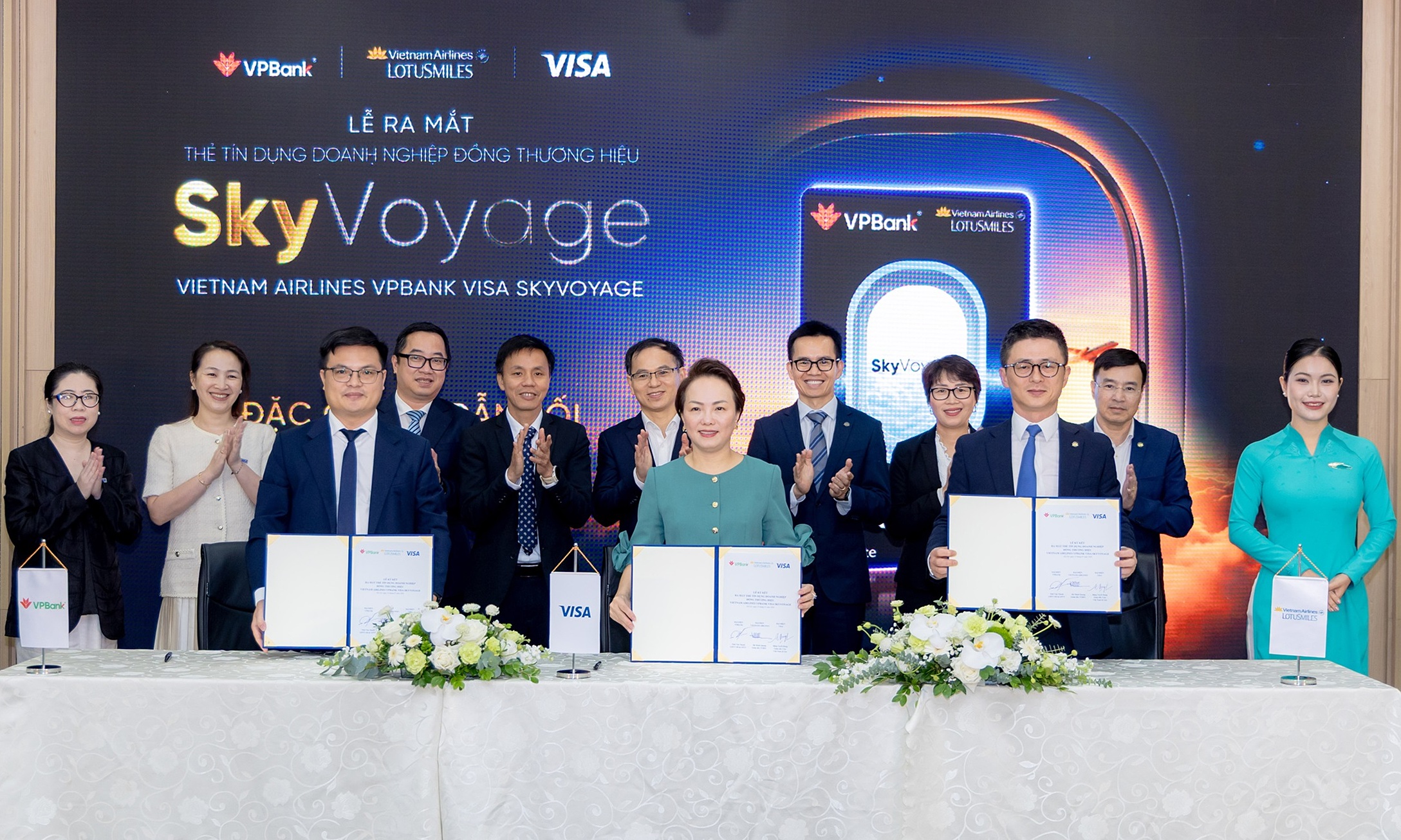
For instance, in late june, VPBank signed a 1,44 billion US dollar (approximately 37,9 trillion dong) sustainable linked syndicated loan with the participation of 15 international financial institutions. The three-year loan attracted numerous banks, including SMBC, ANZ, HSBC, Standard Chartered, Commerzbank, OCBC, Maybank, First Abu Dhabi Bank, and Mashreq Bank.
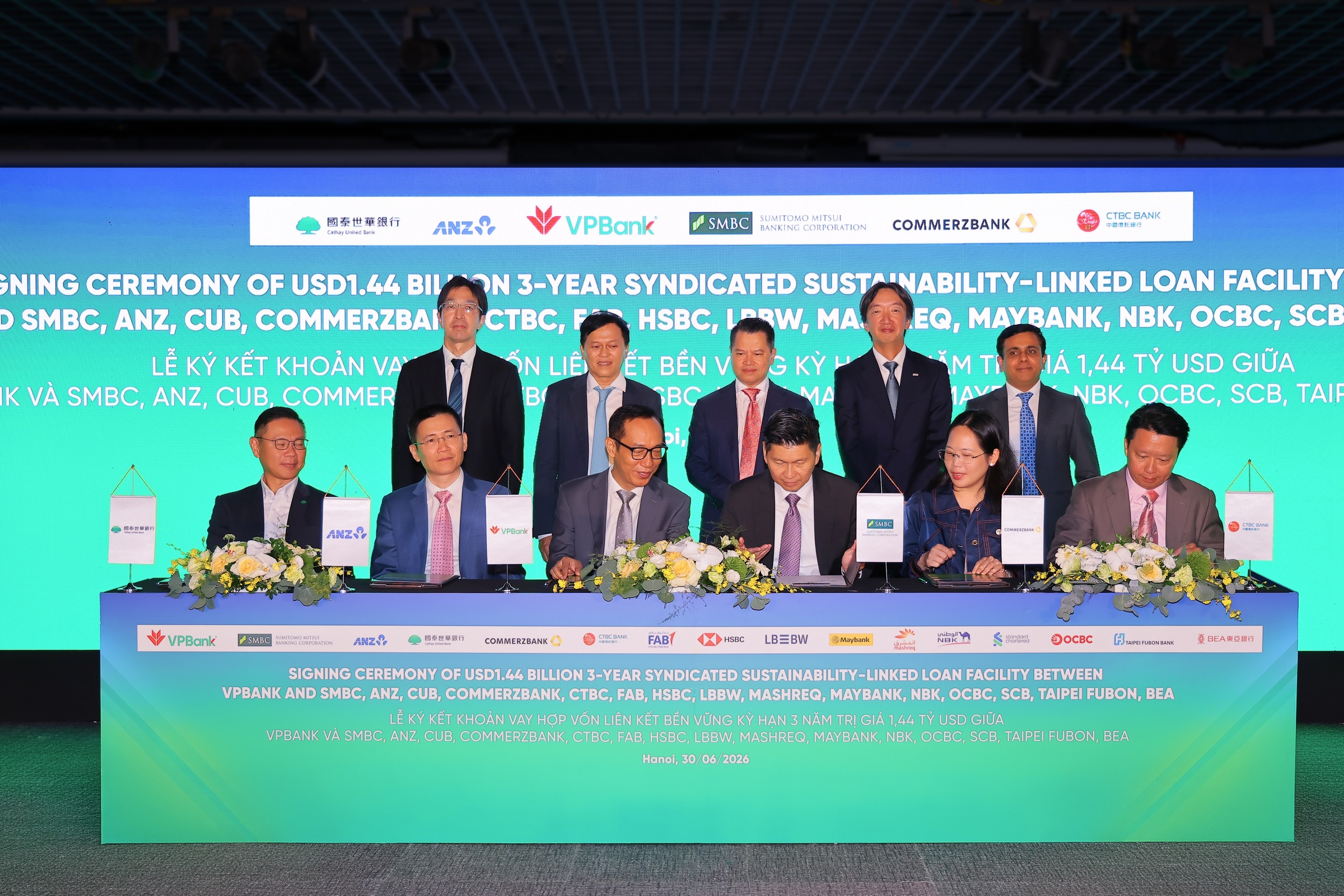 |
Representatives of VPBank and its partners at the signing ceremony for the 1,44 billion US dollar sustainable linked syndicated loan. Photo: VPBank
Previously, in 2025, VPBank successfully raised a 1,56 billion US dollar syndicated loan and issued 300 million US dollars in international sustainable bonds. The bank also signed a 350 million US dollar syndicated loan with SMBC, various development finance institutions (DFI), and bilateral organizations. VPBank's total international capital raised in 2025 reached 2,36 billion US dollars, its highest level to date.
According to the quarter II/2026 financial report, VPBank holds nearly 151 trillion dong (over 5,7 billion US dollars) in foreign currency loans from financial institutions and credit organizations, alongside 300 million US dollars in 5-year international bonds.
Most of VPBank's international loans and bonds have long maturities, contributing to the bank's medium and long-term capital sources. This also helps the bank maintain its liquidity ratios. By the end of quarter II, the bank's loan-to-deposit ratio (LDR) stood at 84,5%, while the ratio of short-term capital used for medium and long-term loans was 22,4%, both within regulatory limits.
"VPB is among the fastest-growing banks in the system in terms of credit expansion, supported by a leading capital base and a diverse ecosystem including retail, SME, corporate clients, consumer finance (FE Credit), and securities brokerage (VPBankS)," commented the analysis team from Yuanta Securities in their banking industry report in early july.
According to industry experts, international syndicated loans typically require banks to meet stringent standards concerning financial capacity, asset quality, risk management, information transparency, and environmental, social, and governance (ESG) criteria. The continuous completion of large-scale deals enhances VPBank's reputation and expands its global partner network, thereby creating an important foundation for the bank to continue accessing international capital in the future.
 |
VPBank's total asset size exceeded 1,5 quadrillion dong by the end of quarter II/2026. Photo: VPBank
Beyond domestic funding, international capital mobilization provides additional resources for the bank to expand its credit activities. After the first six months of 2026, VPBank's consolidated credit outstanding reached over 1,18 quadrillion dong, marking a 23% increase since the beginning of the year; the parent bank's outstanding balance alone was 1,06 quadrillion dong. Building on this, VPBank's consolidated pre-tax profit reached nearly 18,9 trillion dong, a 68% increase compared to the same period last year.
In addition to being a crucial resource for growth, international capital flows also support VPBank in fulfilling its environmental, social, and governance (ESG) commitments. By the end of 2025, the bank's green credit outstanding reached approximately 39 trillion dong, an increase of 78% compared to the start of the year. This capital focuses on sectors such as renewable energy, low-emission transportation, green buildings, the circular economy, and sustainable agriculture. Loans allocated to women-owned small and medium-sized enterprises (SME) exceeded 25,6 trillion dong, representing a 38% increase.
Minh Ngoc