The World Meteorological Organization (WMO) announced this information on 24/4, following a series of forecasts from national meteorological agencies regarding the El Nino phenomenon and its intensity.
El Nino is a climate phenomenon linked to the unusual warming of sea temperatures in the central and eastern Pacific Ocean or tropical sea regions. This phenomenon alters global weather patterns, typically occurring every two to seven years and lasting nine to twelve months.
The WMO noted a rapid increase in sea surface temperatures, indicating a high probability that El Nino will develop between May and July. Wilfran Moufouma Okia, Head of Climate Prediction at the WMO, stated: "Climate models consistently predict a strong El Nino developing in the coming months."
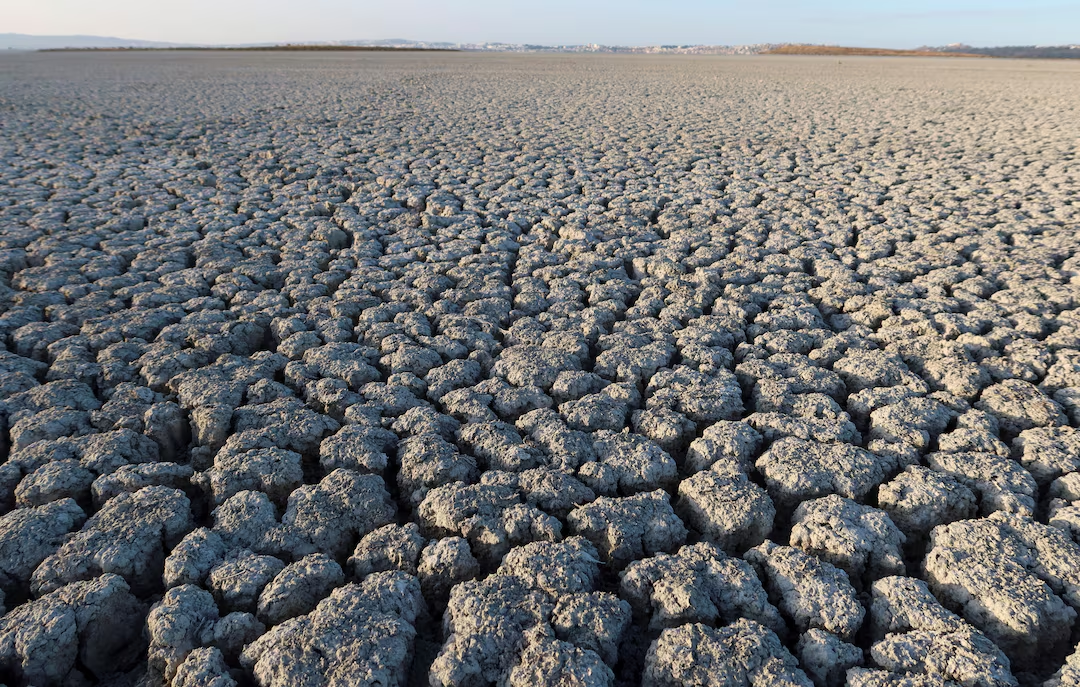 |
Cracked earth at Sijoumi lagoon in Tunis, Tunisia, on 10/8/2023. Photo: Reuters |
Early signs of this climate event are already evident. Chris Hyde, a meteorologist at the Swiss weather research company Meteomatics, observed heatwaves and drought already occurring in parts of Australia and India. He noted: "The last time similar signals were recorded was during the 2015-2016 super El Nino event."
Forecast models from the US and China both warn of the risk of a super El Nino phenomenon. This media term refers to a very strong El Nino intensity, characterized by a three-month average sea surface temperature of 2 degrees Celsius or higher. Historically, super El Nino events have occurred three times: in 1982-1983, 1997-1998, and 2015-2016.
The US National Oceanic and Atmospheric Administration (NOAA) predicted two weeks ago a 50% probability of a strong or super El Nino occurring this year. If a super El Nino occurs, China's National Climate Center warns that 2026 could be the hottest year on record. Scientists note that the most recent El Nino event, while not "super" in intensity, still made 2024 a record-breaking hot year for Earth.
The WMO states that El Nino typically causes widespread climate disruptions. These can include increased rainfall in the southern US, South America, the Horn of Africa, and Central Asia, while causing droughts in Australia, Indonesia, and parts of South Asia. Furthermore, even a lower-intensity El Nino can cause severe flooding, damaging power systems and substations due to landslides and rising water levels. Conversely, during droughts, electricity generation is also impacted by a sharp decrease in water supply. This exacerbates the global energy crisis, already affected by the Middle East conflict. The phenomenon can also worsen global warming.
Bao Bao (according to Reuters, Independent)