On the morning of 26/5, Nghiem Van Binh, Head of the Exam Management and Quality Assurance Department at the Hanoi Department of Education and Training, provided candidates with several important points before the 10th grade entrance exam.
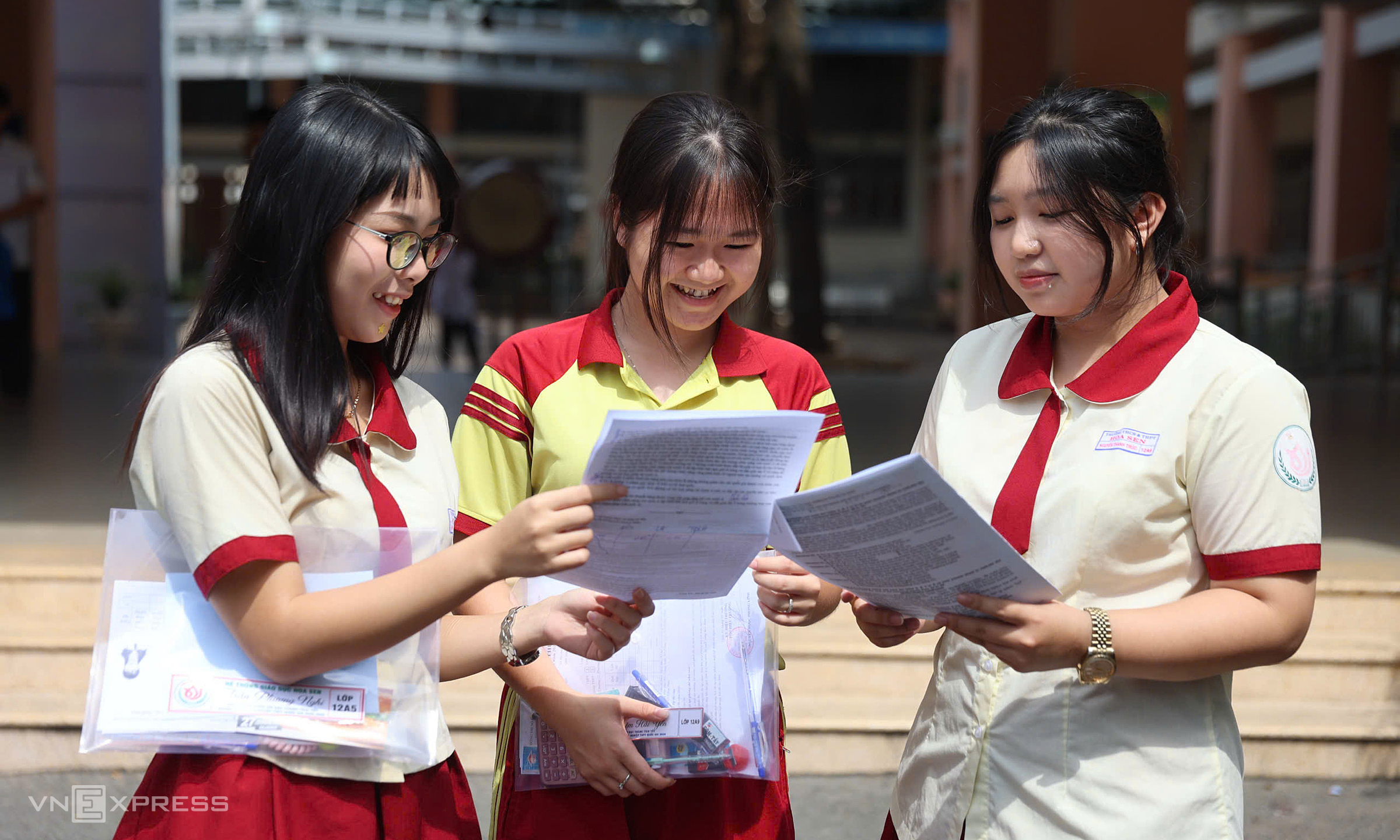
Candidates are permitted to bring the following items into the exam room: pens, rulers, pencils, erasers, set squares, protractors, drawing tools, and handheld calculators without word processing functions or memory cards. Similar to last year, candidates are no longer allowed to bring the Geography Atlas, Periodic Table, or solubility charts used in Chemistry.
Prohibited items include correction fluid, carbon paper, alcoholic beverages, weapons, flammable or explosive substances, and communication devices (information transmitting/receiving, audio recording, video recording devices).
For candidates who need to bring health support devices, Mr. Binh stated that police forces will inspect them. If no irregularities are found, a security seal will be affixed, allowing candidates to bring them into the exam room.
According to Mr. Binh, the approach to other items, such as mechanical watches, jewelry, and transparent clear bags, is "flexible, not rigid". Invigilators will not prohibit candidates from bringing these items into the exam room, but it is crucial to emphasize that candidates must not exploit them for cheating.
Regarding handheld calculators, Mr. Binh stressed that only those without memory cards, transmitting/receiving functions, or word processing capabilities are permitted. There are no specific regulations concerning brands or types of calculators.
For calculators containing periodic tables or solubility charts, Mr. Binh noted that invigilators must inform candidates of the regulations, as these devices contain prohibited content. Therefore, if a candidate is found using such a calculator, they will be disqualified.
Upon receiving the exam paper, candidates must check the number of pages, the exam code, and the printing quality. Within 5 minutes of the start of the exam, candidates must report any irregularities (missing pages, tears, damage, smudges, blurriness) to the invigilator. After this time, candidates will bear responsibility for the exam paper they have received.
Invigilators are prohibited from affecting a candidate's ability to complete the exam. Mr. Binh gave an example: if an invigilator accidentally signs the exam sheet and answer script incorrectly, they must not ask candidates to switch to new papers, as this would affect their psychology, time, and performance. In such cases, the invigilator must document the irregularity, report it to the head of the exam venue, and a joint grading of that specific exam paper may be organized later to ensure candidates' rights.
Regarding exam times, candidates who arrive more than 15 minutes late from the start of the exam will not be permitted to enter the exam room. This means they will receive no score for that subject and will not be eligible for admission to public 10th grade classes.
For essay-based exams, candidates may submit their papers after two-thirds of the time has elapsed, but they must also return the exam paper and scratch paper. For multiple-choice exams, candidates are not allowed to submit their papers early and can only leave the room when the exam time is over.
For specialized subjects exams, a new point this year is that History and Geography exams will also be answered directly on the exam paper, similar to Foreign Language and Natural Sciences, which adopted this format last year. The duration for all specialized subjects is 150 minutes.
Candidates taking multiple specialized subjects may sit for exams at different venues, which might differ from where they take the three common subjects. Therefore, Mr. Binh advised candidates and their families to carefully check the exam room and venue on their admission tickets. They should not be complacent and assume the exam venue for a later session is the same as the previous day, as this could lead to arriving at the wrong venue and missing the exam.
Mr. Binh reminded teachers to strictly adhere to the regulations and invigilation principles, not to be negligent or overconfident, and not to arbitrarily handle situations.
"When there is an urgent issue that requires input from the exam steering committee, invigilators and heads of exam venues must report it immediately for prompt resolution", Mr. Binh stated. "Invigilators must absolutely not act independently or be creative during the invigilation process".
 |
Thanh Hang
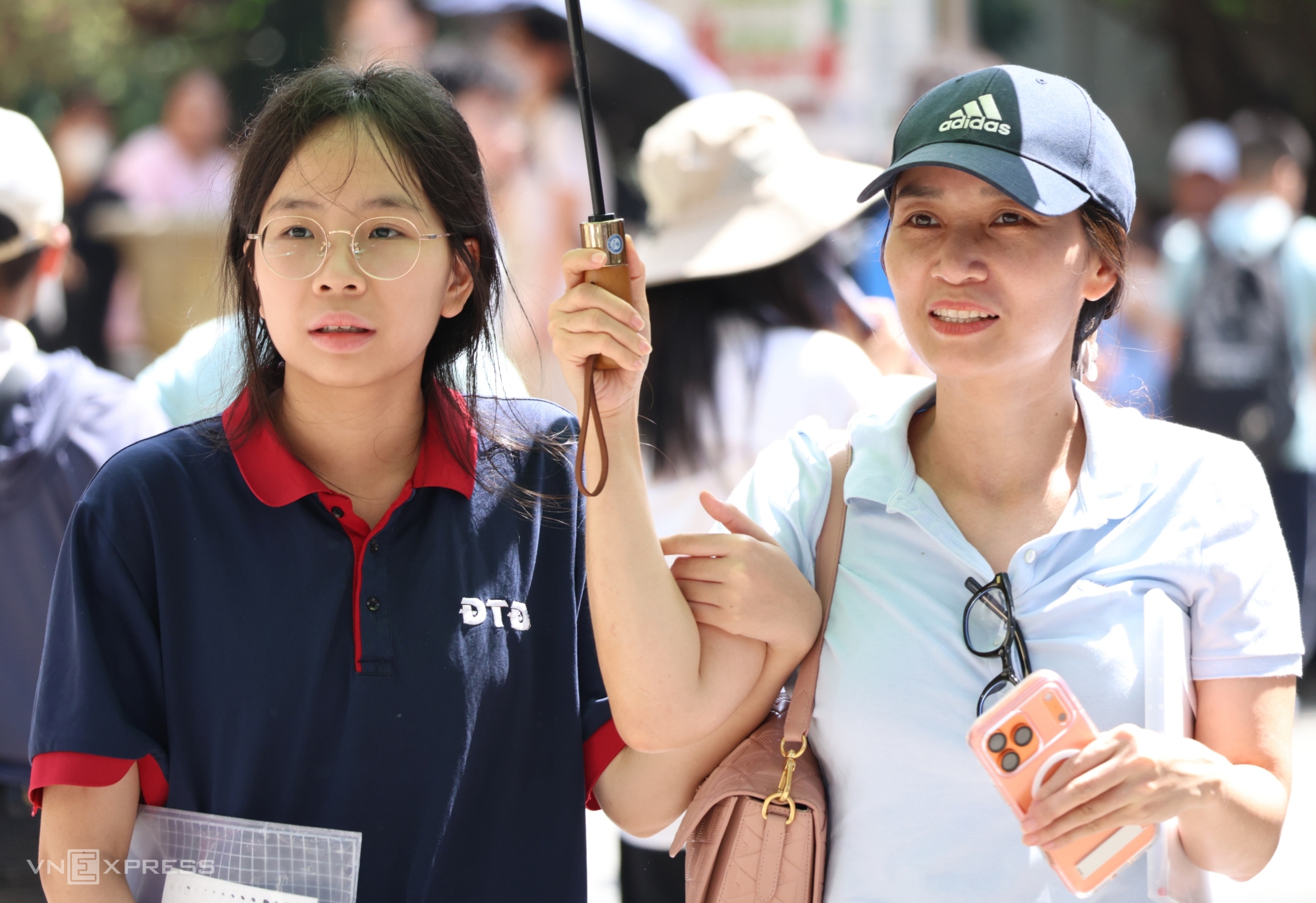
Candidates taking the 10th grade entrance exam at the High School for Natural Sciences, 25/5. Photo: Thanh Hang
This year, Hanoi has approximately 147,000 students graduating from junior high school, with nearly 125,000 registering for the public 10th grade entrance exam. The admission quota for 10th grade is about 82,660, meaning approximately 56% of candidates will be admitted to public schools.
Students will take three subjects: Math, Literature, and Foreign Language on 30-31/5. Candidates taking specialized subjects will have an additional exam day on 1/6. Exam scores and benchmark scores for public 10th grade classes in Hanoi are expected to be announced from 19 to 22/6.
The official 10th grade admission ratio for 122 public schools in Hanoi in 2026.