QS announced its world university rankings across five broad subject areas on 25/3. These rankings cover both overall fields and specific subjects, totaling 55 disciplines.
In Asia, South Asia recorded the highest percentage of universities improving their subject rankings at 40%, followed closely by Southeast Asia at 38%. Both regions lead globally in this regard.
South Asia's most significant advancements were observed in engineering and technology (42%) and social sciences and management (41%). India stands out with 99 institutions featured, an increase of 20 from last year. These universities collectively secured 599 positions across various subject rankings, marking a 12,4% rise, with 44% of these positions showing an upward trend.
According to The Tribune, Indian universities achieved the highest promotion rate globally. They appeared 27 times in the top 50 across various subjects and fields, more than doubling their presence since 2024.
In Southeast Asia, Singaporean universities featured in the global top 10 for 42 subjects, making them the most prominent in the region and third worldwide, according to Forbes. National University of Singapore and Nanyang Technological University were also the only two Asian institutions to reach the top 10 in the engineering and technology field.
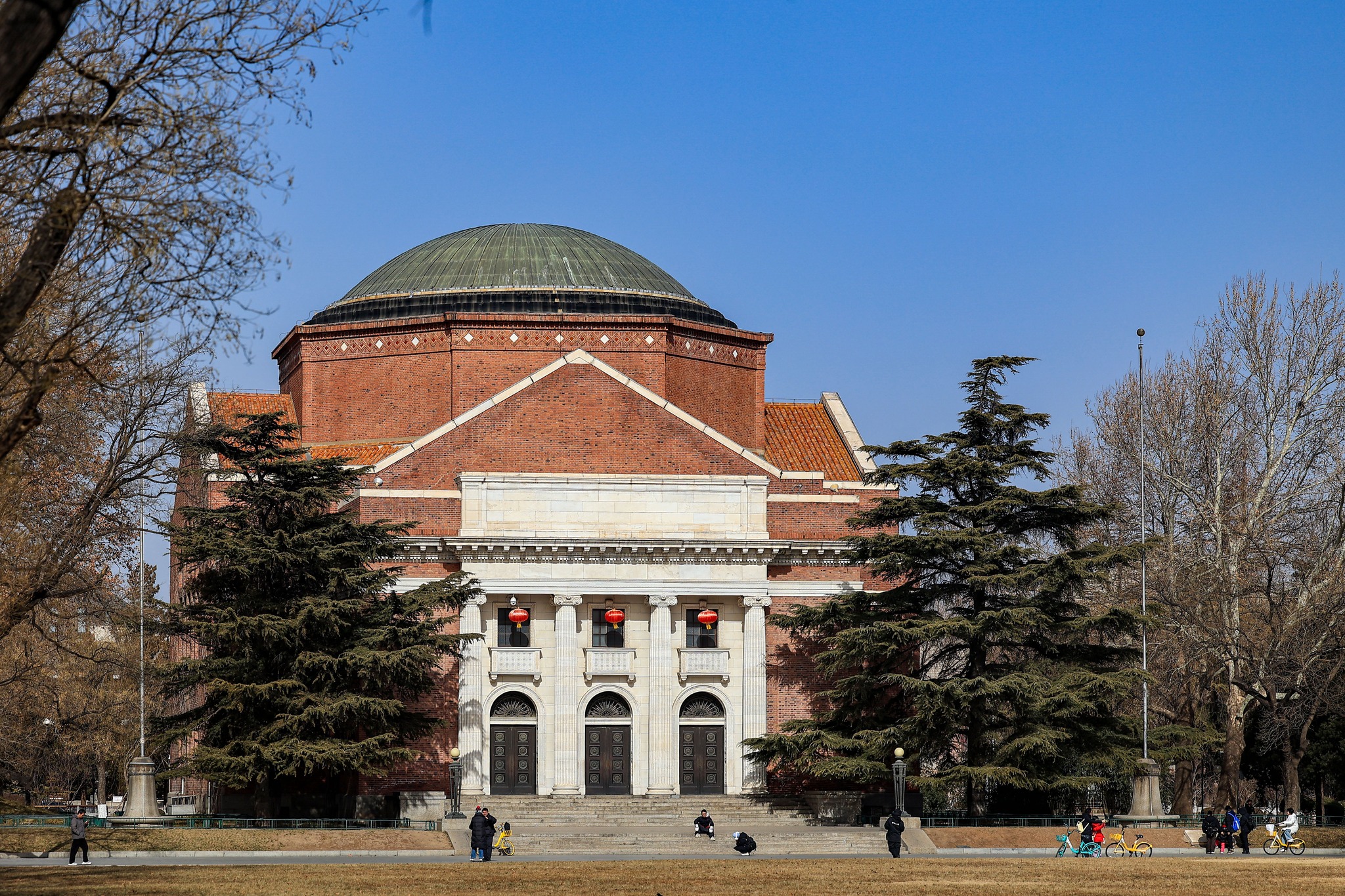 |
A view of Tsinghua University, China. Photo: Tsinghua University Fanpage |
Conversely, East Asia recorded the highest number of new entrants but also the largest decline rate across various subjects at 43%. South Korean national universities were notably absent from the top 100 and top 200 of subject rankings. Data from The Chosun Daily indicated that among leading institutions, only one university made it into the top 100 for a subject, while only four were in the top 200.
Hong Kong (China) also saw 141 out of 266 (53%) of its subject rankings decrease this year. This represents the sharpest decline in the region over the past three years, according to SCMP.
The University of Hong Kong, ranked top 1 in Asia by QS for 2026, followed a similar trend in the global top 20 and top 50 subject rankings. The university held 29 positions in the top 50 for subjects, a decrease of 10 from the previous year.
China had only one representative in the overall top 10 field rankings: Tsinghua University, which placed 10th globally in natural sciences.
When examining fields, natural sciences featured the most Asian universities with 1,224 entries. This was followed by: social sciences and management (1,176), engineering and technology (1,109), life sciences and medicine (925), and finally, arts and humanities (735).
QS is one of three prominent global university ranking organizations, alongside Times Higher Education (THE) and Shanghai Ranking (ARWU).
This year's subject rankings were based on data from 1,900 institutions, an increase of approximately 300 from last year.
QS employs five criteria, with academic reputation carrying the most weight (40-60%). The remaining criteria include: employer reputation, citations per paper, the H-index (measuring research productivity and impact), and the International Research Network (IRN) index (assessing international collaboration effectiveness). Consequently, institutions with a higher number of international publications gain an advantage.
Vietnam had 13 representatives ranked across 23 subjects, with four institutions appearing for the first time.
By Khanh Linh