"My journey was not easy at all. I had to put in a lot of effort to reach this position," she shared after receiving the results recently.
Born with a visual impairment, Nathan attended a school for disabled individuals before pursuing law at Kannur University. She was the only blind student in her program, where she relied on Braille materials and assistive technology to complete her studies, graduating in 2024.
A crucial opportunity arose last year when the Supreme Court permitted the recruitment of visually impaired individuals into the judiciary, including written examinations and interviews.
"I seized the opportunity, and this ruling changed my life," she recounted.
Preparing for the demanding judicial entrance exam required rigorous self-study. Nathan meticulously took notes in Braille and utilized assistive technologies, such as screen readers and speech-to-text software. For the interview stage, she sought guidance from an experienced legal expert, confidently demonstrating how she would perform judicial duties with technological support.
Lawyer K.G. Sunilkumar, Nathan's mentor, initially had reservations but soon recognized her exceptional capabilities. He praised her sharp intellect and dedication to the legal profession.
"Even experienced lawyers sometimes get confused, but if you ask Thanya, she can recall laws instantly. She handles documents with ease and has participated in court litigation many times," Sunilkumar shared.
Nathan acknowledges the challenges ahead but remains confident in her abilities. She expressed hope that court infrastructure will become more accessible for disabled people in the future, ensuring equal opportunities for all.
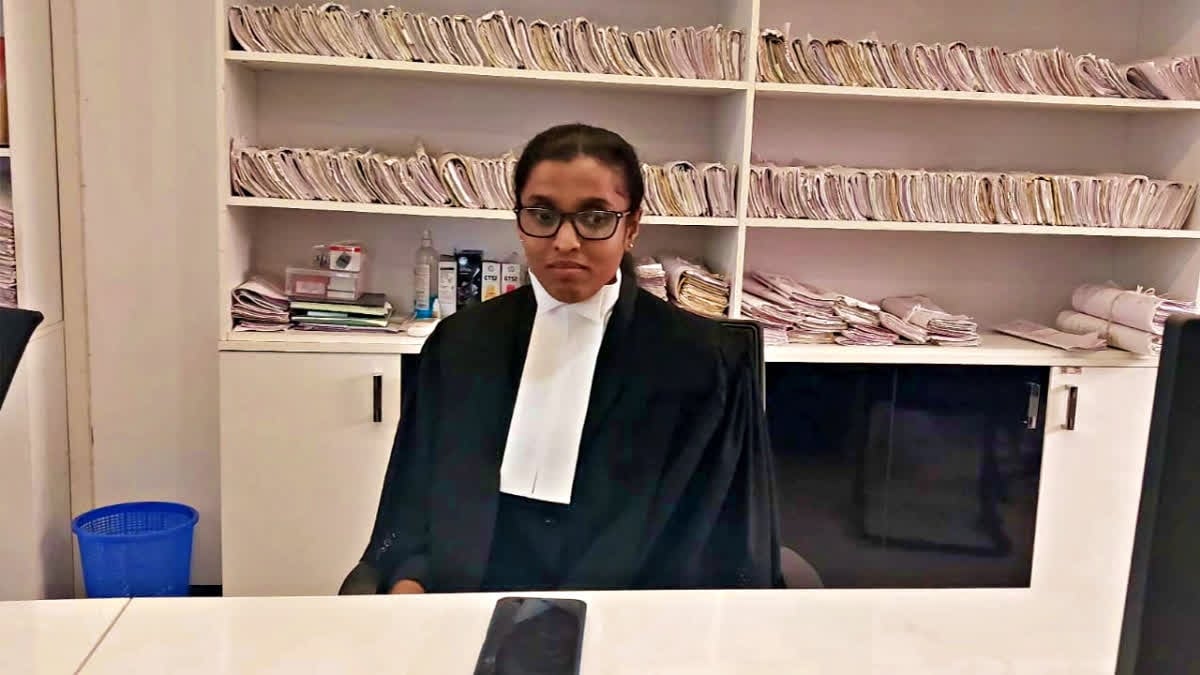 |
Thanya Nathan. Photo: ETV Brahat |
Doan Hung (According to The Hindu, NDTV, ETV Brahat)