Immigration, Refugees and Citizenship Canada (IRCC) data reveals a more than 27% drop in total international students from 12/2023 to 11/2025. Notably, new student arrivals during the first 11 months of last year were 60% lower than in the same period of 2024.
| Period | Total international students | Number with study permits | Number with both study and work permits |
| 12/2023 | 994.800 | 673.970 | 320.830 |
| 11/2025 | 721.230 | 476.330 | 244.900 |
IRCC attributes this decline to the simultaneous launch of several new policies in early 2024. These measures include capping international student admissions, tightening eligibility for post-graduation work permits (PGWP), and increasing visa refusal rates.
Recently, Canada doubled the financial proof requirement for international students to 20,635 CAD. The Student Direct Stream (SDS) program, designed to fast-track study visa processing, has also been suspended.
Lena Metlege Diab, Canada's Minister of Immigration, affirmed the government's need to act. She cited a segment of international students using their studies as a "stepping stone" to immigration and acknowledged numerous fraud cases bringing individuals to Canada under false promises.
The number of international students in Canada is expected to continue declining in 2026. The government has capped new international student admissions at 155,000, nearly half of last year's figure.
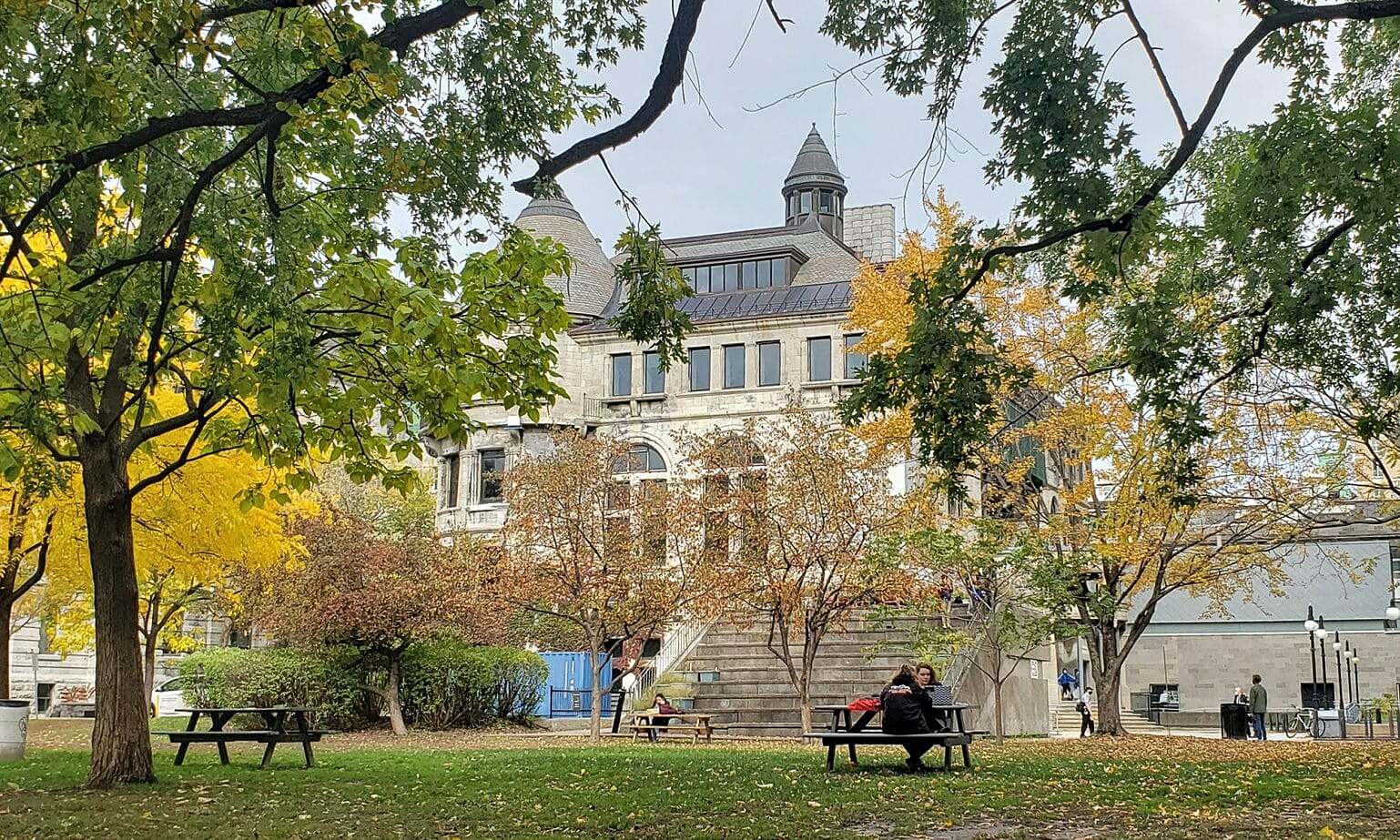 |
McGill University campus. Photo: *McGill University Fanpage*. |
Last year, Canada issued approximately 437,000 study permits. Of these, over 73,000 were for postgraduate levels (master's, doctoral), and nearly 243,000 for undergraduate and other programs. High school students, a government-prioritized group, and those needing permit extensions received the remaining permits.
According to its roadmap, Canada aims to reduce the temporary resident population (including international students and short-term foreign workers) to below 5% of the total population by the end of 2027.
The tightening of admissions represents a government effort to alleviate pressure on housing, healthcare, and public services. However, this also risks reducing economic revenue from international students, who contributed nearly 40 billion CAD (over 28.5 billion USD) in 2022.
Canada is one of the two leading global study destinations, alongside the United States. Of over one million international students last year, 41% were from India and 12% from China.
Huyen Trang (based on IRCC, ICEF Monitor)