According to guidelines issued mid-this month, elementary schools are prohibited from administering any written tests to students in the first two grades. For other elementary grades, only one examination is permitted at the end of each semester.
At the secondary level, students will only take one mid-term and one final exam. China's Ministry of Education has also strictly forbidden inter-school or district-level competitions, with the exception of those for final-year students.
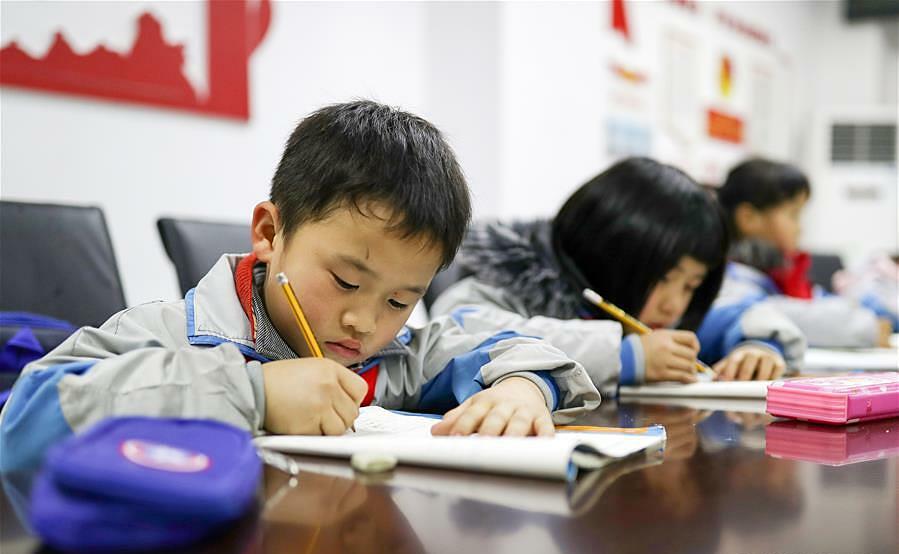 |
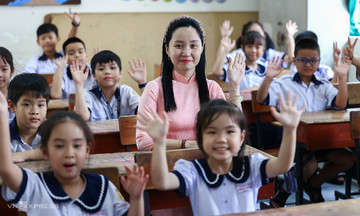
Students at an elementary school in China. *Photo: China Daily/News.cn* |
Another significant change involves the grading system. Exam results must now be converted to a level-based classification system (A, B, C...) instead of specific numerical scores. Schools are also prohibited from publicly ranking students. The primary objective of testing is to diagnose knowledge gaps and adjust teaching methods accordingly.
The Ministry of Education has also tightened the exam question design process, requiring content to adhere strictly to the curriculum and avoid overly difficult or tricky questions. Exam papers must undergo review by at least three people before use. Schools lacking the capacity to design their own exams must utilize those provided by educational authorities and are strictly forbidden from purchasing pre-made exams.
This move comes amid alarming levels of mental health issues among children in China.
A study published in The Lancet Regional Health — Western Pacific in September revealed that the overall prevalence of mental disorders in Chinese children and adolescents has exceeded 10%. Anxiety, depression, and impulse control disorders are identified as the most significant burdens.
The China Youth Development Report, released in 2021, estimated that approximately 30 million children and adolescents under 17 in the country are experiencing various emotional and behavioral problems.
To address these concerns, the government implemented several synchronized measures in November, including: reduced screen time, mandatory two hours of daily physical exercise for students, and a decrease in homework assignments.