The Ho Chi Minh City Department of Education and Training issued a plan on 30/12 to minimize student phone use during breaks without outright prohibiting it.
Instead, each school will design break-time activities, categorized into active pursuits, such as sports, games, and performing arts, and passive options, including chess, reading, drawing, or quiet relaxation.
Schools must also provide activities for students who need to use phones for learning, research, or organized group entertainment. Such use requires teacher permission and must occur in designated areas.
"We do not encourage students to use phones or electronic devices individually, passively, or in isolation, such as playing solo games, browsing social media alone, or watching prolonged videos without interaction", the department's plan states.
The Department of Education and Training encourages schools to establish clear regulations on the areas, times, and forms of phone use, assign teachers and support staff for break times, and avoid confiscating or handling devices unlawfully.
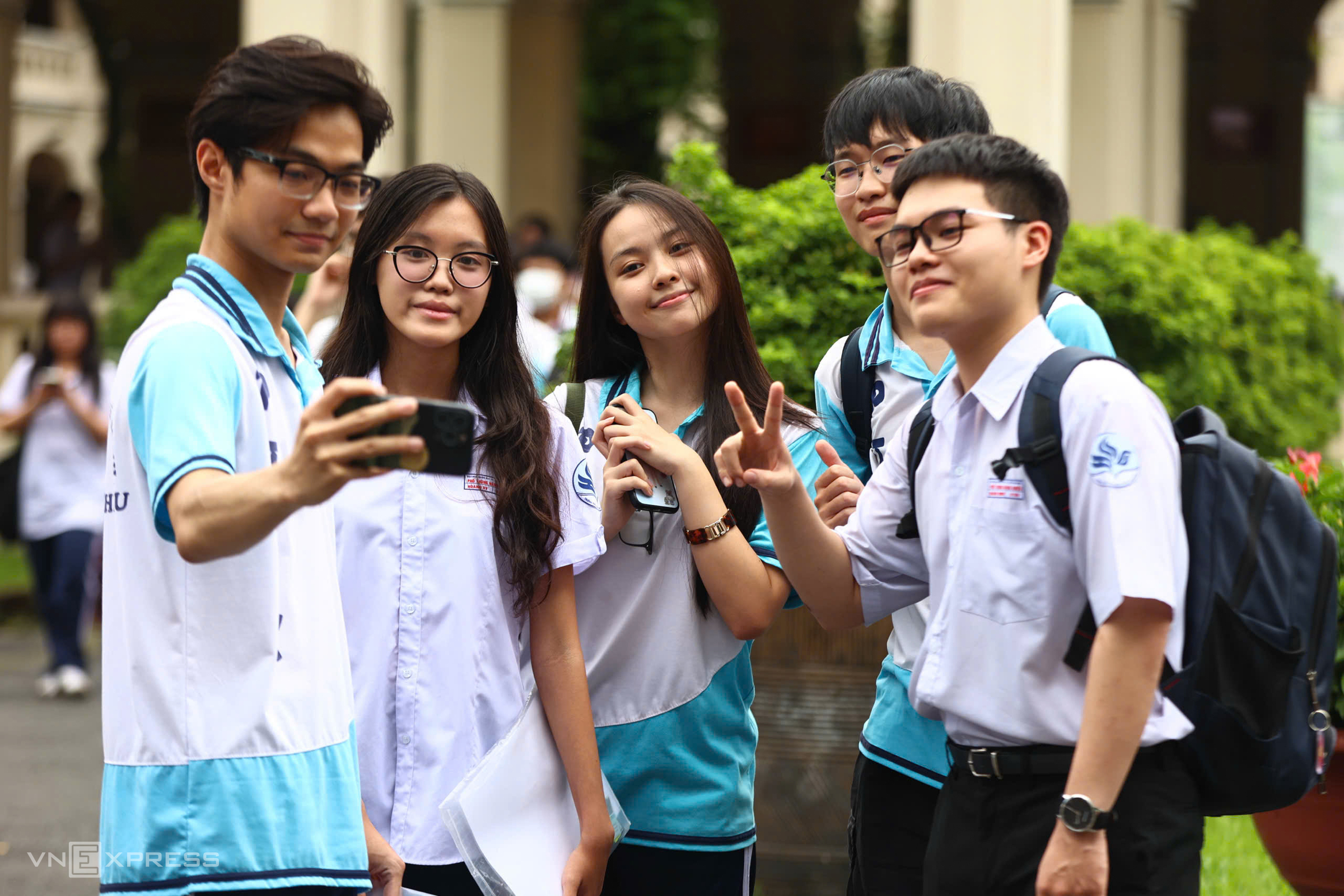 |
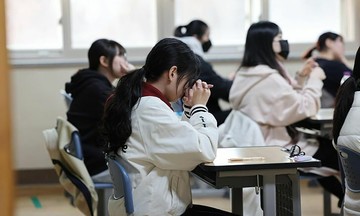
Candidates taking the 2025 high school graduation exam in Ho Chi Minh City. Photo: Quynh Tran
In october, Ho Chi Minh City piloted phone use restrictions during breaks across 16 schools, each with approximately 1,800 to 3,100 students. The pilot showed a marked reduction in passive, solitary phone use during break times. Students engaged more directly with each other, with over 80% participating in at least one activity, such as playing sports or reading. Nearly 98% of surveyed parents supported the department's approach.
The Department of Education and Training acknowledges that a small number of students continue gaming and using social media, requiring persistent educational efforts. Additionally, funding and facility challenges in some schools pose barriers, making alternative activities less engaging.
According to Ministry of Education and Training regulations, students may use phones for learning during class with teacher permission. Phone use during breaks is not prohibited.
This issue has been controversial for years. Recently, many localities are considering restricting student phone use in schools. For example, Hanoi in august required schools to collect student phones before the first class and return them only after the school day concludes. Teachers were advised to design lessons that do not require phone use.
Duong Tam