The program aims to cultivate highly skilled professionals with deep expertise in robotics and artificial intelligence, capable of applying interdisciplinary knowledge to develop and implement smart robot and AI solutions in real-world scenarios.
A 2024 IT labor market report by ITviec/VietnamWorks indicates a 67% surge in demand for engineering roles related to AI and robotics. This upward trend is expected to persist from 2025 to 2026, driven by investments in smart factories, unmanned aerial vehicles (UAVs), humanoid robots, and autonomous vehicles. The demand for AI professionals is also projected to rise significantly.
FPT University's robotics and artificial intelligence major, focusing on UAVs and humanoids, integrates academic learning with practical experience. Students undertake an on-the-job training (OJT) semester at businesses, gaining direct experience in real-world environments before graduation. This practical exposure allows them to return to their studies with clear academic goals, select relevant modules, and develop professional skills that align with industry demands.
The curriculum is developed in consultation with businesses, experts, and professional organizations. It integrates technical and safety standards relevant to the field, such as flight safety for UAVs, human-robot interaction safety, and industrial robot operation safety. This approach ensures the program aligns with labor market demands.
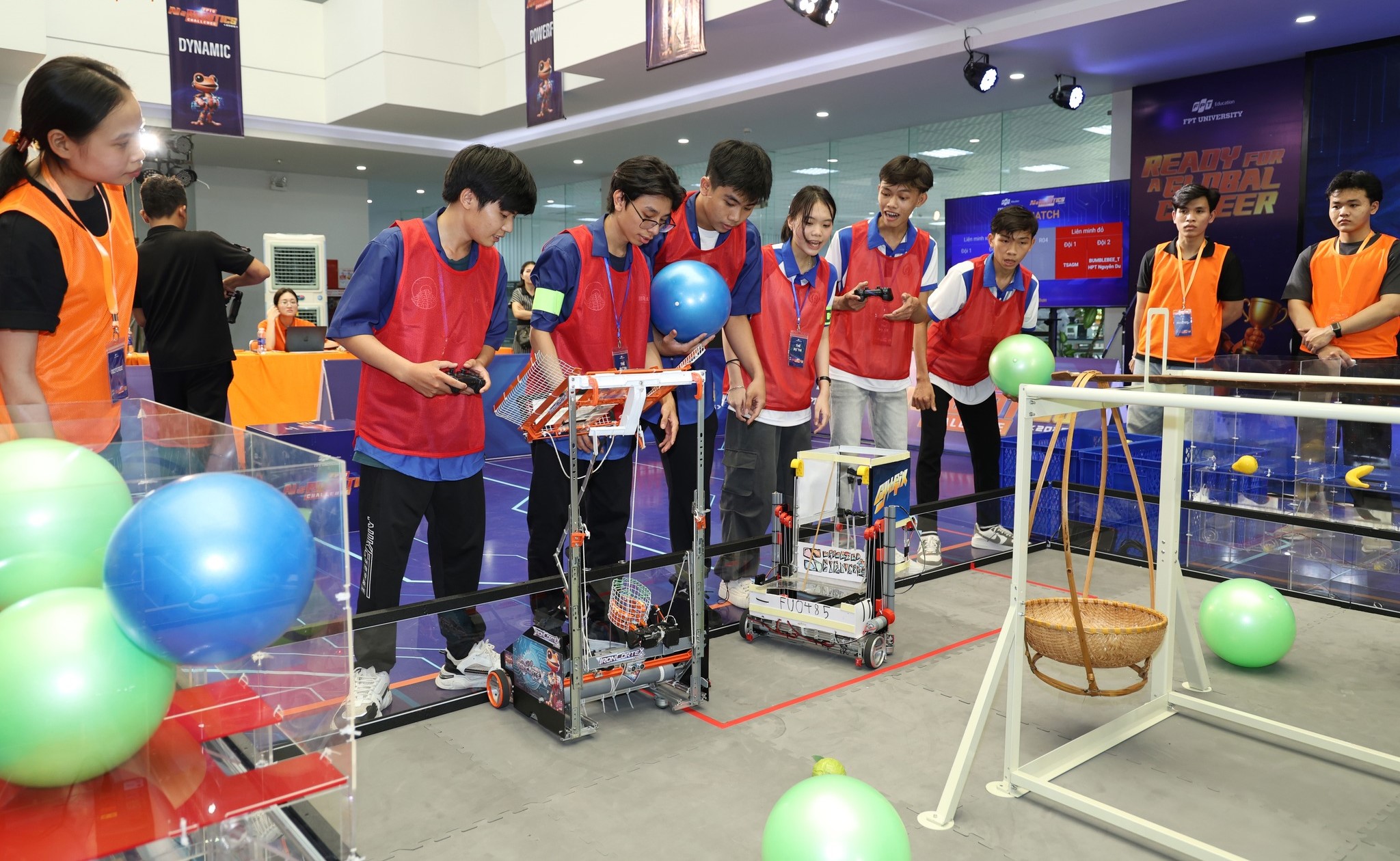 |
FPT students participate in a robot competition. Photo: FPT University |
A university representative stated that the program's design incorporates professional knowledge and skill feedback from businesses, experts, and industry organizations. The university will equip students with core information technology knowledge, as well as technologies and methods of robotics and AI, including: mechanics, robot control, artificial intelligence and machine learning, computer vision and robot perception, system programming, and embedded systems.
FPT University will offer training in advanced technology branches, notably UAVs and humanoids. For UAVs, the program emphasizes design, flight control, embedded systems, and practical applications. The humanoid branch focuses on developing robot systems capable of interaction and human behavior simulation. Students also explore other development areas like industrial robots, autonomous vehicles, and automation systems through specialized modules and projects.
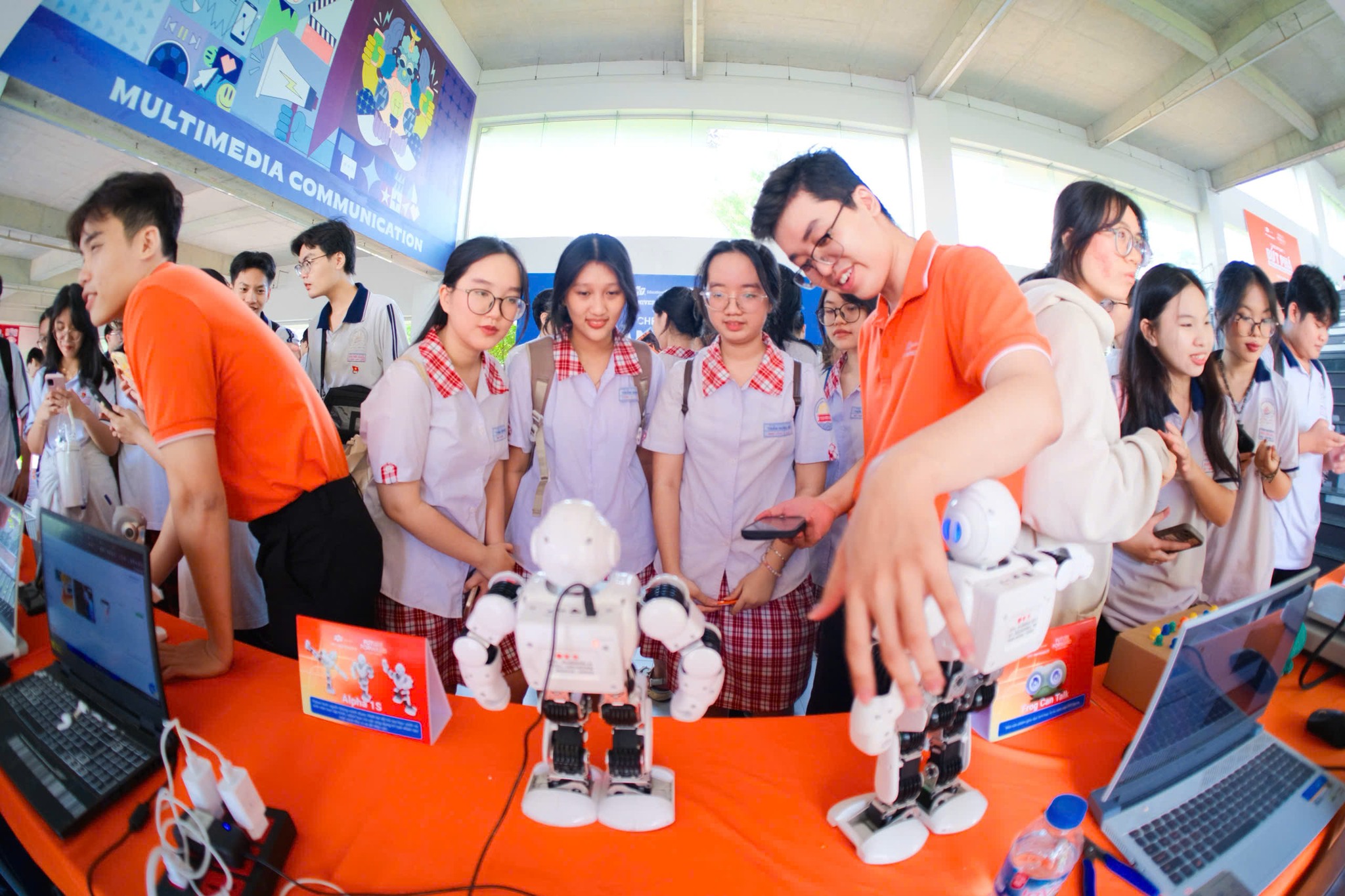 |
Students experience technology at an FPT University event. Photo: FPT University |
According to a university representative, this approach ensures students excel in their chosen field and adapt flexibly to various job roles in the Industry 4.0 era. Students also benefit from the technology ecosystem of FPT Group's units, such as FPT Automotive, FPT UAV, FPT.AI, FPT SEMI, and FPT Software. During their studies, students gain practical experience on the group's autonomous vehicle, UAV, and smart factory projects.
The program adopts an "AI-first" approach, prioritizing artificial intelligence as the core value of technology products, rather than solely focusing on mechanical aspects. The entire major curriculum is taught in English and integrates international technology certifications, preparing students for the global labor market.
With a focus on international integration, the university emphasizes developing foreign language proficiency for global study and work environments. Students achieve English proficiency equivalent to level 4 of the 6-level Foreign Language Competency Framework for Vietnam, or an IELTS 6.0. They also learn a second foreign language, Japanese, which provides an advantage in learning, working, and adapting to international settings.
With a robust training foundation, graduates can pursue various positions, including robot engineer, UAV & drone AI engineer, autonomous robot (AGV/ARM) engineer, AI & robot engineer, automation and control engineer, or advanced research and teaching roles.
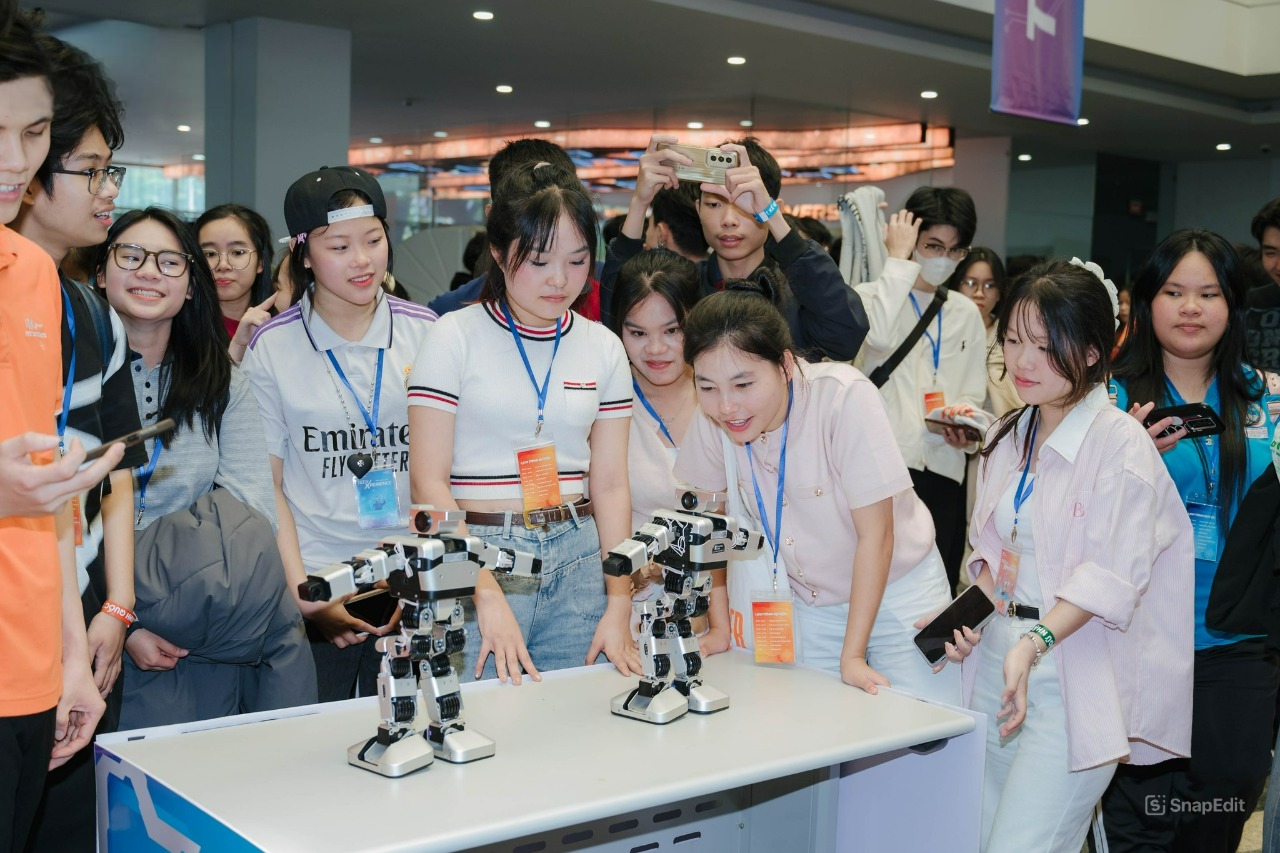 |
High school students at an event in the field of robotics. Photo: FPT University |
Beyond diverse career opportunities, income levels in this field are among the highest in the market. A university representative shared that recent graduates can expect monthly salaries ranging from 18 to 30 million VND. Mid-level engineers earn 50-85 million VND per month, while senior specialists can exceed 125 million VND per month.
"The attractive income levels reflect the industry's appeal amid rapid digital transformation and automation," the representative noted.
The launch of the robotics and artificial intelligence major, with its UAV and humanoid focus, marks an expansion of FPT University's training system. It also demonstrates the university's strategy to anticipate technology trends and market demand for skilled personnel.
Building on its information technology training foundation, the university is developing a multidisciplinary applied university model. It continues to expand its training ecosystem with a Technology-Startup-Global orientation, positioning technology at the core of its human resource development strategy for the digital age.
Nhat Le