Experts from Harvard University, Stanford University, and Dartmouth College on 14/5 released a study titled "Education Report Card". This research analyzed reading and math test scores of students from grades 3 to 8 across more than 100 school districts in the United States, covering the period from 2009 to 2025.
Compared to a decade ago, 2025 reading scores declined in 83% of school districts with available data, while math scores saw a reduction in 70%.
Notably, the study indicated that this decline was not solely due to the Covid-19 pandemic but began in 2013. By last year, 8th grade students' reading scores had reached their lowest level since 1990.
"The pandemic appears to have accelerated the decline in students' math proficiency. However, for reading, the annual rate of score decrease remained consistent before, during, and after the pandemic", the research team stated.
Tom Kane, director of the Center for Education Policy Research at Harvard, referred to this phenomenon as a "learning recession". According to him, this situation began a decade ago, coinciding with social media's increasing presence in children's lives.
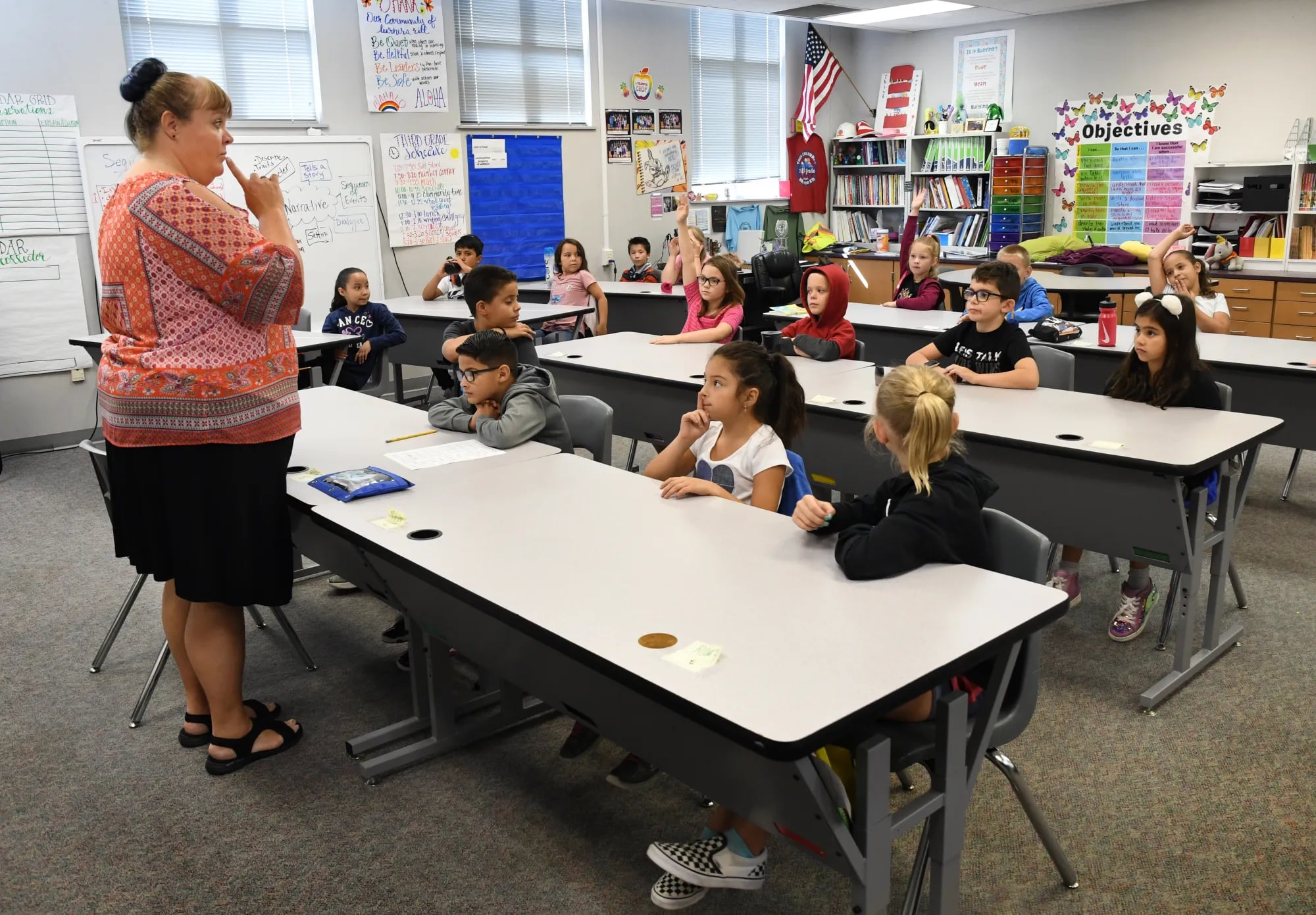 |
Third-grade students in a school district in Colorado, United States. Photo: The Colorado Sun |
Furthermore, the authors suggested another reason was the termination of the "No Child Left Behind" Act in the United States in 2015, after more than a decade in effect. Schools were no longer under pressure to closely assess and report student progress, which gradually led to declining outcomes.
Other contributing factors included prolonged student absenteeism and a lack of literacy skill reforms.
While the study's findings are concerning, Elaine Allensworth, executive director of the Consortium on Chicago School Research at the University of Chicago, believes this does not constitute a crisis.
"Declining scores do not indicate a lack of student capability. This is an issue that requires attention rather than panic", Allensworth commented. She emphasized that instead of applying pressure, society needs to find ways to support students to increase their interest in attending school and address factors that are diminishing learning effectiveness.
In some school districts where student scores have improved, such as in Washington D.C., schools have implemented various measures, including: weekly assessments, collecting phones during class, providing tutoring for struggling students, and offering increased bonuses for effective teachers.
Khanh Linh (According to ABC News, The New York Times)