For many years, residents in the western part of Quang Tri province have relied on water from ponds, streams, or boreholes. During summer, prolonged heat on arid hills transforms water shortages into a constant concern. The challenges extend beyond scarcity; during floods, the water becomes muddy and unusable.
Located amidst the Phong Nha - Ke Bang mountains, Bo Trach Ethnic Boarding School in Thuong Trach commune (formerly Quang Binh province) endures the full impact of harsh weather and rugged terrain. For over 270 students here, clean water was a luxury they only recently experienced.
According to Nguyen Van Hao, the school's vice principal, accessing clean water has been difficult for years, primarily due to heavy reliance on natural conditions. Previously, the school had only one borehole, making rainwater almost the sole supplementary source for cooking and daily activities. For a highland educational institution, "waiting for the sky" became a long-standing reality.
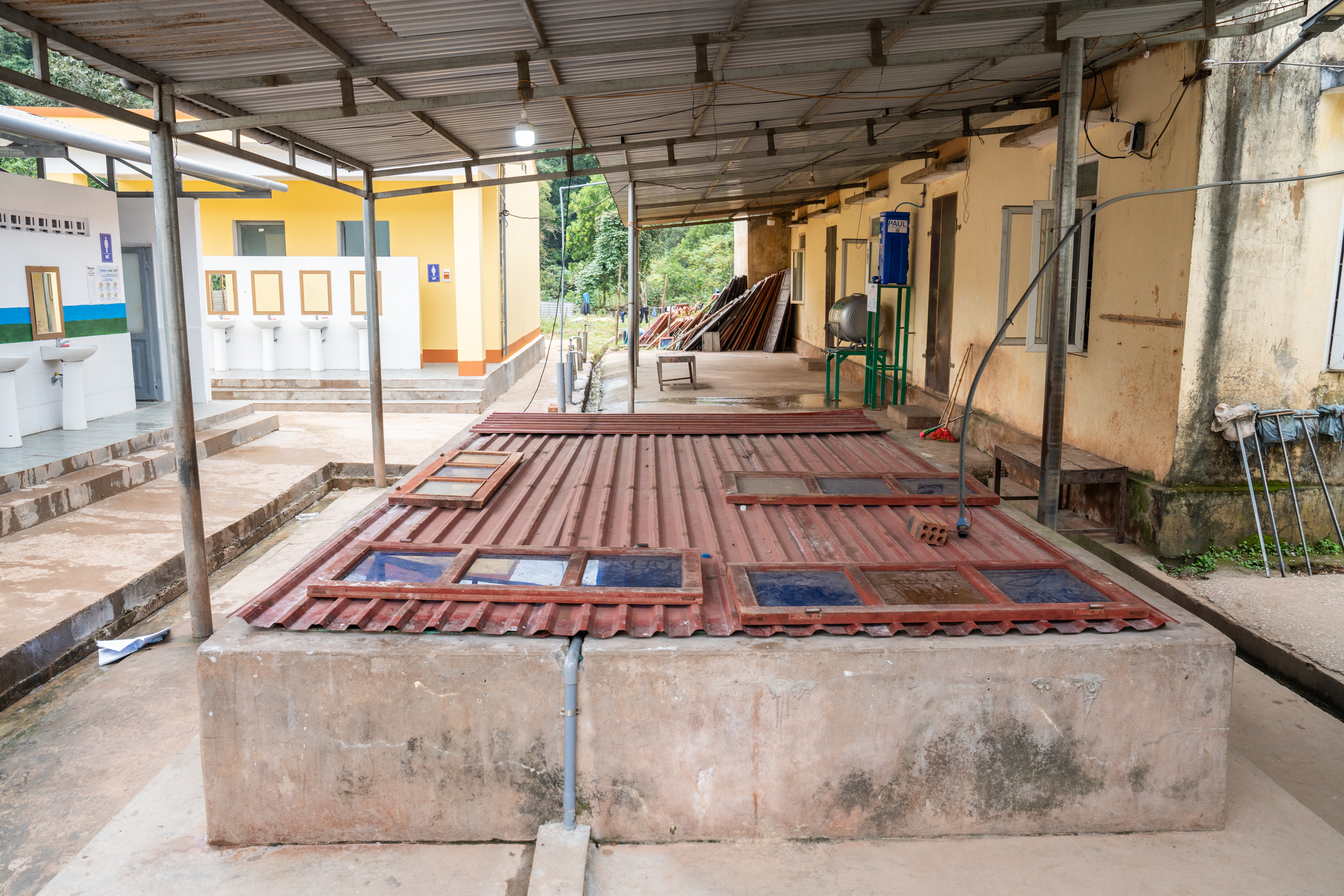 |
The water storage tank at Bo Trach Ethnic Boarding School. Photo: Tung Dinh
Limited technical infrastructure and energy posed another significant barrier. Before grid electricity arrived early this year, the school used a generator to operate the borehole pumping system. However, groundwater extraction proved costly, insufficient, and unstable.
Borehole water quality also deteriorated under adverse weather conditions. During storms or depressions, mud and soil would collapse into the pumping system, making the water turbid and reddish, like stream water after a flood.
"At such times, borehole water is unusable; the school must revert to using rainwater for minimal needs for teachers and students," Hao explained.
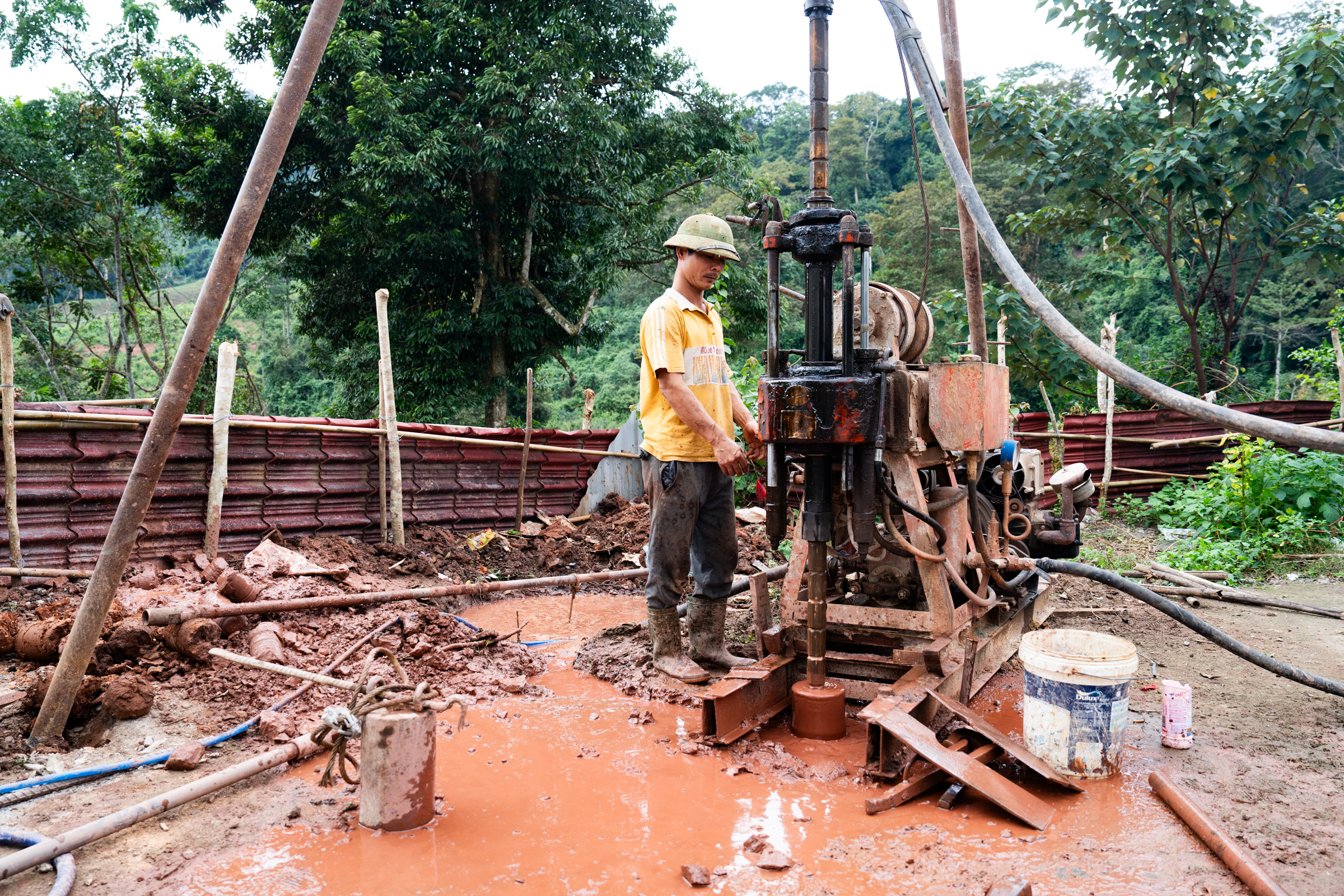 |
The school drills additional wells for more water. Photo: Tung Dinh
Hao noted that local authorities strive to support schools and residents, but face economic, resource, and suitable solution challenges for Thuong Trach's complex terrain. Faced with this reality, the school's management, particularly the principal, actively sought sponsorship and found various ways to secure water for the community.
"The school is deep in the mountains; calling people to drill wells is difficult. They hesitate to travel far, and drilling must go 80 to over 100 meters to reach groundwater," he added.
In early 11/2025, through connections with the Quang Tri Department of Education and Training, Bo Trach Ethnic Boarding School received a nano water filter from the state of Hessen (Germany) and the World University Service (WUS). This marks the first clean water solution for this highland school. After many years, teachers and students now have clean water for cooking.
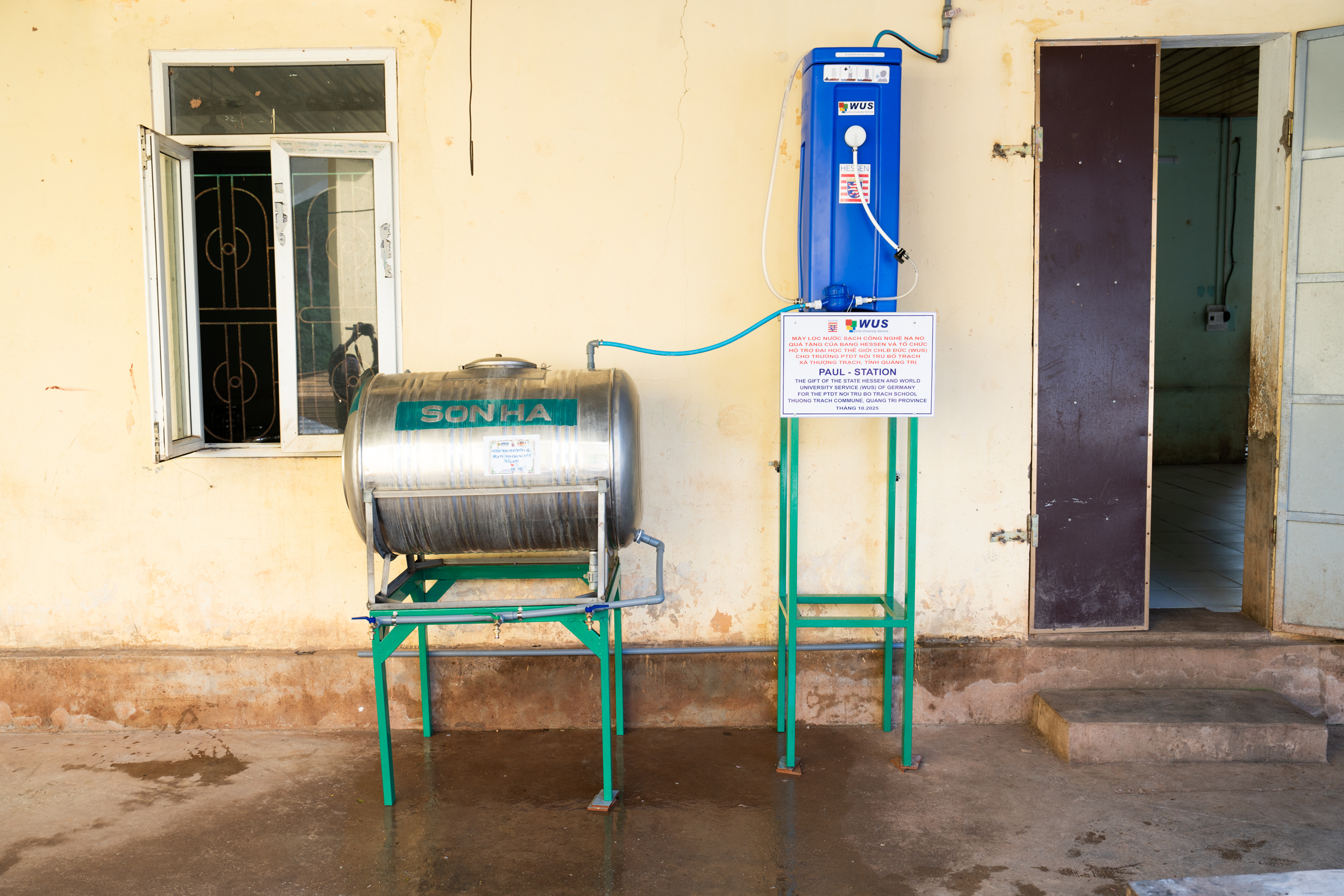 |
The donated water filter, the school's only source of standard clean water. Photo: Tung Dinh
The situation at Bo Trach Ethnic Boarding School affects more than 270 teachers and students; it also highlights the precarious water supply for residents of Thuong Trach commune.
About three kilometers away, Ban But school point, part of Primary School No. 1 Thuong Trach, also relies solely on one borehole for its 30 teachers and students. The school lacks restrooms, so children often use the nearby stream for washing.
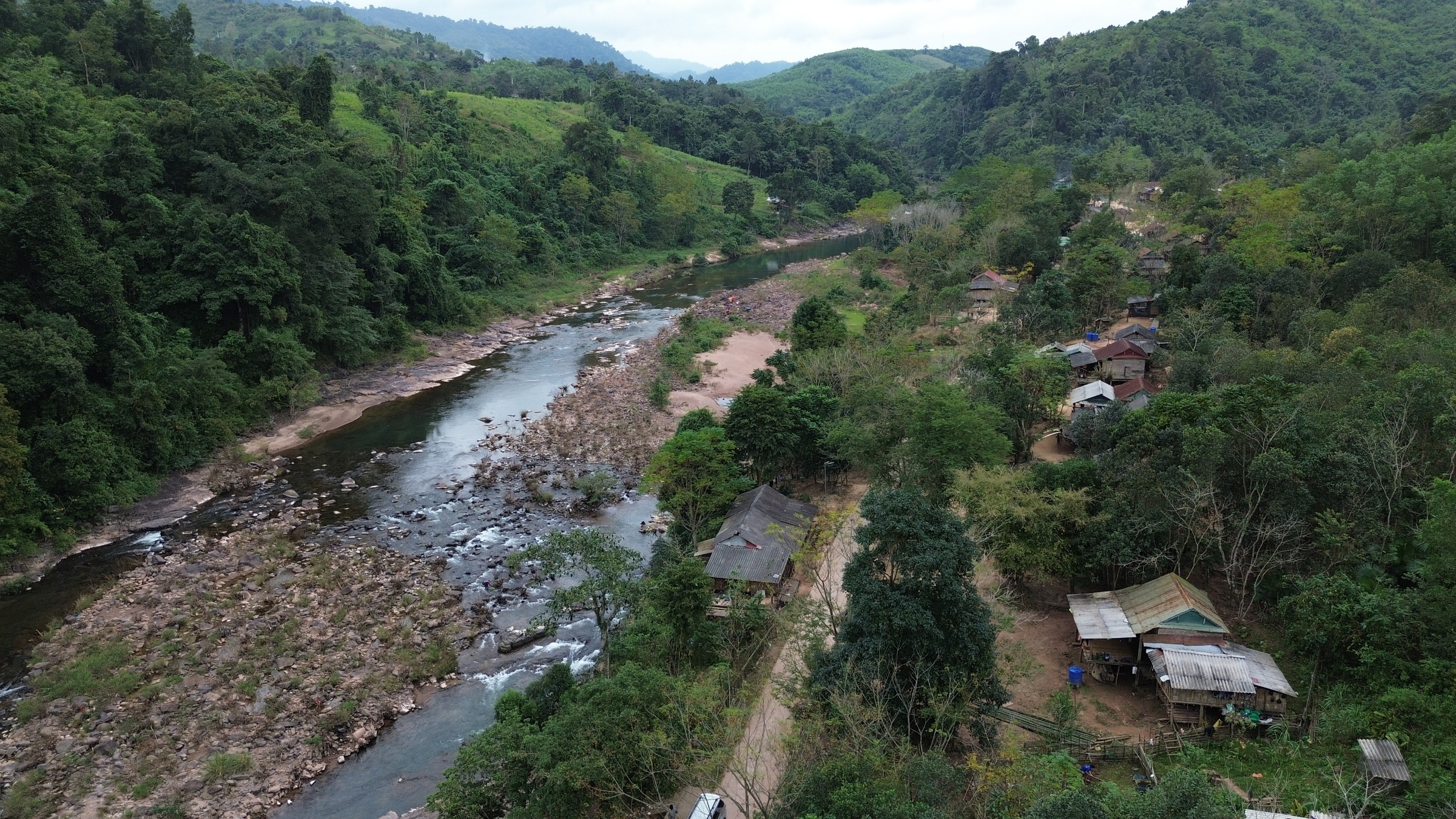 |
The stream near Ban But village. Photo: Ngoc Ngoc
Villagers also use stream water for drinking and daily activities. However, at the beginning of the dry season, the streams gradually recede.
Like other families in Ban But, Y Hut and her children live in a wooden house perched on a mountainside near the stream. "Since my grandparents' time, we've used stream water. If it's too muddy, we wait for it to settle," Y Hut recounted.
She recalled that in previous summers, "the village's only water source" would dry up, leaving behind a jumble of rocks. Early in the morning, she and other villagers would carry buckets and pails, walking dozens of kilometers upstream to find water. During these times, the single mother had to bring her older child to help, while the younger ones stayed home to care for each other.
On days they could not leave early, residents here and in surrounding villages had to let the water settle before using it for drinking.
For many years, projects to expand clean water networks in rural and mountainous Quang Binh have aimed to increase access to standard clean water. Along Ban But, local authorities have provided every household with a water storage tank to mitigate shortages.
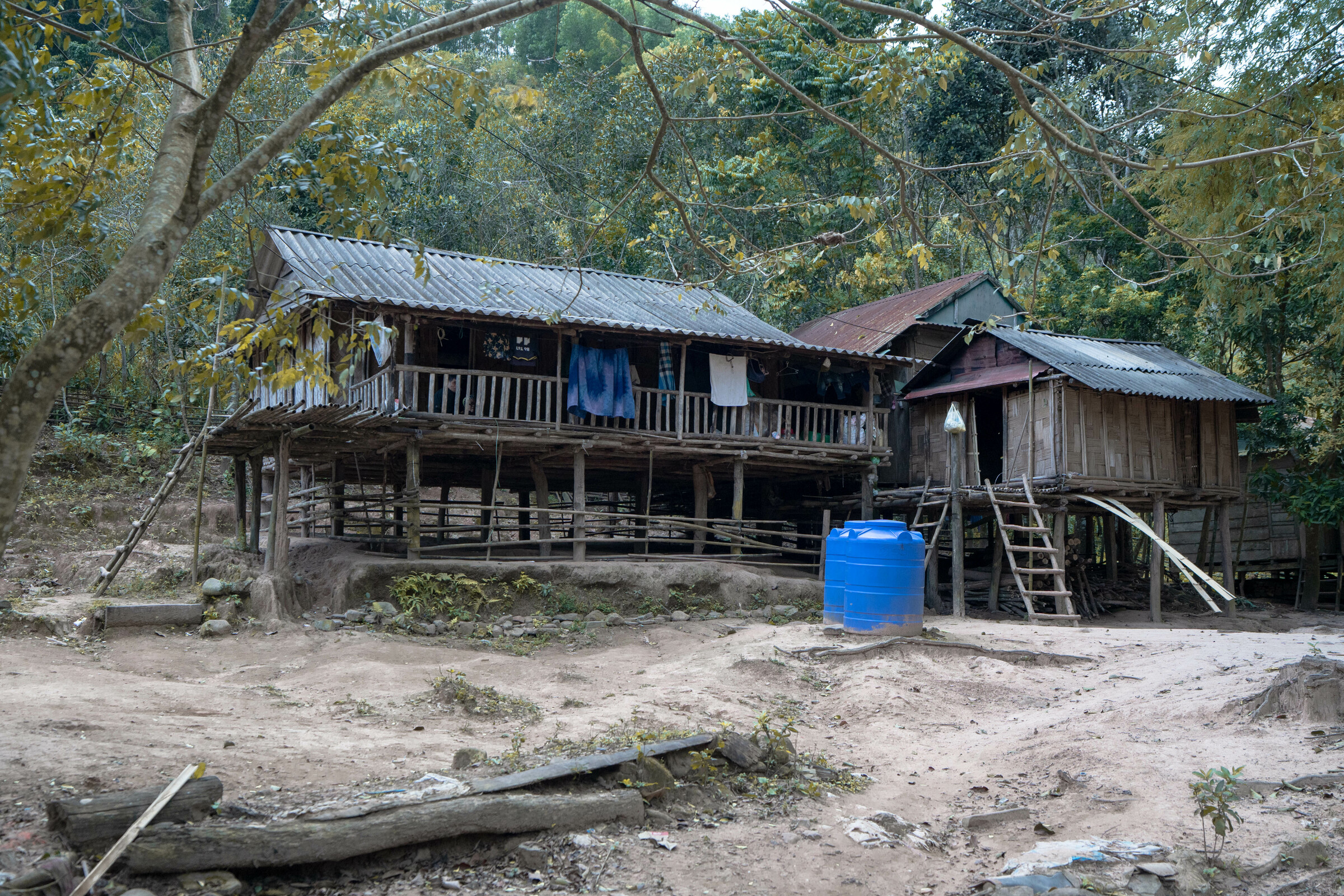 |
Water tanks provided to residents. Photo: Ngoc Ngoc
However, progress and scale remain challenging due to the terrain, resources, and harsh dry season. Located in the North Central Coast region, Quang Binh province has a narrow and steep topography from west to east. Mountains and hills constitute 85% of its total natural area. The entire area is divided into basic ecological zones: high mountains, hills and midlands, plains, and coastal sands. Quang Binh lies within a tropical monsoon climate, with two distinct seasons: rainy and dry. Annually, the province is significantly affected by various natural disasters.
Therefore, provincial agencies have implemented solutions such as drilling wells, installing pumping systems, and utilizing multiple and reserve water sources to provide clean water to villages.
Nhat Le