


On the social media platform Xiaohongshu, the keyword "TOPIK" yields over 87,5 million results, predominantly featuring services promising "guaranteed scores" and "pass" results, alongside numerous posts detailing exam fraud.
The TOPIK is a standardized test assessing Korean language ability, essential for university admissions, graduation requirements, employment, and visa applications in Korea. The exam comprises three sections: listening, reading, and writing, and is graded across six proficiency levels.
A reporter from The Korea Herald, acting as a prospective buyer, contacted a broker and received a shocking price list: a micro-earpiece service, approximately one mm in size, for one-on-one assistance during the exam, costs 20,000 CNY (77 million VND). Exam papers are priced between 25,000-35,000 CNY, with the cost varying by timing. Answers can be delivered 6, 8, or 12 hours prior to the test. The broker asserted that the exam materials originate from "staff at test centers in Korea."
Suspicion intensified last month when a test-taker reported that some answers circulated on Xiaohongshu coincided with the actual exam questions.
Concurrently, at a test center in Korea, the Korean Institute of International Education (NIIED) confirmed a test-taker possessed answers beforehand. This individual was disqualified from the exam and handed over to the police.
NIIED acknowledged a "loophole" contributing to this situation: the differing schedules for the exam across continents.
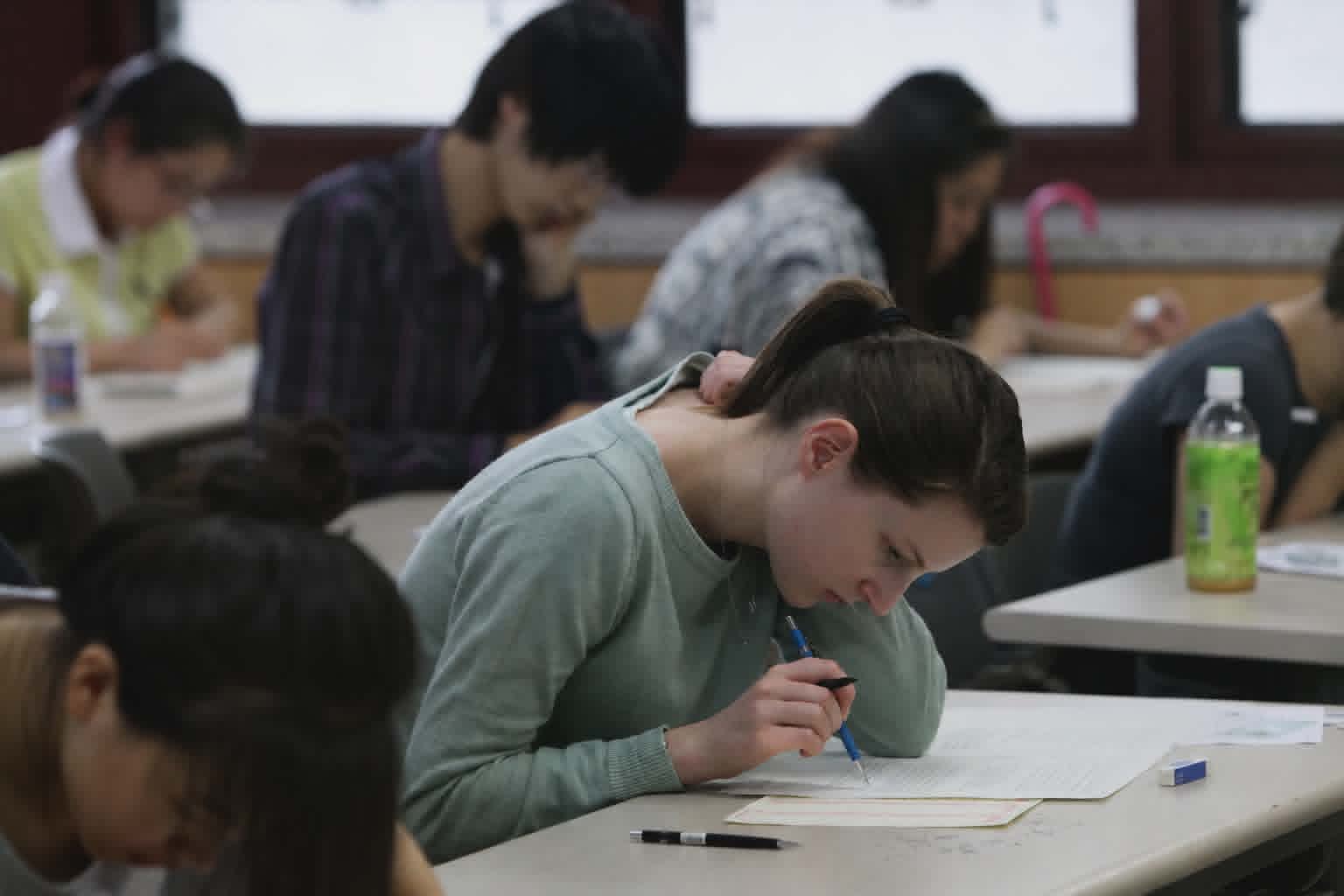 |
Test-takers participating in the Korean language proficiency test (TOPIK). *Photo: Korea Joongang Daily* |
The TOPIK exam is administered in America, Europe, and Africa on saturday, followed by Asia on sunday. This staggered schedule allows early test-takers to memorize and relay exam content to those taking the test later. While exam papers are not 100% identical, there are similarities in questions.
"We are aware of what is happening on social media," stated an official from NIIED's TOPIK Center. "The increasing number of test-takers and wider acceptance of this certificate have led to a rise in cheating."
According to National Assembly member Kim Dae-sik, the number of cheating cases is rising, exceeding 1,600 between 2020 and 2024. The most prevalent method involves the use of unauthorized communication devices, accounting for 488 cases, followed by proxy testing and related forms of misconduct.
The Korean Ministry of Education announced it will collaborate with investigative agencies to address these violations. Furthermore, the agency plans to reduce the similarity between exam papers across continents, starting in July, to mitigate leaks caused by time zone differences.
Korea is an attractive study destination in Asia, having welcomed a record of over 300,000 international students last year.
Huyen Trang (according to The Korea Herald, Korea Joongang Daily)


