Like many middle-class families in India, Bulusu Janardhan once borrowed money to send his son to study in the United States, hoping he would stay to work and financially support the family. However, just as his son graduated and sought employment, the US Citizenship and Immigration Services (USCIS) issued new guidance, tightening the process for changing residency status.
Foreign nationals seeking permanent residency (a green card) must now return to their home countries for consular processing, rather than being able to file an "adjustment of status" (AOS) application directly in the United States as before. For special cases, authorities will review each file to determine eligibility.
"The current situation is very concerning", Janardhan expressed regarding his son's prospects for settlement.
The Janardhan family's anxiety is a common sentiment among the international student community in the United States. According to a 2021 survey by the FWD policy organization, 73% of international students planning to study in the US stated they would stay if they could graduate and obtain a favorable visa.
Law and immigration consulting firms such as WR Immigration, Baker Donelson, and Newland Chase also consider international students seeking permanent residency to be among the groups most affected by this new directive.
On its website, Harvard University's International Office explains that the student visa (F-1) is a non-immigrant visa solely for educational purposes. When applying for this visa, students must demonstrate an intent to return home after graduation. F-1 visa holders who quickly seek to transition to the green card application process will now face higher scrutiny and stricter checks from immigration officers than before.
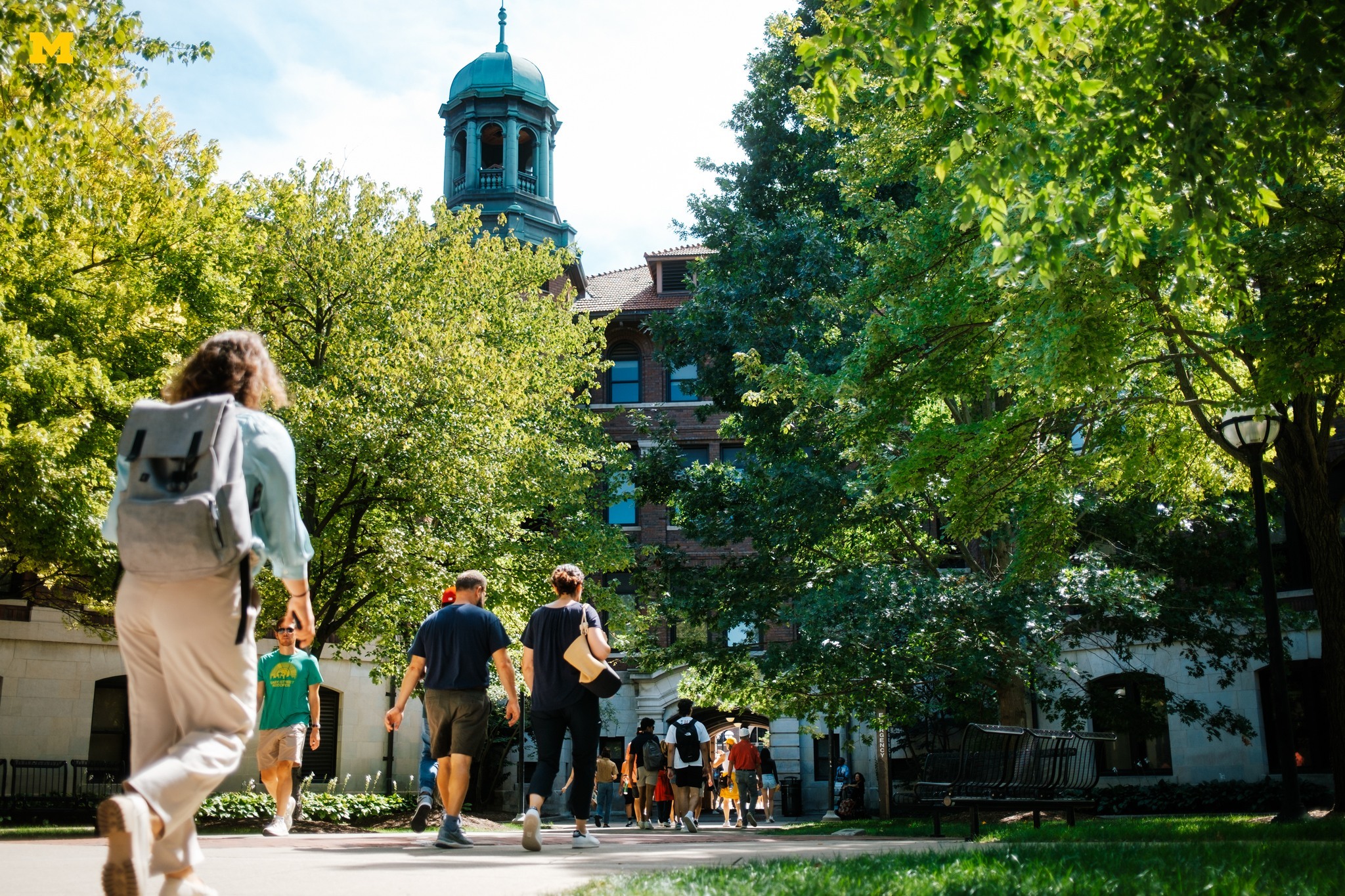 |
The University of Michigan campus, US. Photo: University Fanpage |
Furthermore, the familiar immigration pathway for international students – from practical training (curriculum practical training, optional practical training) to gain experience, to transitioning to dual-intent visas (allowing both work and immigration application) like H-1B – will also be closely examined.
Authorities will evaluate an applicant's entire history of legal compliance, especially any gaps in residency status or violations of work regulations.
Even for those who have successfully transitioned to types like H-1B, the future remains uncertain. The directive states that regulatory compliance and maintaining a clean legal status are "not enough to guarantee priority consideration" during the green card process. Applicants will need to actively provide evidence that they deserve this "special treatment".
Another risk is that while green card applicants in the US can appeal if their AOS application is denied, the consular application route does not allow for this right, making the process more complex and time-consuming.
Additionally, the gloomy job market and the US's tightening approval of optional practical training permits for international students from certain countries and territories are increasing concerns for many.
In response to policy changes, immigration experts advise international students to comply with residency regulations, such as not working illegally or overstaying their visas. For those who have already applied, they should not arbitrarily withdraw pending applications, and should avoid international travel without consulting a lawyer or immigration expert.
According to the Open Doors report, in the 2024-2025 academic year, approximately 1,18 million international students came to the US. Among them, the number of Vietnamese international students was nearly 25.600, an increase of about 16%, placing them among the top 5 largest groups of international students.
Each year, an average of mot million people apply for green cards, with half of them applying from within the United States, NBC LA cited a former USCIS official.
Khanh Linh (compiled)