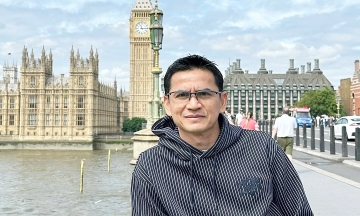
In late march, The Guardian reported that The New York Times made the decision following an infraction by writer and journalist Alex Preston. A reader discovered similarities between two reviews of the book Watching Over Her, one by Alex Preston and another by Christobel Kent. Christobel Kent's article was published in The Guardian in 8/2025.
The reader pointed out several identical details, such as the description of the character Stefano using the phrase "lazy, scheming". The author's conclusion that the book "creates a love song for a country full of contradictions: devastated, divided, lost, and miraculous..." also matched Christobel Kent's review.
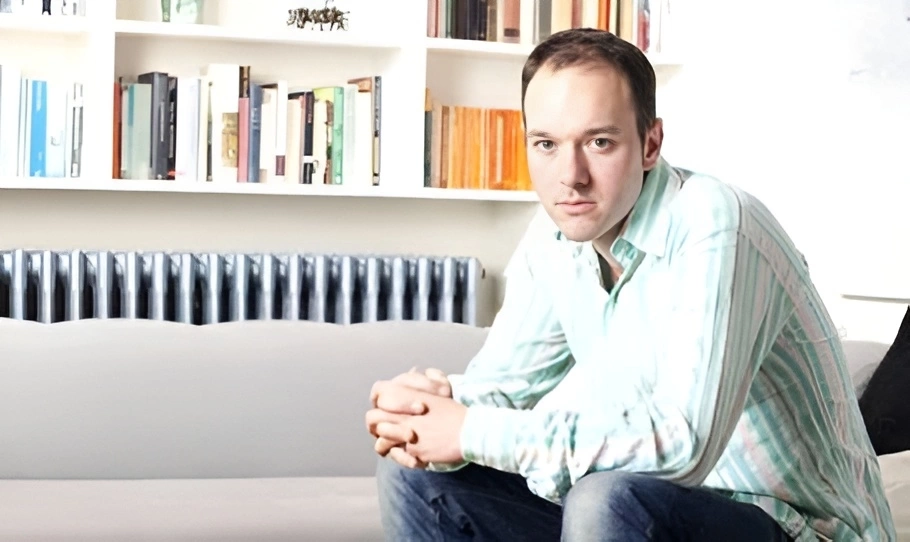 |
Alex Preston has written extensively for The Observer and Financial Times, and collaborated with The Guardian and The Economist. He wrote 6 reviews for The New York Times from 2021 to 2026. He is the author of 6 books, most recently "A Stranger in Corfu", published in february. *Photo: Katherine Rose* |
When The New York Times launched an investigation, Alex Preston admitted to using AI for assistance, then submitted the article without realizing it contained passages taken from The Guardian. He stated that he "made a serious mistake". The author said, "I am very ashamed of what happened and truly apologize."
Novelist Jean-Baptiste Andrea's work Watching Over Her was published in 2023. It centers on the sculptor Michelangelo "Mimo" Vitaliani and his tumultuous relationship with Viola Orsini, the only daughter of an aristocratic family. The novel received the Goncourt Prize—France's most prestigious literary award—in november of the same year. This is the best-selling publication in the award's 121-year history, with over 700,000 copies sold. To date, the book has been translated into 34 languages.
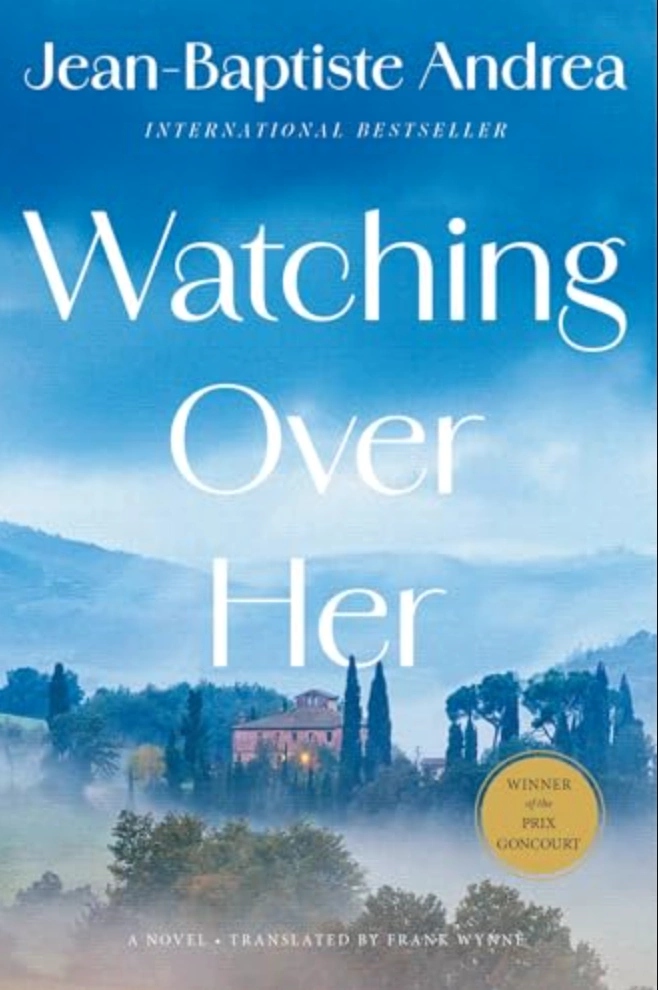 |
Cover of the book "Watching Over Her". *Photo: Goodreads* |
In recent years, artificial intelligence has significantly impacted many fields, including literature. The topic of how to effectively apply AI in writing often garners varied opinions. Domestically, translator Tran Tien Cao Dang once expressed the view that authors would "self-destruct" if they overused AI in literary creation. "No matter how we use AI, in what specific aspects, or to what extent, the resulting product must still bear a strong human imprint," he said.
By Phuong Linh (according to The Guardian)