China's National Radio and Television Administration has ordered the removal of 68,000 short films since the beginning of this year. These films were deemed vulgar, violated public morality, were harmful to children, or infringed copyright. Artificial intelligence (AI) films constituted over 90% of the content processed.
According to Xinhua, at a press conference held by the State Council Information Office on 17/9, Wang Xiaoliang, director of the Online Audio-Visual Program Management Department under the National Radio and Television Administration, stated that a total of 430,000 microdramas were released in the first eight months of this year. This represents a more than 10-fold increase compared to last year, with AI short films accounting for over 90% of the total.
Regulators observe the microdrama segment's widespread popularity, with over 800 million registered viewers. Last year, the market size for short films surpassed 100 billion yuan.
While AI technology offers new forms of expression and opportunities for producers to reduce costs and increase efficiency, it also introduces new challenges in managing content quality and protecting legitimate rights.
 |
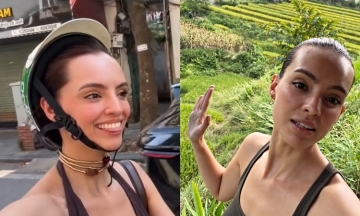
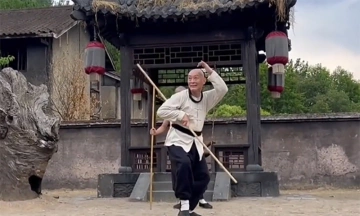
"Dao Hoa Tram" is one of the AI short films removed from platforms for unauthorized use of ordinary people's faces as characters. *Photo: The Paper* |
Chinese regulators uphold the principle of encouraging creativity while adhering to basic standards. Broadcasting platforms are obligated to implement principles regarding the use of copyrighted images and audio. AI films must be clearly labeled for content. Regulations stipulate that artificial intelligence-generated videos require visible annotations in each episode.
Officials assess that live-action films remain the primary source of high-quality content and should be encouraged to develop, ensuring deserving works receive appropriate recognition.
According to IT Home, the short film production industry is currently experiencing an intense price war and market consolidation. Due to an oversupply, the cost of producing one minute of an AI short film has dropped from 5,000 yuan (approximately 19,4 million dong) to just a few hundred yuan in only six months. Some experienced teams offer even lower quotes, pushing production costs to a minimum.
In addition to short film production, major Chinese companies are investing in AI feature films for television broadcasts, theatrical releases, and online streaming. On 31/8, Hunan TV and Mango TV jointly premiered "Hau Tay Du Ky" (Sequel to Journey to the West), signaling a new era for artificial intelligence-produced feature films. The work, with 5 of its 30 episodes aired, attracted nearly 300 million online views.
Nhu Anh