The event took place on the evening of 27/12 at the Central Circus Theater, coinciding with the inclusion of Dong Ho folk painting in UNESCO's List of Intangible Cultural Heritage in Need of Urgent Safeguarding.
Over 90 minutes and three acts, the production transports viewers back to the life of an ancient Northern Vietnamese village. The creative team used renowned paintings to drive the narrative, combining them with the expertise of circus artists to honor the beauty of the traditional craft village and the enduring value of its artworks.
Trich doan "Du quan ho".
The opening act, "Du quan ho" (Quan Ho Swing), introduced the Kinh Bac region, the main setting for the entire performance. Hundreds of spectators cheered at the aerial acrobatics of Meritorious Artists Thu Huong and Thanh Tuan, who spent many days training for their stage appearance.
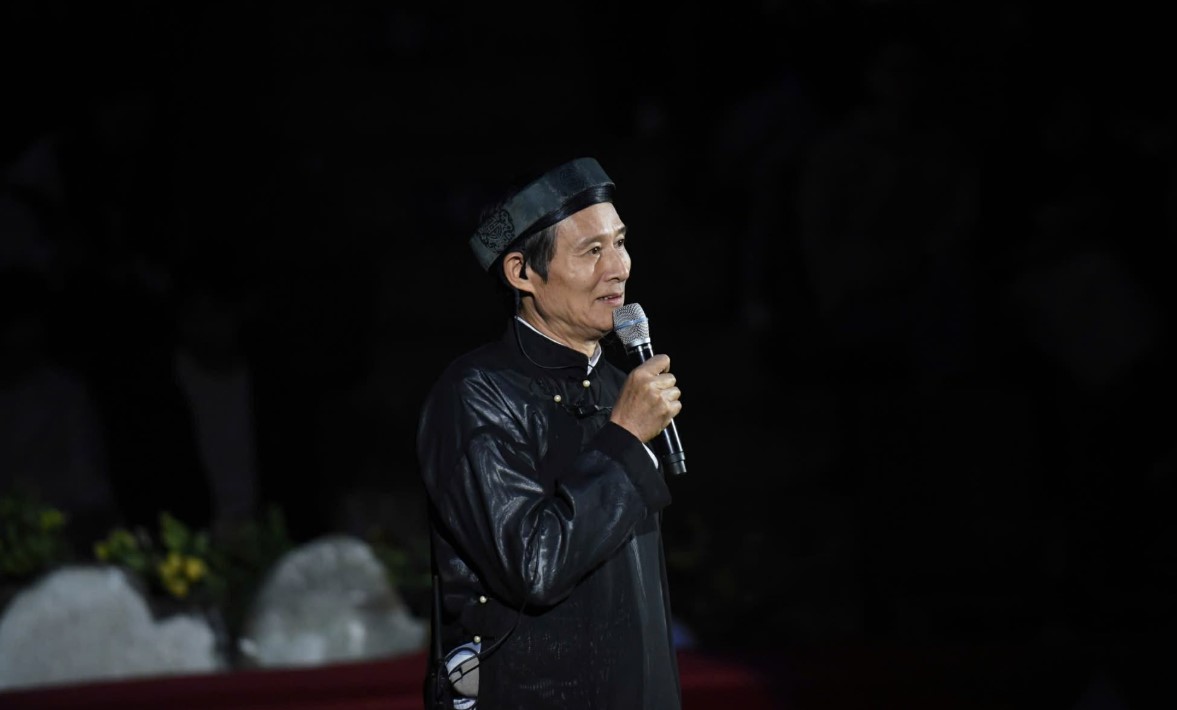 |
Nghe si Nguyen Huu Qua introduces his hometown, Lang Mai in Bac Ninh, where Dong Ho folk painting has been preserved for generations, at the beginning of the show.
The spring village festival opened with a recreation of the painting "Harvest Season". Circus artists depicted villagers calling to each other through a dance featuring props such as rice bundles, bamboo baskets, fruit platters, and bamboo bridges. Performers also played on swings, landed with balance, and performed handstands. The village market scene included a pig circus act, inspired by the "Indochinese pigs" painting, symbolizing farmers' wishes for prosperity, harmony, and many children.
The centerpiece of the evening was the "Ti's Story" segment, which recreated a well-known folk tale. The ancient story tells of Ti, a poor, orphaned student burdened by the complex wedding customs and rules of the village. Ti sought out the fortune teller Hoi at the village festival, who advised him to bribe the mandarins for a smooth wedding process.
Actors portraying corrupt mandarins juggled gold ingots and delivered humorous lines, eliciting laughter from the audience. This act captured the spirit of "The mouse's wedding" painting, where the mouse groom must offer bribes to the cat to marry. The segment, satirical in style, highlighted the oppression of farmers by the ruling class in feudal society.
Afterward, Ti resolved to study diligently for a better future, promising to return in glory to marry Thi Mai, his beloved, with a proper wedding. In the concluding act, this aspiration became reality. Urgent drumbeats welcomed Ti's return, and the couple reunited in happiness. The artists conveyed their affection through tender gazes, hand-holding, lifts, and aerial spins, drawing applause from the audience.
Circus artists perform the scene of Ti returning home in glory and meeting Thi Mai.
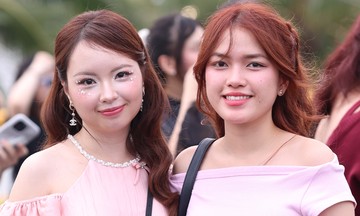
Over 700 spectators watched the show until the very end. Quynh Trang, 19, from Hanoi, expressed her impression of the fusion of the two art forms. "The performances, narration, and stage design were all meticulously combined, helping viewers visualize the content of the Dong Ho paintings", she said.
Nguyen Tat Dat, head of the organizing committee, stated that the program aims to bring paintings from traditional, static frames into a vibrant performance space to reach young audiences. With its strength in physical and visual language, circus art helps folk artworks connect with viewers' emotions.
The show "Memories of Ho Village" was part of the "Dong Ho Circus Art" program, a component of the "Awakening Heritage" project, which seeks to blend traditional heritage with contemporary art forms. The event was co-organized by a group of students, the Vietnam Circus Federation, and the Dong Ho Folk Painting Preservation Center.
The program also featured a card-making workshop, a painting exhibition space, artist interactions, and a painting printing experience for visitors.
Article, video: Khanh Linh