This article contains spoilers.
The 45th "Doraemon" film, a remake of the 1983 work, follows Nobita and his friends as they search for a camping spot during their summer vacation. With assistance from Doraemon's gadgets, the group embarks on an underwater journey. There, they discover a shipwreck and encounter a boy named El.
Trailer for "Doraemon: Nobita and the Castle Under the Sea," a film permitted for all ages. According to Box Office Vietnam, the film has currently grossed over 170 billion VND, marking the highest achievement for an international project this year. Video: Trigger
While the plot closely adheres to the spirit of the original, the production team expands on contemporary messages, most notably the relationship between humans and robots. In an era where artificial intelligence is deeply integrated into daily life, stories about machines that can think, feel, and make ethical choices resonate with audiences.
The Buggy vehicle, a gadget capable of conversation and size alteration, is one of the most important characters. Unlike its somewhat cold portrayal in the old film, Buggy is depicted here with a friendly personality, serving as a source of knowledge for the friends. Through various situations, Buggy becomes a true companion to the entire group. The connection between Buggy, Nobita, and Shizuka highlights the process of a machine learning to love and sacrifice for others. The film's climax involving Buggy, while not overly tragic, effectively underscores the value of compassion.
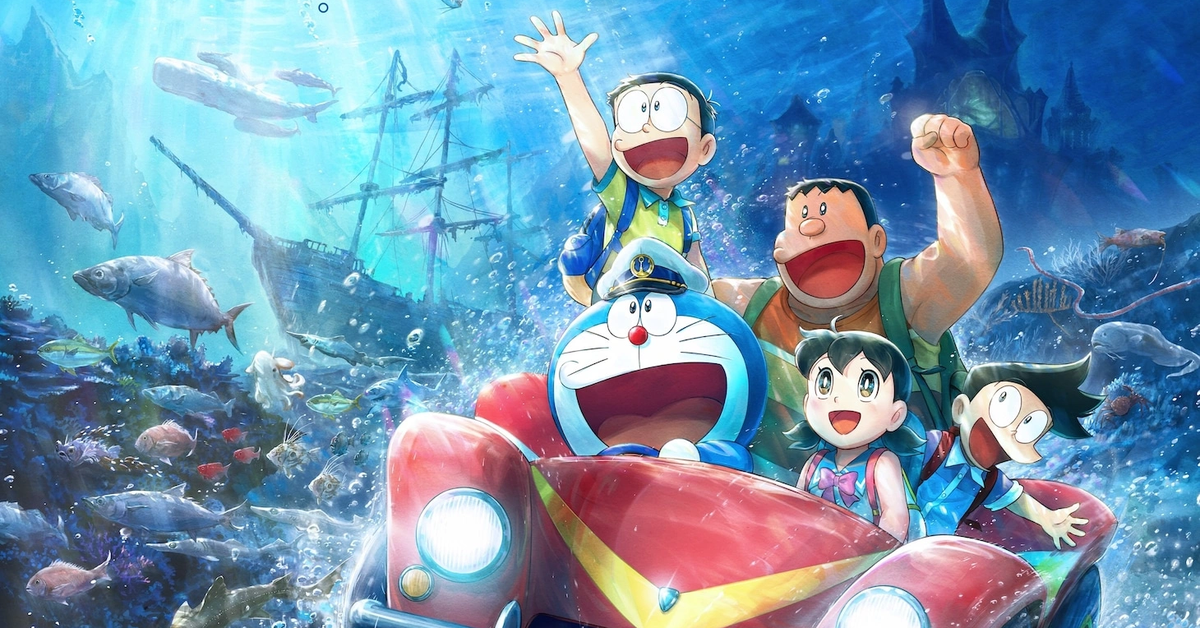 |
Doraemon's Buggy accompanies the friends in the 45th "Doraemon" film. Photo: Toho
Another key character, El, connects Nobita's group with the undersea inhabitants and leads them to uncover the mysteries surrounding Atlantis, Poseidon, and the "devil's castle." Compared to the 1983 version, El has a revamped appearance and personality. Previously a small character, the new El is more mature, with a taller, more refined physique. The character exhibits internal depth as he strives to balance his responsibility to protect his homeland with his understanding of humanity.
The screenwriter also conveys humanity's responsibility towards nature. The imagery of a threatened ocean and the destructive power of the Atlantis civilization symbolize a warning about the consequences of excessive natural resource exploitation. The filmmakers express belief in technology's potential as a tool for environmental protection when used correctly.
The film leverages the strengths of both the series and the manga by emphasizing friendship, courage, and solidarity. Jaian and Suneo's mistake of independently controlling Buggy to search for treasure puts the entire group in danger. However, instead of focusing on blame, the film highlights mutual understanding and overcoming difficulties together. The relationship between El and the friends demonstrates how trust can bridge prejudices between different communities. This humanistic value helps Doraemon's works maintain their vitality across generations of audiences.
Although the deep-sea environment is uninhabitable for humans due to darkness and pressure, Doraemon's gadgets make the impossible a reality. The group can conquer underwater mountains and use an adaptation flashlight to function as they would on land. Beyond these fascinating experiences, the adventure becomes dangerous due to the limited duration of the adaptation flashlight's effect, creating a sense of unease.
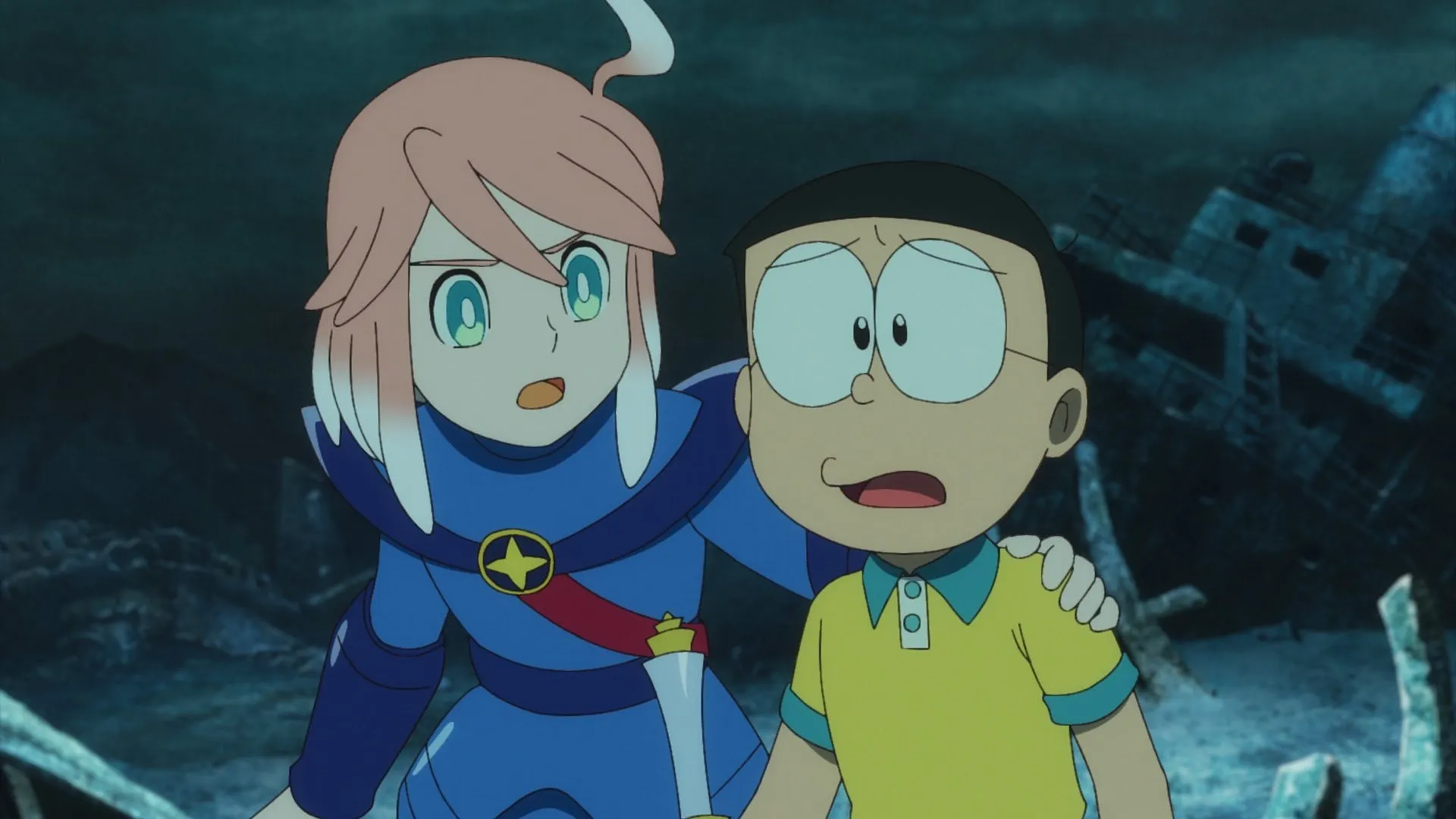 |
Characters El (right) and Nobita in the film. Photo: Toho
Visually, the Mu kingdom stands out. While the 1983 version portrayed it with the mystique of a lost civilization, the remake expands this world by blending science fiction and fantasy elements. Giant glowing structures deep within the ocean, crystal-powered energy systems, and futuristic architecture create a modern space.
According to Nlab, the film reflects the historical context of the original's creation. The early 1980s marked one of the most tense periods of the Cold War. This is manifested through the Poseidon machine, capable of world destruction. The film's shift in tempo from an adventurous atmosphere to the threat of global war creates a contrast, opening up a message about peace.
Despite integrating many contemporary themes, the film employs a simple narrative style, offering few surprises. Some emotional details from the original manga and the 1983 animated film are omitted, such as the scene where the group dines on the sea under the moonlight, amidst swimming dolphins.
The new version adds a segment where Doraemon and Nobita survey the seabed, a detail present in the manga but absent from the 1983 animated version. While this helps the film adhere closely to the original work, this detail, along with the segment of Nobita completing his summer homework, extends the opening and slows the film's pace.
On the film review site Movie Walker, some audience members found the film unsatisfying for those familiar with the 1983 version. In the latter half of the film, some dialogue added for the remake occasionally feels unnatural, failing to enhance the plot's appeal.
During the film's release in Vietnam, the producers launched a television episode featuring images of Hoan Kiem Lake, Ha Long Bay, and Ho Chi Minh City Post Office. In the episode, Shizuka expresses a desire to visit Vietnam. Nobita then devises a plan for a trip as a birthday gift for her, after which the group watches the lantern festival in Hoi An and enjoys local delicacies like banh mi and com tam.
Trailer for the "Doraemon" episode set in Vietnam, released in Japan in late May, then online in Vietnam on 1/6. Video: TV Asahi/Mon Fansub
Cat Tien