 |
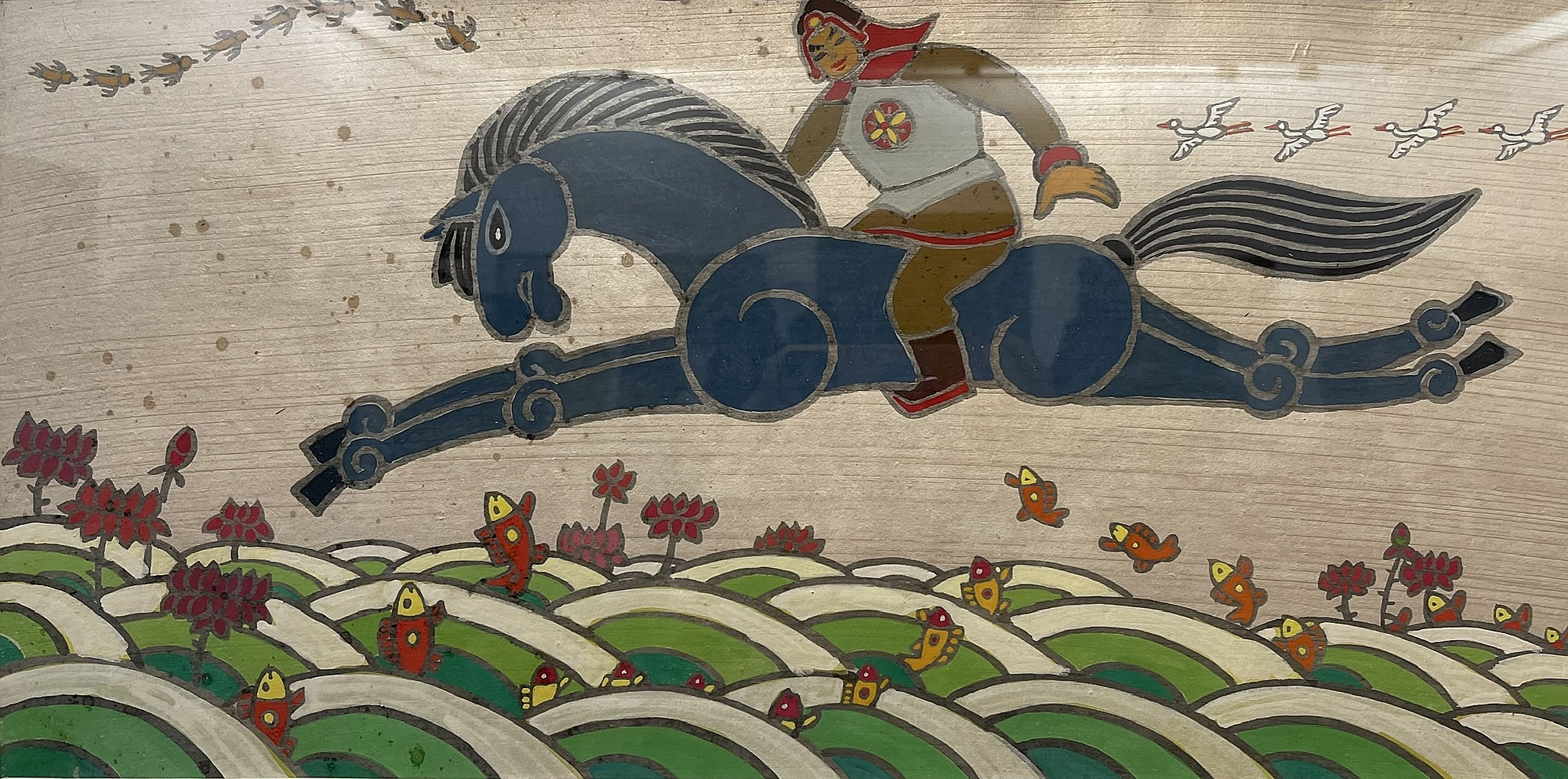
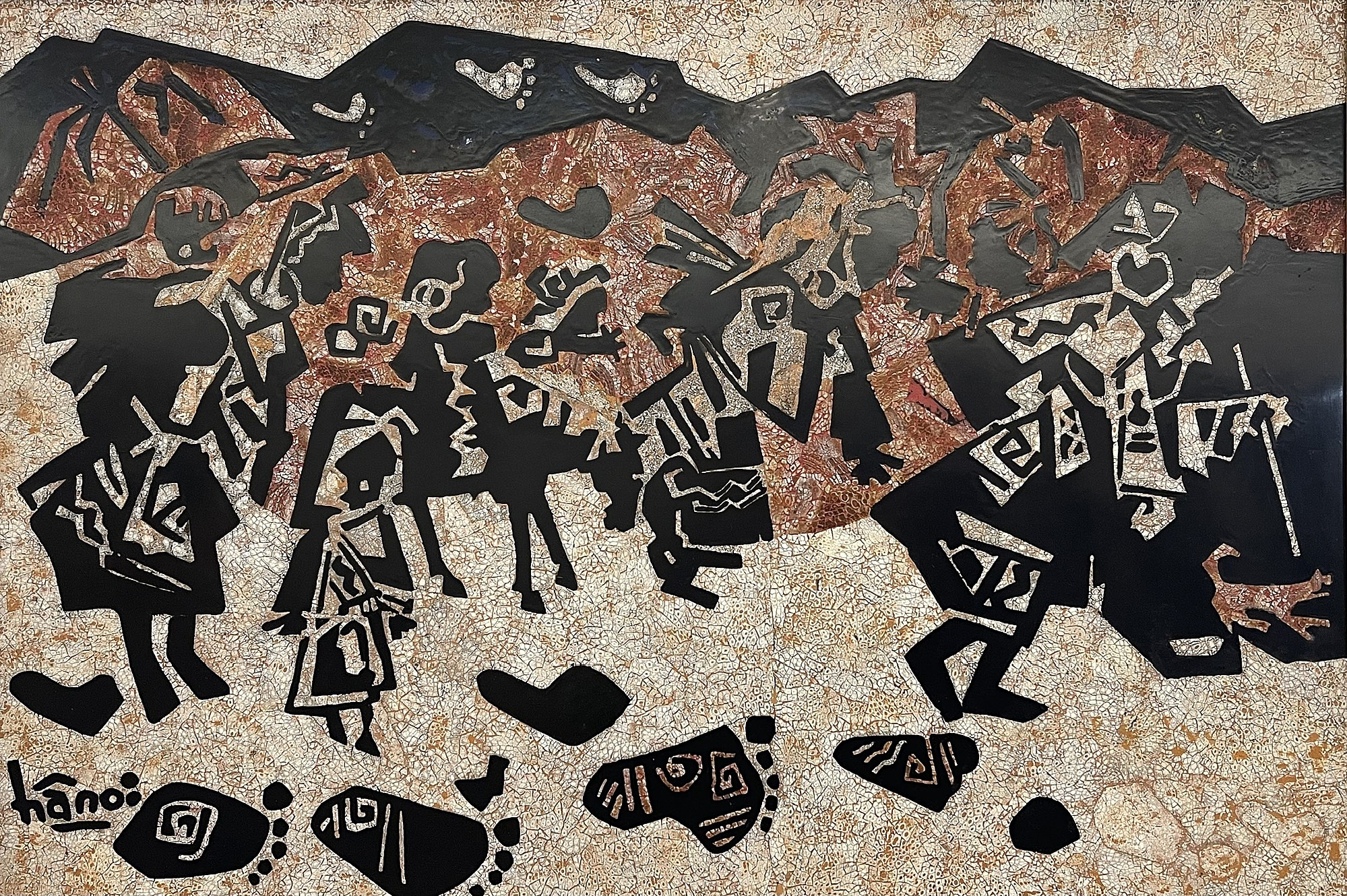
The artwork "Ong Giong" by the late artist Ngo Manh Lan, featured in the exhibition "Horses in Visual Arts," which runs from 30/1 to 1/3 at the Vietnam Fine Arts Museum. |
An exhibition titled "Horses in Visual Arts" is currently underway at the Vietnam Fine Arts Museum, running from 30/1 to 1/3. This special exhibition features 60 artworks, including paintings and sculptures, that explore the enduring image of the horse in Vietnamese culture and history.
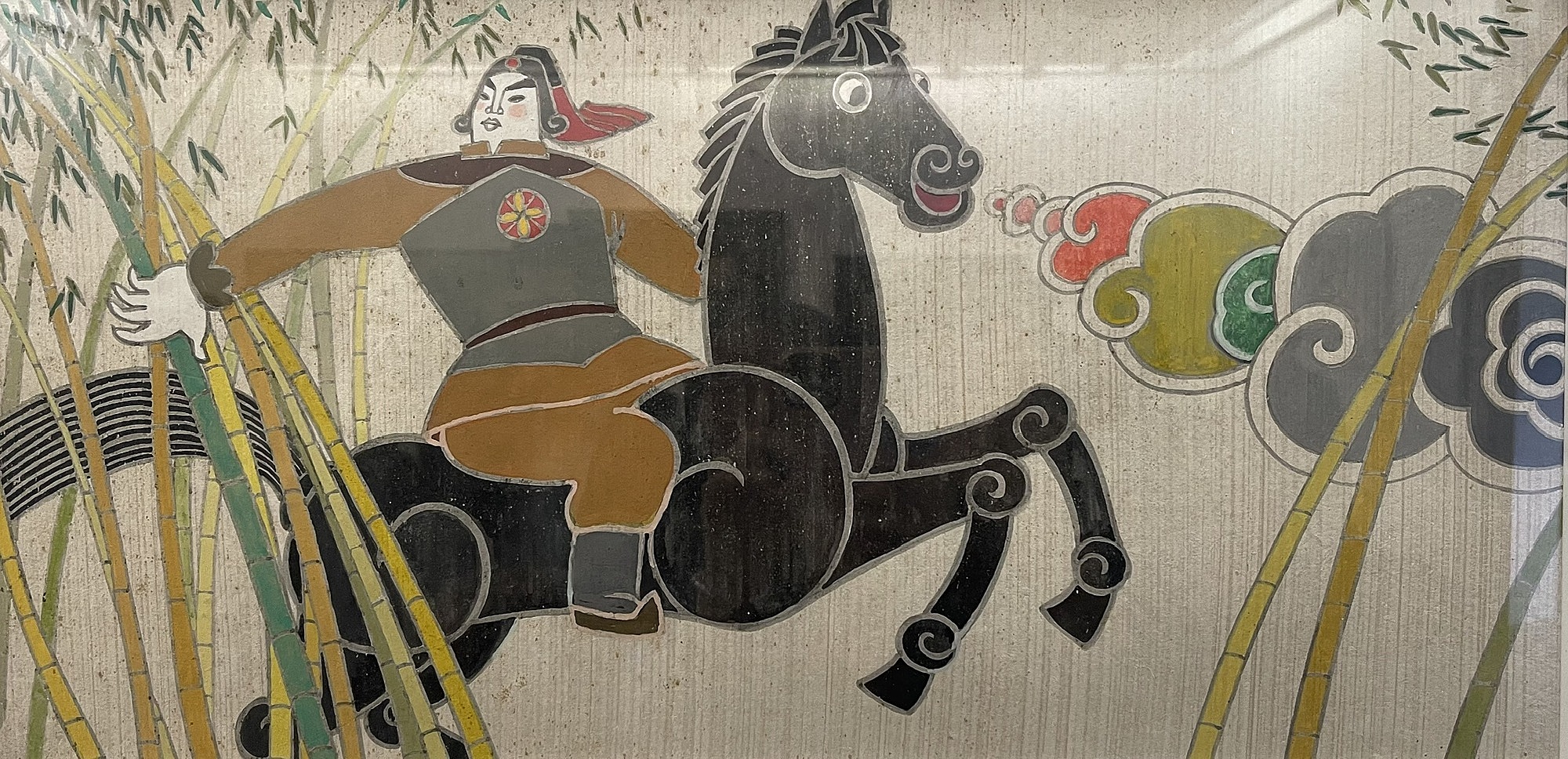 |
During his lifetime, artist Ngo Manh Lan was renowned for the series of paintings he created for the 1970 puppet film "Chuyen Ong Giong." When commissioned for the film, he and artist Mai Long visited Den Giong in Soc Son to observe the real-life setting. Climbing to the peak and gazing into the distance, he saw many ponds, imagining them as footprints left by the horse. |
The exhibition highlights the horse's deep connection to Vietnamese life, labor, and traditional culture. According to Doctor Nguyen Anh Minh, Director of the Vietnam Fine Arts Museum, the horse image appeared early and became widespread in Vietnamese painting history. Among the notable pieces is "Ong Giong" by the late artist Ngo Manh Lan, whose creative process for the 1970 puppet film "Chuyen Ong Giong" involved a visit to Den Giong in Soc Son with artist Mai Long. Observing the landscape, Lan imagined the numerous ponds as the giant horse's footprints, a powerful inspiration for his work.
 |
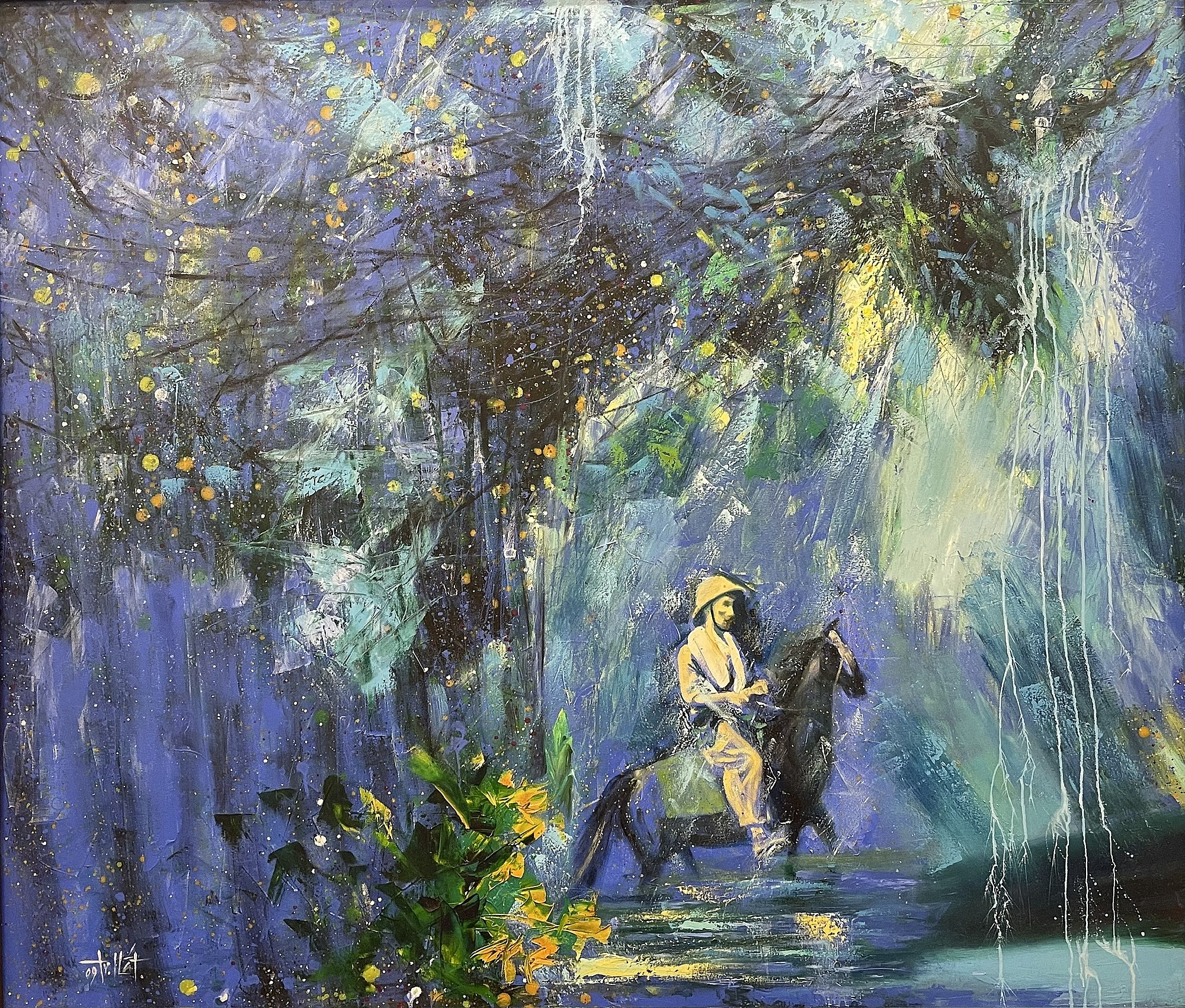
Artist Tran Chat depicts President Ho Chi Minh riding a horse in his oil painting "Xuan chien khu." During the resistance war, the horse became a close companion to President Ho and soldiers as they traversed forests and streams. |
The lacquer painting "Sapa" by artist Le Ngoc Han.
 |
Horses also appear in artworks recreating the daily life of people in highland regions, such as in artist Nguyen Van Da's work "Nui do va ngua trang." |
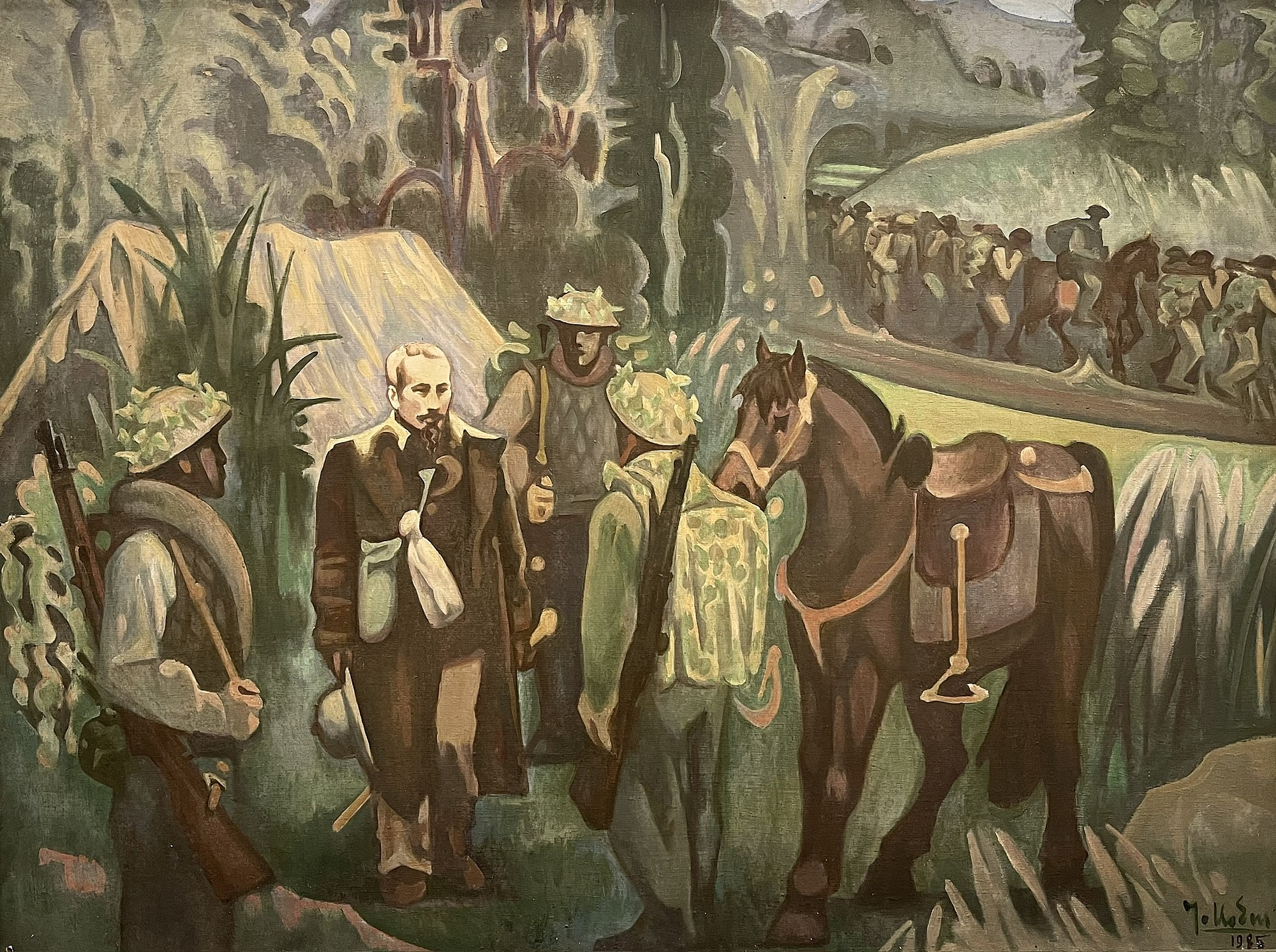
The exhibition also features powerful depictions of horses during the resistance war. Artist Tran Chat's oil painting "Xuan chien khu" portrays President Ho Chi Minh on horseback, symbolizing the horse's role as a close companion to the leader and soldiers navigating challenging terrains. Similarly, Nguyen Trong Kiem's oil painting "Roi leu co Bac tiep tuc hanh quan" (Leaving the Grass Hut, Uncle Continues His March) stands out as a representative work on President Ho Chi Minh, the revolution, and the resistance.
 |
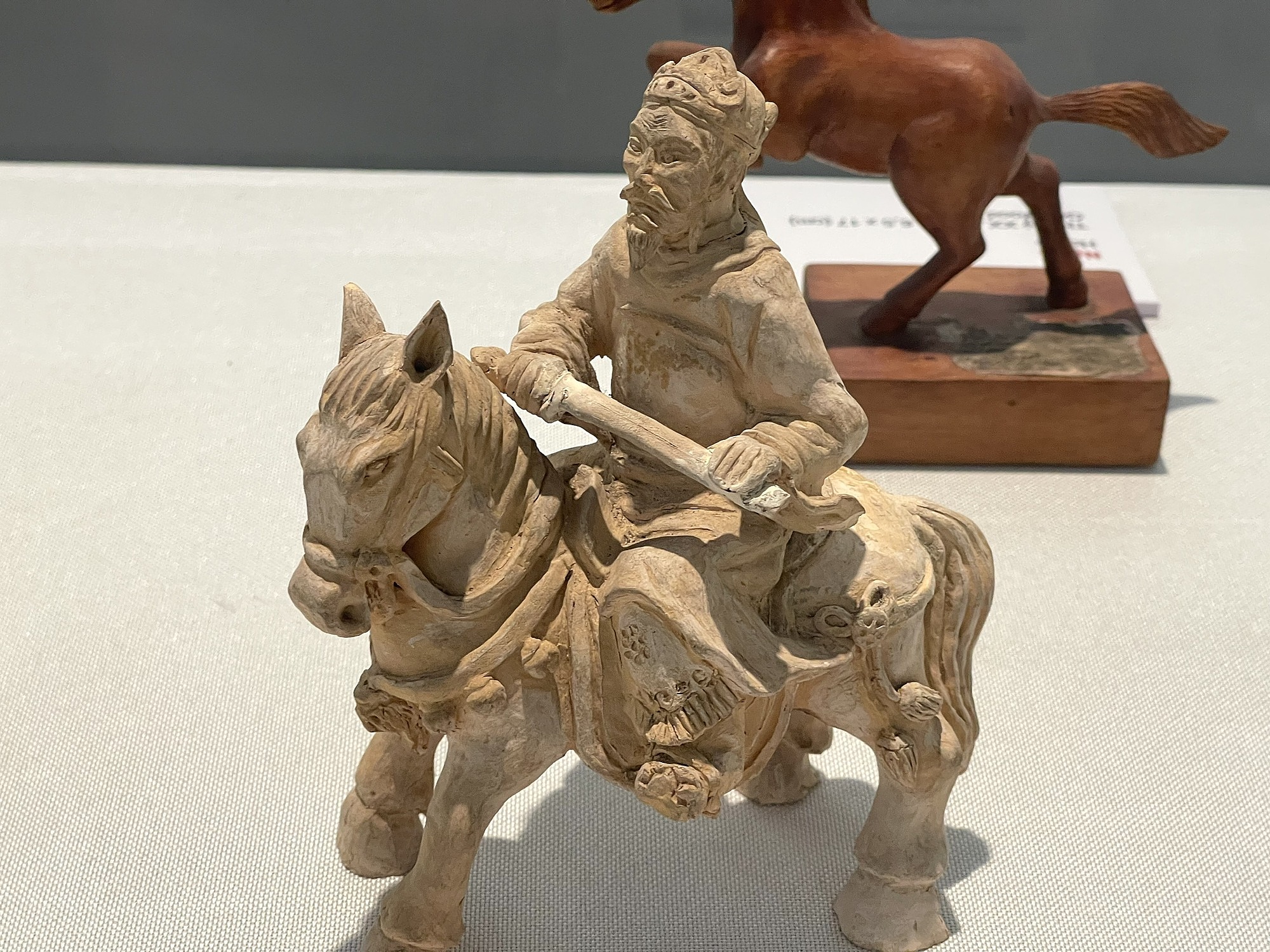
The terracotta artwork "Le Loi cuoi ngua" by Dang Dinh Hung. |
Nguyen Trong Kiem's oil painting "Roi leu co Bac tiep tuc hanh quan" is a prominent work depicting President Ho Chi Minh, the revolution, and the resistance.
The painting features the leader surrounded by cadres, soldiers, and a horse ready for departure. This artwork is highly regarded for its oil painting technique, characterized by strong, firm brushstrokes and clear forms. It earned a gold medal at the National Fine Arts Exhibition in 1985.
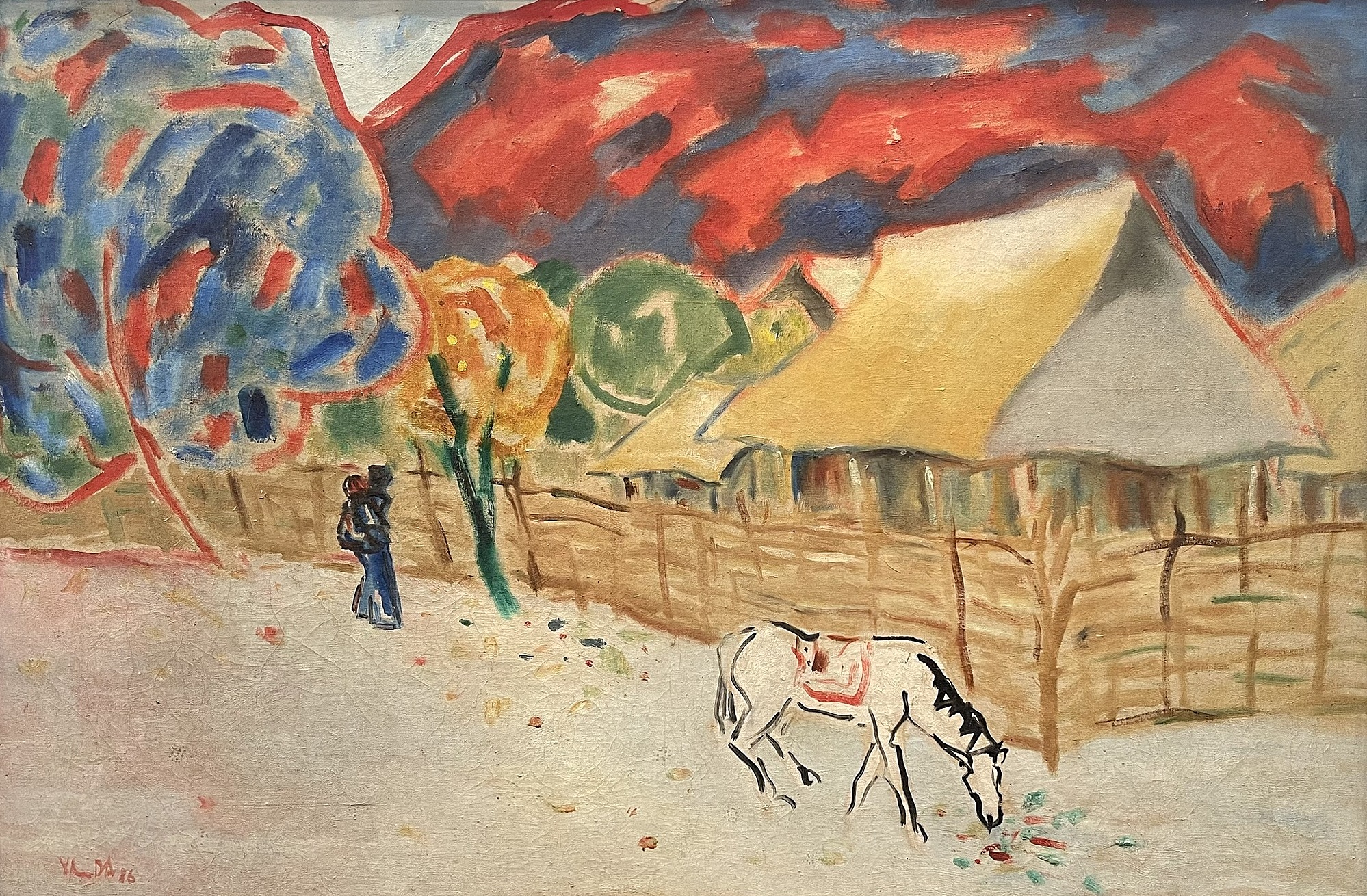 |
Beyond historical narratives, horses are also captured in scenes of daily life, particularly among highland communities. Nguyen Van Da's painting "Nui do va ngua trang" (Red Mountain and White Horse) exemplifies this, showcasing the horse's integral presence in these regions. The exhibition further includes sculptures, such as Dang Dinh Hung's terracotta piece "Le Loi cuoi ngua" (Le Loi Riding a Horse), which adds another dimension to the portrayal of this revered animal.
 |
Visitors to the "Horses in Visual Arts" exhibition can also engage in interactive activities, including woodblock printing and painting workshops, offering a hands-on experience with the artistic themes. The exhibition, documented by Phuong Linh, provides a comprehensive look at the horse's symbolic and practical significance in Vietnamese art and culture.