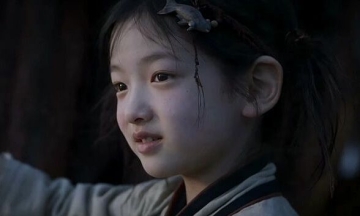
The Chinese short film 'Vuong Gia That The' has been canceled following a scandal involving its male lead, Chung Vu Phi, who claims he was forced to film an excessive number of kiss scenes. The investor, who also starred as the female lead, reportedly added numerous intimate scenes without approval, causing the film's plot to become chaotic and incoherent. This ultimately led to the project's cancellation during post-production.
According to Jinyun News on 7/8, Chung Vu Phi stated that filming for 'Vuong Gia That The' began in Zhejiang in 10/2025. While the original script he received contained more than 10 kiss scenes with the female lead, the script was repeatedly altered during production. This increased the number of kiss scenes to over 60, despite the film only having 50 episodes. As a newcomer to the industry needing career opportunities, Chung Vu Phi felt unable to offend the production team. He had previously requested that the team reduce the 'excessively intimate' scenes, but his requests were denied.
During post-production, the abundance of sensitive scenes resulted in a disjointed and illogical narrative. Furthermore, the investor rejected the director's editing approach and failed to pay the agreed-upon post-production costs, leading to the film's cancellation. The incident garnered significant attention on social media, exposing the darker aspects of the short film industry.
 |
Chung Vu Phi revealed the production scandal of the film 'Vuong Gia That The'. *Photo: South Yule*
Over the past two years, hundreds of short film productions have been removed from video platforms due to various scandals during their making. These have included controversial storylines such as a one-year-old child being left in the rain overnight, 'a 7-year-old girl marrying', and 'a female lead giving birth to 99 children at once'.
According to Jf Daily, numerous creators in the short film sector prioritize attracting views with sensational content, often neglecting artistic value. Producers are primarily focused on short-term profits, failing to invest sufficiently in scripts and overall quality. Additionally, platform censorship and oversight mechanisms still have significant loopholes, failing to promptly prevent the spread of absurd content.
Despite these issues, short films have experienced a boom in China, with the market size reaching 50,5 billion yuan (6,9 billion USD) last year. Projections indicate that by 2027, the short film market will exceed 100 billion yuan (13,7 billion USD).
Nhu Anh