With 48 national teams and 104 matches, FIFA recognizes 2026 as the largest World Cup in history. This unprecedented scale means a massive audience, along with millions of tourists and fans flocking to the host cities. The tournament is seen as a prime opportunity for brands to fully capitalize.
Unlike Paris Fashion Week, New York Fashion Week, or the Olympic Games, the World Cup connects diverse audience groups simultaneously: sports enthusiasts, young people, content creators, mass consumers, and even high-end customers. In an environment where customers are increasingly difficult to reach and digital advertising costs continue to rise, the football tournament has become a magnet for brands. They no longer just sponsor one team or player, but significantly more. Adidas sponsors 22 teams, while Nike provides apparel for 16 national teams.
Data analytics platform GWI reports that 32% of consumers are interested in collaborations between major fashion brands and sportswear brands. Capitalizing on this, adidas unveiled its Fall/Winter 2026 collection in collaboration with Willy Chavarria at Paris Fashion Week, highlighting the Copa Mundial Megaride sneakers. Nike has partnered with seven fashion houses, launching collections such as Palace x England x Football Beyond Borders, Jacquemus x France x Sport Dans La Ville, and Patta x Netherlands x Favela Street.
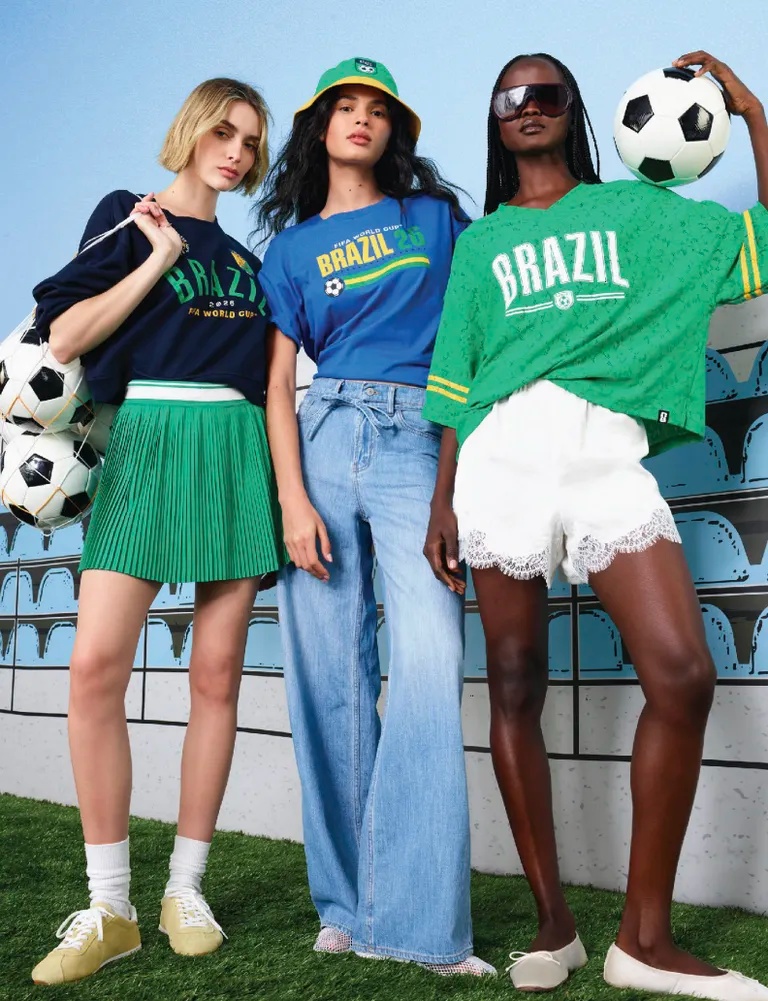 |
Some designs from Old Navy's World Cup collection. Photo: Old Navy |
The World Cup has also been leveraged by many affordable fashion brands since april. Old Navy and Gap partnered with FIFA to launch design lines including oversized jerseys, hoodies, and baseball caps. Aerie released a collection featuring the colors of teams like Mexico, Canada, Brazil, England, Croatia, France, Argentina, and the US, with prices ranging from 12.95 USD to 59.95 USD. Levi's apparel offers a rich palette reflecting the fan styles in Mexico, the US, and England. Puma collaborated with designer Salehe Bembury to create a line of clothing and sneakers, helping fans make a statement in the stands.
Thanks to continuous promotional campaigns from april until now, searches for the keyword "World Cup jersey" on Pinterest have surged by 840% compared to the same period last year. "England World Cup jersey" searches increased by over 2,300% on TikTok. Questions related to blokecore fashion on Pinterest also saw sharp increases: "pairing football jerseys with high heels" rose by 81%, "football jerseys with skirts" by 33%, and "outfits with Brazil women's football jerseys" by 302%.
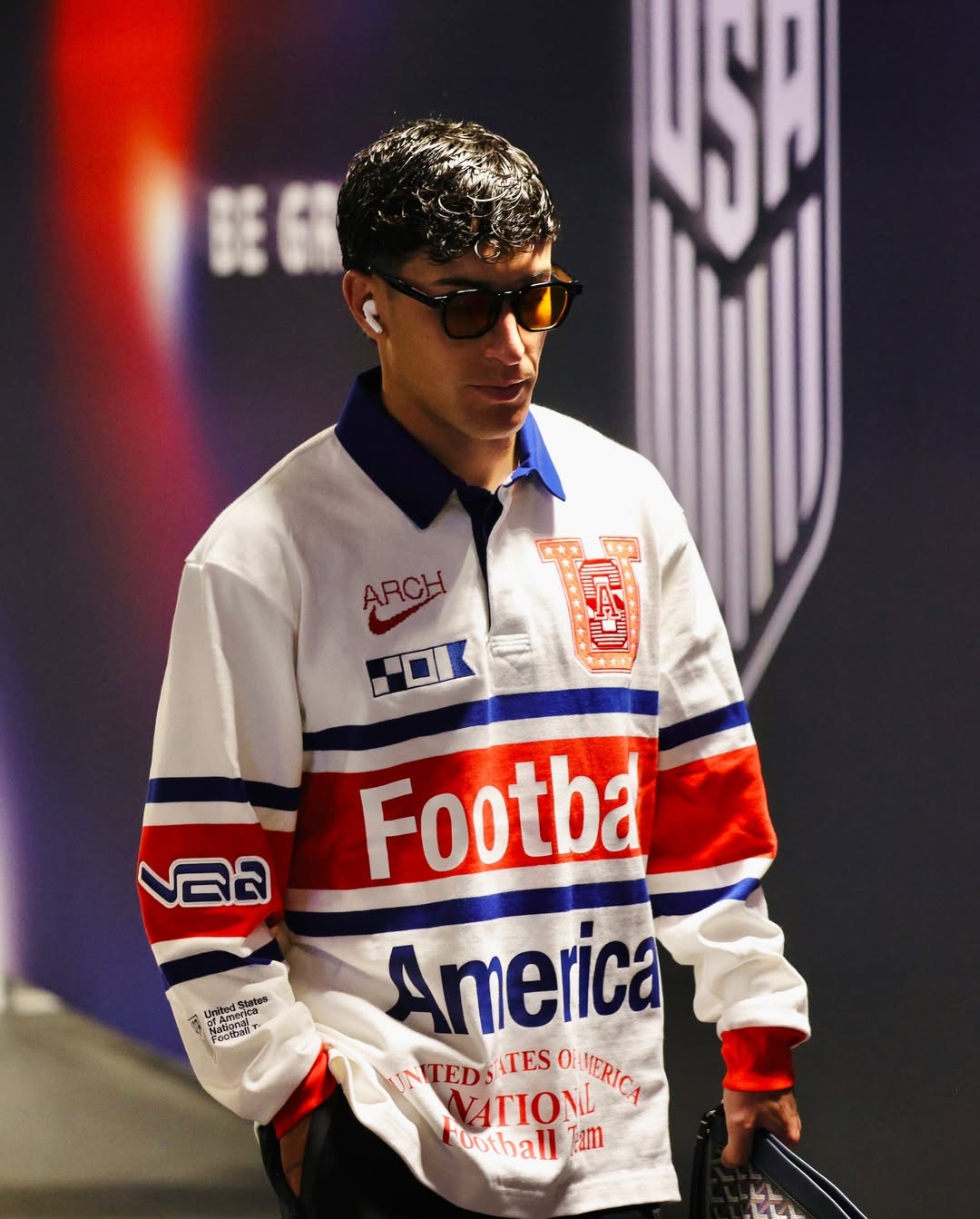 |
US player Alejandro Zendejas wears a Nike x Virgil Ablo jersey. Photo: Nike |
According to Guardian, a successful campaign delivers more than just attractive jerseys; it needs to create a compelling story. Fashion houses no longer view football as a sponsorship activity but as a cultural archive. They borrow the energy, symbolism, and emotional connection this sport generates to enrich their brand narrative.
For its Fall/Winter 2026 campaign, "A Good Sport", British fashion house Burberry focused on the culture of a football match day: the anticipation before kickoff, encounters in the stands, community spirit, and the joy of sharing with friends. A company representative stated they aim to celebrate "the camaraderie that football brings". Loewe and Corteiz also embraced the trend through designs, collaborations, or imagery associated with players and teams.
Adidas reportedly spent approximately 67 million USD on a short film for its World Cup campaign, "Backyard Legends". Launched in early may, the film features Timothee Chalamet, Trinity Rodman, Lionel Messi, Jude Bellingham, Bad Bunny, and David Beckham. In its first two weeks alone, the video reached 5.4 million views on TikTok, 2.4 million likes on Instagram, and 4.7 million views on YouTube. Alasdhair Willis, adidas creative director, told Vogue they began planning for the tournament years ago.
Nike also released short films featuring former football legends Zlatan Ibrahimović and Eric Cantona.
Despite its widespread appeal, the World Cup presents a complex challenge for brands. According to Vogue, to thrive in this market, companies must find ways to engage with customers everywhere, from stores and social media to websites, and create compelling content on TikTok to align with the browsing habits of Generation Z and Millennials.
British fashion critic Joe Bobowicz argues that the World Cup is not a race to sell the most jerseys, but a contest to win consumer affection, loyalty, and engagement.
Sao Mai